Best Gear Oils for Differentials (2026)
We selected products based on SAE viscosity fit for differentials, synthetic formulation, limited-slip compatibility, and cost-per-quart value
The Verdict
- Best Overall: Valvoline Flexfill SAE 75W-90 Full Synthetic Gear Oil 1 QT (4-Pack) — Best fit for common differentials: full-synthetic 75W-90 formulation offering balanced protection and value per quart
This page compares gear oils formulated for differentials, focusing on fit, viscosity (SAE grade), synthetic formulation, and value across common use cases. Picks were chosen by matching fluid specifications to differential types, limited-slip compatibility, and cost-per-quart for typical maintenance intervals
Top Picks
-
1

Best Overall Valvoline Flexfill SAE 75W-90 Full Synthetic Gear Oil 1 QT (4-Pack)
Best fit for common differentials: full-synthetic 75W-90 formulation offering balanced protection and value per quart
Full synthetic gear oil designed for high/low temp protection with an extreme pressure additive for load carrying and wear protection. Customers cite quality, ease of use, and value for money, noting good performance in tight spaces and differential servicing
- Full Synthetic formulation
- Excellent thermal stability
- Designed for tight spaces and ease of use
-
2

Valvoline Gear Oil 75W-140 Full Synthetic, 1 QT (Case of 4)
Best for high-temperature duty: full-synthetic 75W-140 delivers higher viscosity protection for hot-running axles
Full synthetic gear oil with high/low temp protection and EP additive for load carrying. Easy to use in tight spaces, praised for quality and pouch design by customers
- Full Synthetic for protection
- EP additive for load carrying
- Easy to use in tight spaces
-
3

Valvoline SynPower 75W-140 Full Synthetic Gear Oil 1 QT (Pack of 4)
Best for limited-slip systems: 75W-140 full-synthetic with an additive package suited to limited-slip differentials
Full synthetic gear oil for conventional and limited-slip differentials and non-synchronized manual transmissions. Supports low-temperature protection and thermal stability. Customer notes include ease of use and good value
- suitable for limited-slip differentials
- low-temperature protection
- rust and corrosion protection additives
-
4
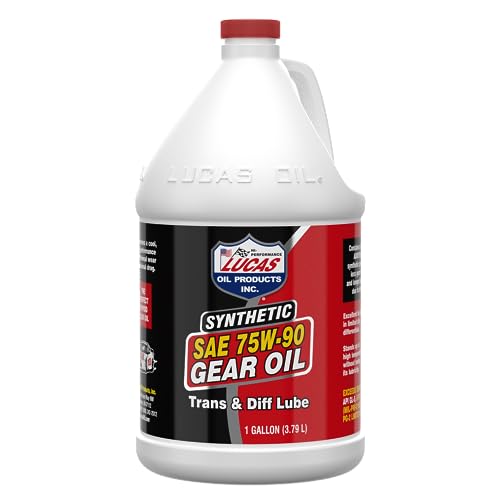
Lucas Oil Synthetic SAE 75W-90 Gear Oil - 1 Gallon
gallon option: synthetic 75W-90 in a one-gallon size lowers per-service cost for frequent maintenance
Synthetic gear oil for high-temperature performance and smooth shifting. Customers report high quality and effective use in transfer cases and differentials
- heavy-duty performance
- high temperature stability
- smooth shifting