Best Educational Flash Cards Under $50 (2026)
We scored products by educational focus, age-appropriateness, build quality, supplemental features (audio/visual/kinesthetic), and overall value under $50
The Verdict
- Best Overall: Think Tank Scholar 652 Sight Words & Phonics Flash Cards — Best for early readers: extensive sight-word and phonics coverage designed to build reading fluency
- Best Value: 335 multiplication & division flash cards with charts — Best for visual math learners: large multiplication/division set that includes reference charts for quick recall
This roundup highlights educational flash cards for babies and kids that deliver strong learning value for under $50, focusing on durability, curriculum alignment, and engagement. Picks were chosen by scoring product features, age-appropriateness, material quality, and supplemental learning aids to surface high-value options
Top Picks
-
1

Best Overall Think Tank Scholar 652 Sight Words & Phonics Flash Cards
Best for early readers: extensive sight-word and phonics coverage designed to build reading fluency
Flash cards for learning CVC blends, short/long vowel sounds, and Dolch & Fry high-frequency words. Helps improve reading speed and fluency; versatile for homeschool and classroom use. Customer insight: durable and effective for first graders
- 600 sight words + 52 phonics cards
- Dolch & Fry word coverage
- supports reading speed and fluency
-
2

Multiplication & division flash cards bundle (0-12 facts) 711 equations
Best for upper elementary math practice: comprehensive 0–12 multiplication and division fact bundle for drill work
Comprehensive flash card set for 3rd-6th graders with color-coded visuals and 16 teaching methods. Includes 429 cards plus +13 bonus facts to practice multiplication and division, with tabs/dividers for mastered cards
- color-coded illustrations
- extensive fact coverage 0-12 + bonus
- 16 teaching methods
-
3
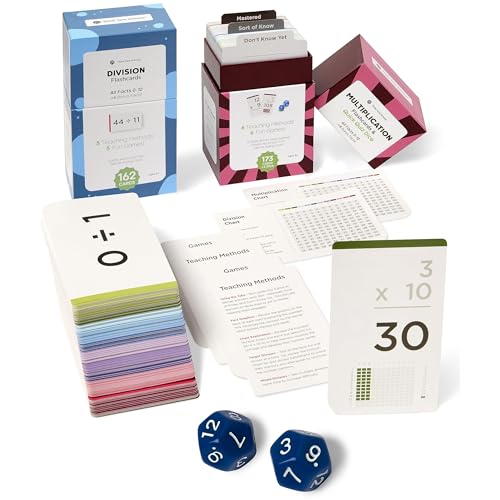
Best Value 335 multiplication & division flash cards with charts
Best for visual math learners: large multiplication/division set that includes reference charts for quick recall
335 multiplication and division flash cards with visual aids and charts for grades 3–6. Helps memorize all facts 0-12 with bonus facts and dice games. Customers note durable cards and organized color-coding for easy use
- 335 flash cards for all 0-12 facts
- includes 12-sided dice and charts
- award-winning educational tool
-
4

The Fidget Game: Grades 1-2 Learning Bundle
Best for active learners: kinesthetic-focused cards that combine sight-word practice with hands-on activities
A bundle of 500 flash cards plus pop fidget toys for reading, math, and time skills. Includes mats and dice for interactive learning; customers note it helps with word recognition and is easy to use
- 500 flash cards for reading basics
- pop fidget toys for engagement
- multisubject bundle (reading, math, time)
-
5

Bilingual Talking Flash Cards for Toddlers (Chinese & English) by TimingSXD
Best for bilingual toddlers: talking Chinese-English cards that introduce words with audio reinforcement
Bilingual learning flash cards with a card reader, teaching 224 sight words across 12 categories. Helps develop memory, concentration, and vocabulary with no screen. Customers note clear sound and on-the-road portability, but mixed durability
- 224 sight words across 12 categories
- bilingual voice output in Chinese & English
- no screen for eye protection
-
6

Toddler learning activities & flash cards by Toyventive
Best for toddler activity packs: combines simple flash cards with hands-on learning activities for early skills
Educational box with books, flash cards, and preschool activities for toddlers. Helps with early speech, word learning, and fine motor skills; praised for engaging visuals and color variety
- multiformat learning kit
- speech and phonics focus
- colorful kid-friendly design
-
7

Baby learning board books & flash cards set for infants & toddlers
Best for infants and toddlers: board-book plus card sets built for visual engagement and sturdy handling
Educational & problem-solving activity set for babies and toddlers with board books and sensory montessori cards. Encourages fine motor, speech, and hand-eye coordination, plus colorful, realistic pictures. Customers note engaging design and good value
- multi-item learning set
- bright, realistic pictures
- age-appropriate for 0-24 months
-
8

Flash Cards for Toddlers: Jumbo Learning Box Set (468) with Real Pictures
Best for variety seekers: jumbo learning box with real photos that covers alphabet, numbers, and basic concepts
Jumbo set of 468 flash cards for toddlers with real images covering alphabet, numbers, emotions, body parts, first words. Durable, easy-to-read text, variety of topics for early preschool prep. Customers note high quality and engaging visuals
- 468-card jumbo set
- real picture illustrations
- covers multiple early-learning topics
-
9

QuTZ Phonics Learning Toy: Flash Cards with Sound & Blending (4-8)
Best for phonics with sound: cards with sound and blending features to support early decoding skills
Phonics-based flash card system for early readers with letter/word cards and a sound-enabled reader. Supports word segmentation and blending to improve reading skills; customers note engaging educational value and ease of use for toddlers, with mixed feedback on sound quality
- structured phonics with 73 cards
- two-mode reader for segmentation and blending
- includes 265 words for practice
-
10
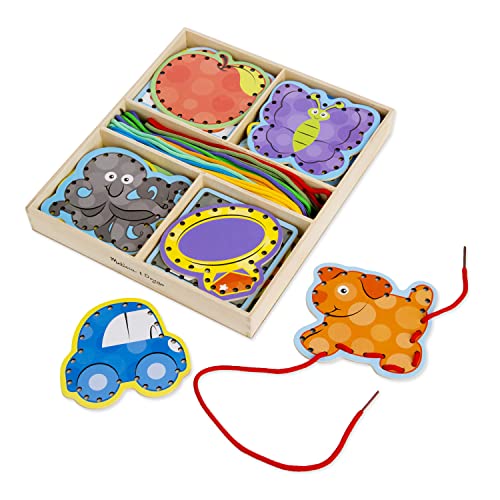
Alphabet wooden lacing cards with double-sided panels
Best tactile alphabet learning: double-sided wooden lacing cards that develop letter recognition and fine motor skills
Wooden lacing set with 26 cards and laces for alphabet learning. Each card has a full-color image on one side and upper/lowercase letters on the other, aiding letter recognition, vocabulary, and fine motor skills. Customers note durable construction and engaging color variety
- 26-card alphabet set
- double-sided panels with images and letters
- lace-based fine motor activity