Best DJ Mixers Under $200 (2026)
We selected mixers under $200 and scored them by connectivity, channel count, mic/preamp quality, phantom power, portability, and overall value
The Verdict
- Best Overall: VAsdev Podcast Soundboard Bundle with Bluetooth Voice Changer DJ Controller — Best for streamers: compact soundboard bundle with Bluetooth and voice-change features for live streaming and casual mixing
This roundup compares compact DJ mixers and audio mixers priced under $200, focusing on features and real-world value for DJs, streamers, podcasters, and hobbyists. Picks were ranked by a value score that weights connectivity, channel count, mic support, phantom power, and portability
Top Picks
-
1

Best Overall VAsdev Podcast Soundboard Bundle with Bluetooth Voice Changer DJ Controller
Best for streamers: compact soundboard bundle with Bluetooth and voice-change features for live streaming and casual mixing
A podcast soundboard and DJ controller bundle for live streaming, singing, and gaming with multiple reverb modes, pitch settings, and scene effects. Enables simultaneous multi-platform streaming for a personalized audio environment
- multi-platform streaming
- extensive voice modulation options
- built-in scene sound effects
-
2
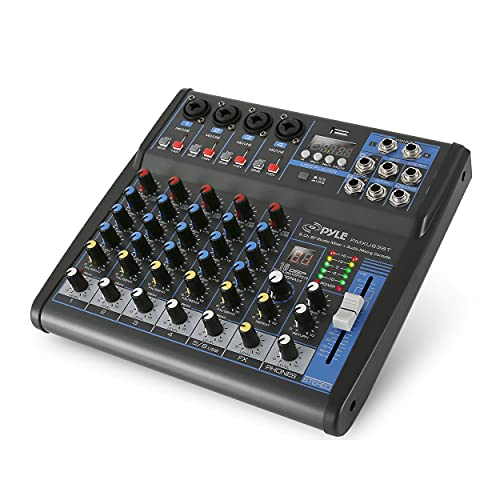
Pyle 6-Channel USB/Bluetooth Audio Mixer PMXU63BT
Best for USB recording: multi-channel USB/Bluetooth mixer with phantom power and flexible routing for small studios
Compact 6-channel mixer with USB, flash MP3, Bluetooth streaming, and 48V phantom power for multi-source input and recording. Customers note solid build, ease of use, and good sound quality
- USB/MP3 compatibility
- Bluetooth streaming
- 48V phantom power
-
3

FIFINE Gaming Audio Mixer with XLR mic input and phantom power
Best for gaming streamers: XLR input and phantom power in a compact mixer designed for live voice capture and streaming setups
Compact gaming audio mixer with a dedicated XLR mic input, 48V phantom power, and independent channel controls. Users note easy setup and clear audio, with some concerns about mic monitor and overall sound quality
- xlr mic input with phantom power
- four independent channels with direct control
- built-in volume fader and mute button
-
4

FIFINE SC3W 4-Channel Gaming Mixer with XLR Interface
Best for multi-stream setups: four-channel XLR-equipped gaming mixer offering phantom power and easy integration with streaming rigs
4-channel gaming mixer with individual channel control and XLR mic input. Built-in phantom power for condenser mics. One user notes ease of use and voice changer features
- 4-channel independent control
- XLR mic input with phantom power
- built-in monitoring and faders
-
5

Gemini 2-Channel Pocket DJ Mixer with RCA, Mic & Headphone Jacks
Best portable option: true two-channel pocket mixer with RCA, mic, and headphone jacks for lightweight mobile DJing
Compact 2-channel mixer with pro-style controls in a palm-sized form. Ideal for dorms, small venues, or busking, with multiple inputs and built-in EQ. Customers note good value and clear sound, though some report setup issues
- ultra-compact design
- dual inputs and mic/headphone jacks
- rugged pocket-friendly mixer
-
6
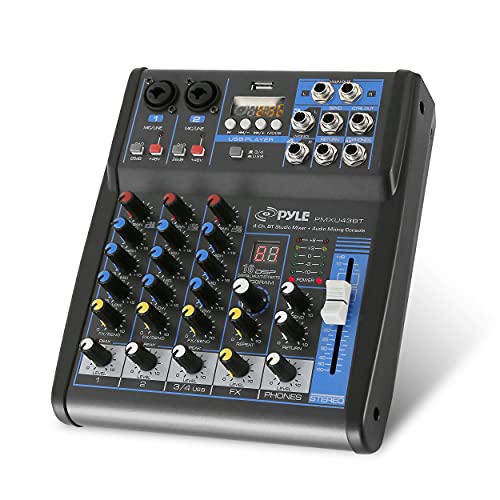
Pyle 4-Channel USB Bluetooth DJ Mixer
Best for basic Bluetooth playback: four-channel USB/Bluetooth mixer that handles MP3 players and simple DJ setups
Compact 4-channel mixer with USB/MP3 playback, Bluetooth streaming, and 48V phantom power for studio or live setups. Users praise ease of use and versatile connectivity, including zero-latency headphone output
- USB/MP3 compatibility
- Bluetooth streaming
- 4-channel digital DSP processing
-
7

Pyle 8-Channel USB Bluetooth Audio Mixer PMXU83BT
Best for expanded inputs: eight-channel USB/Bluetooth mixer suitable for complex small-stage setups needing many sources
Compact 8-channel mixer with USB/flash/MP3 input and Bluetooth streaming. Built-in controls for playback and mode switching, +48V phantom power, XLR and 1/4" inputs. Customer note: sturdy build and easy to use
- Bluetooth streaming to mixer
- 8-channel input with +48V phantom
- USB/MP3/flash compatibility
-
8

A60 6-Channel USB audio mixer with 48V phantom power
Best for budget studio builds: six-channel USB mixer with 48V phantom power and mic preamps for home recording
Compact 6-channel music mixer with low-noise preamps and 48V phantom power for laptops, Mac/PC. Ideal for recording and gigs; users note solid sound quality and value, with some critique on instruction clarity
- low-noise preamp
- 48V phantom power
- compact 6-channel design
-
9

4-channel DJ mixer with Bluetooth, USB/MP3 input
Best for casual DJs: four-channel unit with Bluetooth, USB/MP3 input and intuitive controls for party or practice use
4-channel DJ mixer with Bluetooth, USB/MP3/BT input and 48V phantom power for studio use. Lightweight, compact design enhances portability. Customers praise its solid build, ease of use, and good sound quality
- bluetooth connectivity
- multi-input versatility
- compact, portable design
-
10

Yamaha 6-Input Compact Stereo Mixer MG06
Best for compact pro use: six-input compact stereo mixer with quality build and straightforward analog controls for studio tasks
Compact 6-channel mixer with discrete class A D PRE preamps for clean sound. Features 3-band EQ and high-pass filters for tonal control; suitable for live gigs and home studios. Customers appreciation for ease of use and value, with some noting noise concerns
- discrete class A preamps for tone
- 3-band EQ and HPF filters
- balanced XLR outputs