Best External Sound Cards Under $100 (2026)
We ranked products by a value score combining feature set (connectivity, DAC specs, inputs/outputs), compatibility, user-facing features (noise reduction, mixing), and perceived build quality
The Verdict
- Best Overall: Creative Sound Blaster Play! 3 External USB Sound Adapter — Best for simple desktop upgrades: compact USB audio adapter that adds basic DAC and mic/headphone I/O for Windows and macOS
- Best Value: StarTech USB 7.1 External Sound Card — Best for virtual surround needs: USB device that provides 7.1-channel output and extra line-in flexibility for multi-channel setups
This roundup covers compact external sound cards and USB audio interfaces under $100, chosen for utility across gaming, streaming, and laptop audio upgrades. Selections prioritize measured audio features, connectivity (USB-A/C, SPDIF, line-in), and overall value for common desktop and mobile setups
Top Picks
-
1

Best Overall Creative Sound Blaster Play! 3 External USB Sound Adapter
Best for simple desktop upgrades: compact USB audio adapter that adds basic DAC and mic/headphone I/O for Windows and macOS
Plug-and-play USB sound adapter upgrading to 24-bit 96kHz playback for PC and Mac. Customers praise ease of setup and compatibility across systems
- 24-bit 96kHz playback
- no drivers required
- cross-platform compatibility
-
2
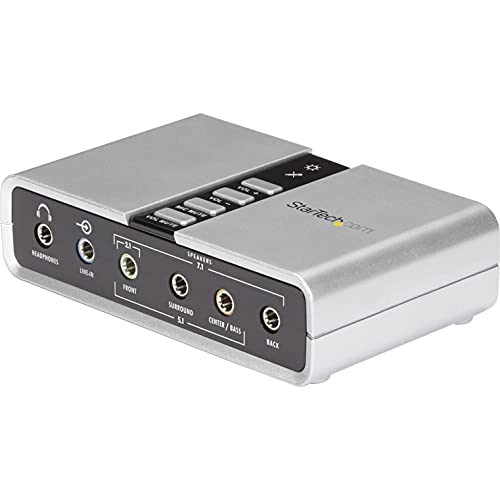
Best Value StarTech USB 7.1 External Sound Card
Best for virtual surround needs: USB device that provides 7.1-channel output and extra line-in flexibility for multi-channel setups
External USB sound card adds up to 7.1 channels via a single USB port, supporting analog and digital outputs. Users note easy setup and good sound quality with plug-and-play recognition on Windows
- 7.1-channel external USB audio
- analog and digital output support
- easy plug-and-play setup
-
3

StarTech USB Sound Card with SPDIF Output
Best for digital output: includes SPDIF output and broad OS compatibility for connecting to external DSPs or receivers
External USB sound card with SPDIF digital output and volume/EQ controls. Useful for replacing an internal card on laptops or PCs; compatible with various systems. Customers note solid functionality and value, with mixed opinions on sound quality and cable length
- SPDIF output with pass-through
- external volume and EQ controls
- compact external sound card replacement
-
4

Andrea USB-SA-1 external digital sound card with noise reduction
Best for voice clarity: USB sound card with built-in noise reduction aimed at clearer mic input for calls and recordings
USB 2.0 external sound card delivering high fidelity audio with CD-quality digital sample rates. Designed for PC users seeking improved sound quality and low noise; customers note good audio and USB connectivity
- cd-quality digital sample rates
- usb 2.0 full speed compliant
- compact thumb-drive size
-
5

Gaming audio mixer with USB interface and soundboard for streaming
Best for streamers: combines USB audio interface with mixing and soundboard features to trigger effects during live streams
All-in-one USB streaming mixer for podcasting, live streaming, and gaming. Controls mic, music, and headphone levels for smooth broadcasts. Customer insight mentions versatility
- usb audio interface
- all-in-one streaming mixer
- customizable soundpads
-
6

InnoMaker Portable USB HiFi Sound Card & Headphone Amplifier
Best portable HiFi option: compact USB DAC with headphone amplification designed for improved mobile listening
Portable USB audio DAC/amp supporting PCM 384kHz/32bit and DSD256 with dual 4.4mm and 3.5mm outputs. Widely compatible with Android, Windows, and Linux devices. "Wide range impedance adaptive" design for various headphones
- High-resolution DAC/amp
- Dual output options
- Broad device compatibility
-
7

VENTION USB External Sound Card Gaming DAC AMP
Best for gamers needing virtual surround: USB-C compatible DAC/amp that adds virtual 7.1 processing and gaming-oriented audio
External USB sound card enabling virtual 7.1 surround sound for gaming and media. Includes USB-C and three 3.5mm jacks for mic and audio output. customer insight: no insights provided
- 7.1 virtual surround
- USB-C input
- RGB light mode
-
8

USB Live Sound Card 24 BIT 192KHZ USB External Audio Mixer
Best for fidelity and low noise: USB mixer and external sound card offering 24‑bit/192 kHz audio and clean preamps for recording
USB external sound card supporting 24 BIT 192KHZ for clear, detailed audio. Built-in AD converter enables high-resolution output with flexible sampling rate options
- high resolution audio support
- portable USB interface
- flexible sampling rate