Best Internal USB Port Cards Under $200 (2026)
We ranked cards by a value score combining port count, USB generation (bandwidth), internal header support, PCIe lane requirements, and cross‑platform compatibility
The Verdict
- Best Overall: PCIE USB 3.0 Expansion Card (7 ports) — expansion: multiple USB-A and USB-C ports for adding seven external connections and a front‑panel header option
- Best Value: USB 3.0 PCIe Card with 6 USB-A and 2 USB-C ports — Best mix of ports: six USB‑A plus two USB‑C ports deliver broad legacy and modern device support from a single PCIe card
This roundup covers internal PCIe USB port cards under $200 that add front-panel headers, extra USB-A/C ports, or high‑speed USB-C lanes to desktops and workstations. Picks were chosen by value score using feature mix (port count, USB generation, internal headers), PCIe lane requirements, and cross‑platform compatibility
Top Picks
-
1
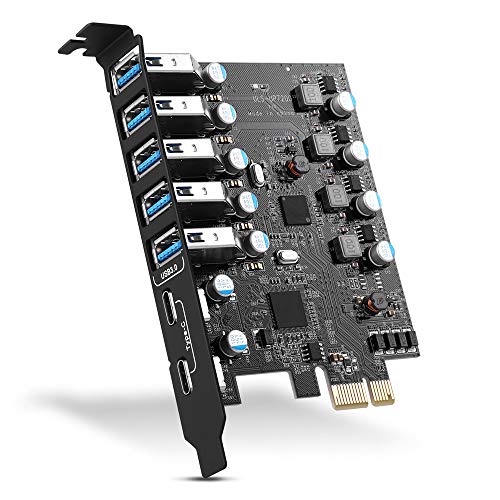
Best Overall PCIE USB 3.0 Expansion Card (7 ports)
expansion: multiple USB-A and USB-C ports for adding seven external connections and a front‑panel header option
A PCIe USB 3.0 expansion card with 7 ports (5 Type-A, 2 Type-C) for Windows, macOS, and Linux. Enables plug-and-play USB expansion with easy installation, valued for quality and versatility, though some users report port and reliability issues
- 7-port USB 3.0 expansion
- 5 Type-A + 2 Type-C ports
- Cross-OS compatibility
-
2

Allegro Type A USB 3.2 PCIe Card (4-Port) for Mac/Windows
Best for Mac/Windows upgrades: four USB 3.2 Type‑A ports designed for Mac Pro and Windows PCIe systems with reliable driver support
Adds four USB 3.2 ports to PCIe-ready systems, supporting bus-powered drives and devices. Customers note easy installation and no driver need
- four-port usb 3.2 expansion
- mac and windows compatible
- driver-free installation
-
3

Best Value USB 3.0 PCIe Card with 6 USB-A and 2 USB-C ports
Best mix of ports: six USB‑A plus two USB‑C ports deliver broad legacy and modern device support from a single PCIe card
RIITOP PCIe expansion card adds 6 external USB 3.0 ports and 2 USB-C ports via PCIe x1/x4/x8/x16 for PC connectivity. Easy installation with no driver required, works with multiple devices according to user feedback
- six USB-A 3.0 ports
- two USB-C ports
- driver-free installation
-
4

7-port USB 3.0 PCIe expansion card (FS-U7L-Pro)
Best high‑port count: seven USB 3.0 ports provide many external connections without demanding high PCIe lane width
PCIE x1 USB 3.0 expansion card adding 7 USB-A 5Gbps ports for desktops and workstations. Enables high-power USB devices without extra power supply; drivers not required for Windows compatibility
- 7x USB 3.0 ports
- PCIE X1 interface
- self-powered technology
-
5
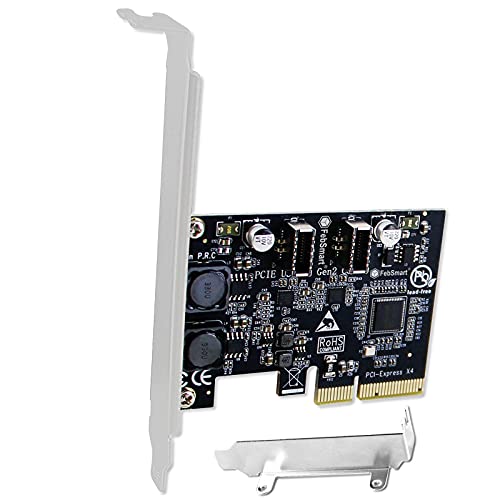
FS-E2C-Pro USB 3.1 Gen2 x4 to 2x USB-C 10Gbps PCIe card
Best Gen2 USB‑C add‑on: dual USB‑C ports using PCIe x4 for full 10Gbps links to modern peripherals and front panels
FebSmart FS-E2C-Pro adds 2x USB 3.1 Gen2 type E key A ports, extending to 2x 10Gbps USB-C front-panel ports for desktops and workstations. Provides up to 10Gbps transfer for USB-C devices; mixed feedback on power delivery and connectivity
- dual usb-c 10gbps expansion
- usb 3.1 gen2 performance
- built-in self-powered technology
-
6

USB C PCIe Card with 4 ports and 19 pin header
Best for front‑panel installs: four USB‑C ports plus a 19‑pin header make it easy to route USB‑C to a case panel
PCIe to USB expansion card with 4 ports and 19-pin USB 3.0 header. Enables front-panel USB access and high-speed data transfer up to 10Gbps. One customer notes work with Windows 11; mixed feedback on installation and compatibility
- PCIe to USB expansion with 4 ports
- internal 19-pin USB 3.0 header support
- 10Gbps USB 3.1 Gen 2 performance
-
7

7-Port PCIe USB 3.0 Expansion Card (2x USB-C, 5x USB-A) for Desktop
Best balanced expansion: two USB‑C and five USB‑A ports give flexible device support and moderate PCIe bandwidth needs
Internal PCIe USB expansion card adding 7 ports (5 USB-A, 2 USB-C) for PCs with limited USB. Supports speeds up to 5Gbps and is compatible with Windows and macOS. Customer insight notes mixed compatibility and installation experiences
- 7 ports total (5x USB-A, 2x USB-C)
- PCIe expansion for desktop PCs
- 5Gbps transfer rate
-
8

StarTech USB 3.2 Gen 2x2 PCIe Card, USB-C 20Gbps, 4-lane
Best for high throughput: USB‑C 20Gbps interface on a 4‑lane PCIe card for bandwidth‑heavy external drives and docks
Add a USB-C 20Gbps port to a desktop PCIe slot with 4-lane support. Includes power delivery up to 5V 3A and driver support across Windows, macOS, and Linux. Customers note fast transfers and easy installation, with mixed compatibility reports
- 20Gbps USB-C via PCIe x4
- power delivery to devices
- cross-OS compatibility
-
9

Kingwin 7-Port USB 3.0 Front Panel Hub with Fast Charging
Best front‑panel hub: seven front ports with fast‑charging capability designed for easy case installation and device charging
Kingwin USB 3.0 front panel hub with 7 ports and a 2.1A fast charging port. Backward compatible with USB 2.0/1.1. Supports up to 5 Gbps for USB 3.0 devices. Customer note: mixed build quality and some port alignment issues
- 7 USB 3.0 ports
- 1 quick charging port
- front-bay compatible
-
10

Sonnet Allegro Max USB-C 20Gbps PCIe Card
Best Gen2x2 alternative: 20Gbps USB‑C performance in a compact PCIe card for single‑device high‑speed transfers
USB-C PCIe card enabling high-speed transfers up to 2000 MB/s. Features a custom connector to reduce interference and a resettable overcurrent fuse. Supports bus-powered USB-C SSDs and RAID devices on Mac and Windows
- up to 2000 MB/s transfer speed
- interference-reducing connector design
- bus-powered USB-C SSD/RAID support