Best Microphone Cables for Live Sound Reinforcement (2026)
We evaluated XLR microphone cables by fit for live stage use (lengths 25–50 ft), connector/build quality, shielding, and overall value
The Verdict
- Best Overall: Gearlux XLR Microphone Cable, 25 ft, 3 Pack — Best for tight budgets: three 25 ft XLRs offering balanced connections and multi-cable convenience for stage setups
This roundup covers microphone cables suited for live sound reinforcement, focusing on fit for stage setups and overall value across common lengths and builds. Picks were chosen from available XLR options with attention to cable length, connector quality, and durability for live performance use
Top Picks
-
1

Best Overall Gearlux XLR Microphone Cable, 25 ft, 3 Pack
Best for tight budgets: three 25 ft XLRs offering balanced connections and multi-cable convenience for stage setups
Fully balanced XLR cable with OFC core and copper shielding for low-noise signal transmission. Customers note durability, clear sound, and suitable length for various setups
- balanced XLR for low noise
- OFC core for signal integrity
- durable build
-
2
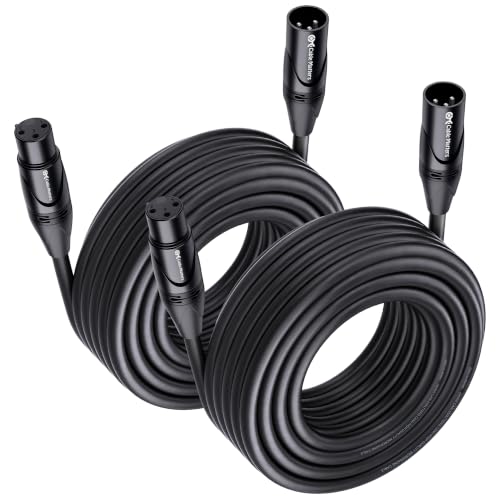
Cable Matters 2-pack XLR to XLR Microphone Cables, 35ft
Best for heavy-duty use: 35 ft XLRs with reinforced construction suited to frequent plugging and longer runs
Two 35ft XLR to XLR microphone cables with oxygen-free copper for studio and live sound. Users report solid construction, sturdy connectors, and low noise with most mics; some notice hiss with specific models
- 2-pack for flexibility
- professional audio quality
- oxygen-free copper conductors
-
3

Gearlux XLR Microphone Cable, 50 ft, 3 pack
Best for flexible rigs: three 50 ft XLRs delivering long reach and balanced audio for versatile live setups
Fully balanced XLR microphone cables with 3-pin connectors, built for durability and quiet sound. Customers note sturdy connections, suitable length, and low noise for sound systems
- fully balanced 3-pin XLR
- oxygen-free copper conductors
- flexible PVC jacket