Best Recording Signal Converters Under $50 (2026)
We selected products under $50 by evaluating connector types, passive vs active circuitry, channel/routing options, build quality, and overall value score
The Verdict
- Best Overall: 3-Way XLR Stereo Audio Switch Box (3 in 1 out) by SOLUPEAK — Best for quick XLR routing: three-input stereo switch box for balanced signal switching without power
Top Picks
-
1

Best Overall 3-Way XLR Stereo Audio Switch Box (3 in 1 out) by SOLUPEAK
Best for quick XLR routing: three-input stereo switch box for balanced signal switching without power
Passive XLR input selector with no amplification or power circuit. Maintains sound quality with low noise, useful for switching between mics. Mixed build impressions from users
- passive signal selector
- balanced XLR in 3, out 1
- no sound coloration
-
2

NVX XLOC22X 2-channel high voltage line output converter
Best for car-to-studio line conversion: two-channel high-voltage converter for speaker-level to RCA outputs and impedance matching
2-channel line output converter with impedance matching and 2-channel RCA outputs. Supports up to high input voltage and auto turn-on; one customer notes easy installation and good value, while others report inconsistent functionality
- 2-channel inputs and outputs
- Impedance matching and load selection
- Auto turn-on and high voltage handling
-
3
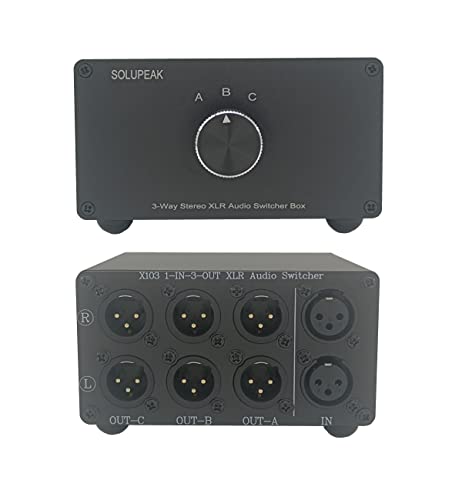
1 in 3 Out XLR Balanced Audio Switch Box (3-Ch) SOLUPEAK
Best for simple multi-destination routing: one-in, three-out balanced XLR switch box for passive studio signal distribution
Passive 1-to-3 XLR stereo input selector with no amplification or power required, preserving sound quality. Users note good audio quality and low noise when switching, though some report fragile build and knob issues
- passive, no power required
- 3-channel XLR input selector
- claims minimal signal impact
-
4
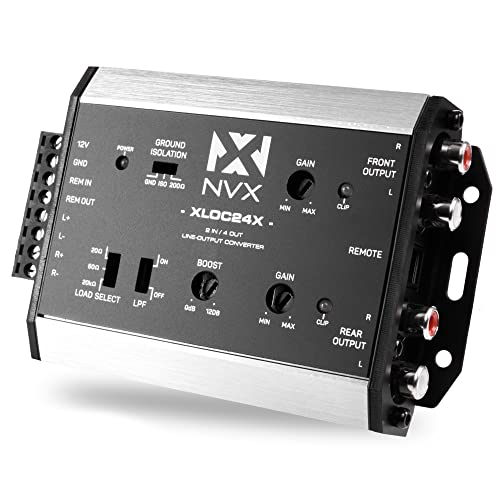
NVX XLOC24X 2 inputs / 4 outputs High Voltage Active Line Output Converter
Best for expanded output needs: two-input, four-output active line converter that handles speaker-level inputs and multiple RCA feeds
2-channel speaker level inputs to 4-channel RCA outputs with impedance matching and remote level control. Handles up to 40V (400W RMS) and provides up to 9.5V output; auto turn-on via DC offset or audio detection. Customer insight highlights ease of installation and solid sound, but notes some reliability and control knob concerns
- 2-channel input to 4-channel output
- high voltage handling up to 40V
- remote level control with impedance matching
-
5

RJ45 to 3Pin XLR Audio Extender with Built-in Isolators
Best for long-run studio cabling: RJ45-to-3-pin XLR extender with built-in isolators for noise-resistant audio over CAT cable
SIUNIMAS Pro RJ45 to 3Pin XLR extender box connects over Cat5/Cat6 with built-in audio transformers for improved compatibility. Includes male-female XLR connections and gold-coated audio connectors
- built-in audio transformers
- gold coating on connectors
- cat5/6 compatibility for extension