Best Telescope Barlow Lenses for Planetary Viewing (2026)
We selected lenses based on 1.25" compatibility, magnification (2x–3x), optical design (apochromatic or telecentric), user ratings, price, and brand reliability
The Verdict
- Best Overall: SVBONY SV216 3x Barlow Lens 1.25" APO Optics — 3x magnification Barlow lens with 1.25" interface for standard eyepieces and accessories.
- Best Premium: Explore Scientific Fokal Extender: 2x Teleextender — telecentric 2x extender increasing focal length for telescopes.
This roundup identifies the best telescope Barlow lenses for planetary viewing, focusing on fit (1.25" compatibility), magnification (2x–3x), optical design, and value. Picks were chosen by comparing brand reputation, reported ratings, price, and relevant product features like apochromatic elements and telecentric design.
Top Picks
-
1
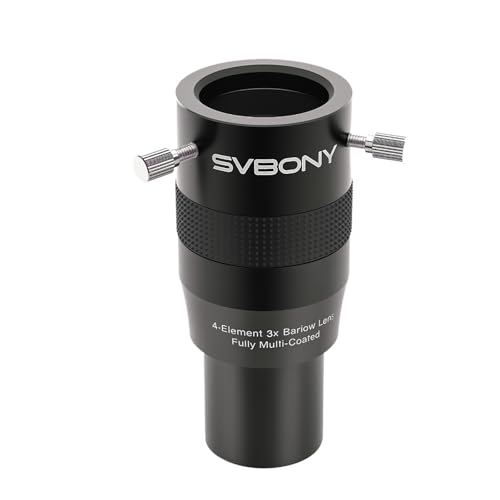
Best Overall SVBONY SV216 3x Barlow Lens 1.25" APO Optics
3x magnification Barlow lens with 1.25" interface for standard eyepieces and accessories. Improved image quality with multi-coated four-element optics and edge coatings; sturdy aluminum base. Users note solid build and maintained field of view
- constant 3x magnification
- 4-element apochromatic-like design
- coated optics with reduced halos
-
2

SV216 2x Barlow Lens 1.25" FMC 4-Element APO
SV216 2x Barlow lens with 4-piece telecentric design to extend focal length while minimizing aberrations. Maintains a flat field and sharpness with full multi-layer coatings; compatible with standard 1.25-inch eyepieces
- 2x constant magnification
- 4-element telecentric design
- fully multi-layer coatings
-
3

Celestron 1.25" X-Cel LX 3x Barlow Lens
Celestron X-Cel LX 3x Barlow Lens for 1.25-inch eyepieces, delivering enhanced magnification with multi-coated optics. Customers note solid build, improved views of planets and nebulas, and compatibility with DSLR cameras
- 3x magnification boost
- fully multi-coated optics
- solid build quality
-
4

Best Premium Explore Scientific Fokal Extender: 2x Teleextender
telecentric 2x extender increasing focal length for telescopes. Four-lens, fully multicoated design for sharpness and contrast. customer insight mentions clarity
- 2x focal length extension
- telecentric design
- four-lens multicoated optics