Best Telescope Filters (2026 Guide)
Selections were based on aggregated star ratings and review volume, filter function and compatibility, build quality, and manufacturer reputation
The Verdict
- Best Overall: Celestron 1.25" Variable Polarizing Moon Filter — Best for Moon and bright-planet viewing: adjustable polarizing control reduces glare and customizes contrast
This guide surveys top-rated telescope filters for visual observing and astrophotography, chosen by aggregated customer ratings and review volume across leading brands. Picks prioritize optical purpose (solar, lunar, light-pollution, CCD), mechanical compatibility (1.25", 2", filter drawers, SCT fit), and proven user satisfaction
Top Picks
-
1

Best Overall Celestron 1.25" Variable Polarizing Moon Filter
Best for Moon and bright-planet viewing: adjustable polarizing control reduces glare and customizes contrast
Variable polarizing moon filter for 1.25" eyepieces reduces brightness and glare for moon, Venus, and bright double stars. Easy to adjust brightness and threads onto Celestron 1.25" eyepieces
- adjustable 1-40% light transmission
- rotating ring for brightness control
- fits 1.25" eyepieces
-
2
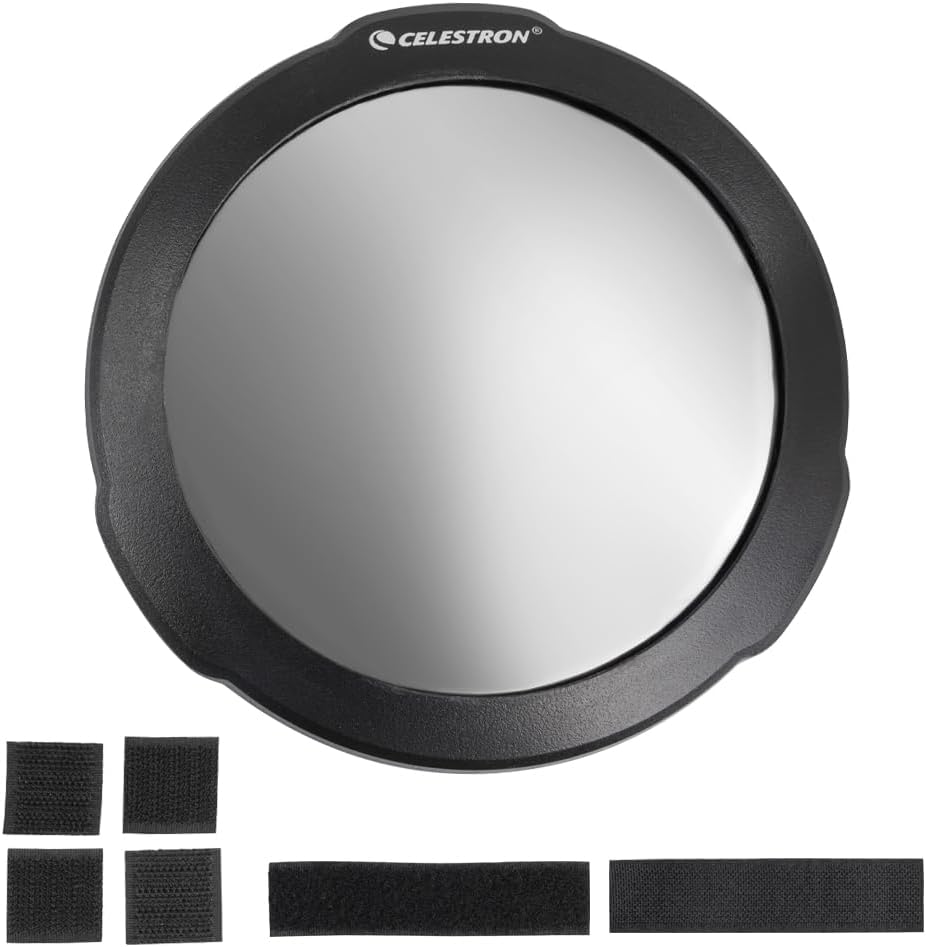
Celestron EclipSmart Solar Eclipse Filter for SCT Telescopes
Best for SCT solar observation: designed to safely fit Schmidt‑Cassegrain scopes for direct Sun viewing
Solar-safe telescope filter compatible with 5 Schmidt-Cassegrain telescopes; enables viewing eclipses and sunspots with secure fit. Customers note stable attachment and safety features
- ISO safety standard compliance
- secure two-strap attachment
- compatibility with common SCT models
-
3

Rollei Astroklar Light Pollution Filter 67mm for Night Photography
Best for night photography: 67mm light‑pollution filter enhances contrast for urban long exposures
Astroklar light pollution filter reduces artificial light while shooting at night. Manufactured from optical glass with double-sided water-repellent nano coating; neutral in infrared range. Customer insight notes mixed sentiment
- reduces artificial light pollution
- nanocoated glass for clarity
- infrared-neutral performance
-
4
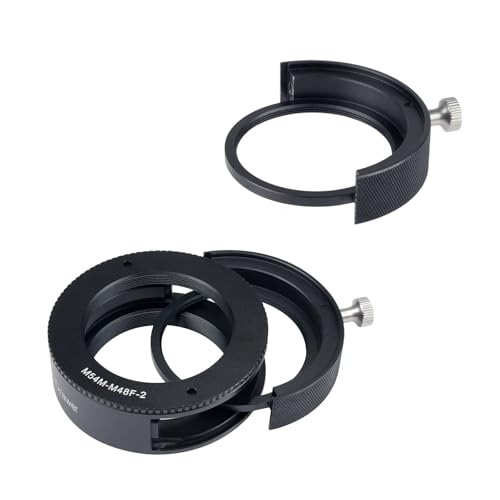
SV226 M54 Filter Drawer for 2'' filters
Best for large imaging setups: 2" filter drawer accepts full-frame sensors and standard 2" filters securely
Astrophotography filter drawer with dual magnets for secure 2'' filters and fast swapping. Compatible with full-frame setups and adaptable to 2"/1.25" filters, with two drawers for quick transitions
- dual magnets for stability
- two filter drawers for quick swaps
- vignetting-free field with 2-inch filters
-
5

OPTOLONG 1.25" UV/IR Cut Filter for CCD Astrophotography
Best for CCD imaging: UV/IR cut filter preserves color fidelity and protects imaging sensors from unwanted wavelengths
UV/IR cut filter for CCD astrophotography with high transmission at key wavelengths. Maintains telescope performance with durable, scratch-resistant material. Customer insight mentions no explicit feedback
- high wavelength transmission
- durable filter material
- all-round deep sky utility
-
6

SVBONY 2" CLS Broadband Telescope Filter
Best for urban visual observing: CLS broadband filter improves nebula contrast in light‑polluted skies
2" CLS broadband telescope filter reduces city lights for better deep-sky viewing and photography. Useful for color CCDs and unmodified DSLRs; performance can vary by setup, with some users noting fit issues
- high pass-band transmission
- coating stability across temperature
-
7

SVBONY SV226 Filter Drawer for 1.25" and 2" filters
Best for flexible setups: combo filter drawer supports both 1.25" and 2" filters with common adapter threads
Compact double-drawer filter holder with M42-M48 adapter for 1.25" and 2" filters. Noted for solid build and versatile compatibility; some users report mixed magnet strength and light leakage concerns
- dual filter drawer design
- 2" and 1.25" compatibility
- M42-M48 adapter support
-
8

Celestron Solar Eclipse Telescope Filter 8 Schmidt-Cassegrain/EdgeHD
Best for certified solar use on large SCTs: engineered to cover 8" Schmidt‑Cassegrain and EdgeHD objectives safely
Solar-safe filter conforming to ISO 12312-2, fits Celestron 8 Schmidt-Cassegrain and EdgeHD telescopes. Provides clear sun viewing; customers note easy fit and secure attachment
- ISO 12312-2 compliance
- secure, snug fit
- works with 8 SCT/EdgeHD telescopes
-
9
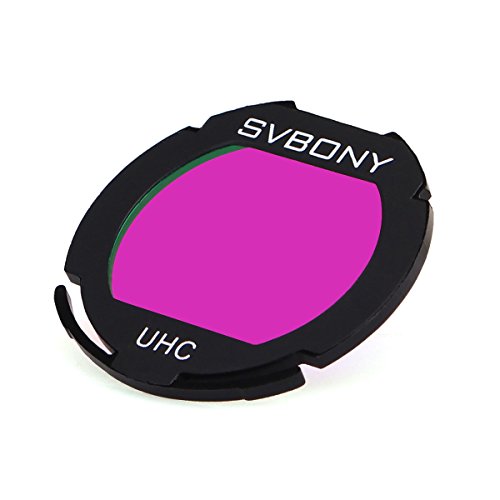
SVBONY UHC Telescope Filter for CCD/DSLR
Best for CCD/DSLR nebula imaging: UHC filter boosts emission-line contrast while rejecting skyglow
UHC filter designed for celestial observations and astrophotography with multilayer coatings to reduce light pollution. Some customers report mixed results on light pollution reduction and image quality
- low vignetting design
- broadband anti-reflection coating
- precision CNC aerometal construction
-
10
Rollei Astroklar Light Pollution Round Filter I 105mm
Best for wide-aperture nightscapes: 105mm light‑pollution filter improves contrast for large‑format lenses
Astroklar filter reduces artificial light pollution for night photography. Manufactured from optical glass with double-sided nano coating and anti-reflective, water, oil, and dirt-repellent properties. Customer insight mentions clarity and utility in night imaging
- light pollution reduction
- robust coating and repellents
- infrared-neutral performance