Best Automatic Irrigation Tubing Under $100 (2026)
We ranked products by a combined value score using tubing length and diameter, emitter type or soaker design, build material and flexibility, ease of installation, and overall cost under $100
The Verdict
- Best Overall: MIXC 400ft 1/4in blank distribution tubing for drip irrigation — long run: 400 ft of 1/4" flexible distribution tubing for extensive branch layouts and low-cost coverage
- Best Value: Raindrip 1/4 in drip tubing 50 ft (2-pack) white — Best compact pair: two 50 ft white 1/4" drip tubes for short runs or discrete feeder lines in tight garden spaces
Top Picks
-
1

Best Overall MIXC 400ft 1/4in blank distribution tubing for drip irrigation
long run: 400 ft of 1/4" flexible distribution tubing for extensive branch layouts and low-cost coverage
MIXC drip irrigation tubing designed for year-round use, flexible and easy to install. Customers note good quality and pliability, with some concerns about fittings sometimes slipping
- flexible for tight turns
- works year-round in any weather
- easy installation and handling
-
2

Best Value Raindrip 1/4 in drip tubing 50 ft (2-pack) white
Best compact pair: two 50 ft white 1/4" drip tubes for short runs or discrete feeder lines in tight garden spaces
1/4 inch irrigation tubing for drip systems; feeds low-flow devices or serves as a main line in small setups. White color blends with surroundings and offers decent quality, though some find it stiff and installation variable
- 1/4 inch irrigation tubing
- pack of 2, 50-foot each
- white polyethylene tubing
-
3

Rain Bird drip irrigation pressure compensating tubing 6" spacing (pack of 2)
Best for pressure consistency: pressure-compensating tubing with 6" emitter spacing for even output across elevation changes
Drip irrigation tubing with built-in 0.8 gph pressure-compensating emitters spaced 6" apart. Designed to water evenly along the length without clogging and with durable construction. Customers note good quality and durability, though some find it stiff to work with
- emitter spacing 6 inches
- per-pack emitters built-in
- even flow across length
-
4

Flat Soaker Hose 75 ft for Garden, linkable drip hose
Best broad-soak option: linkable 75 ft flat soaker hose for even seepage coverage across flowerbeds and narrow rows
Soaker hose delivers consistent soaking along its length, reducing water waste with leakproof design. Customers find it easy to place around plants, though durability can be inconsistent
- even watering along full length
- leakproof and waste-free watering
- end-to-end connectable with rust-resistant caps
-
5
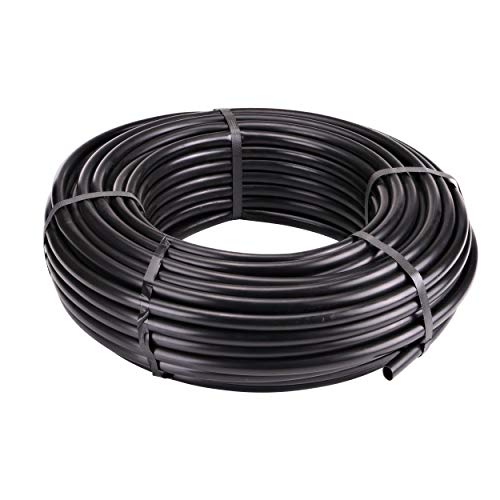
Raindrip 1/2-inch drip irrigation tubing
Best for higher-flow mains: 1/2" polyethylene tubing suited to deliver consistent flow to multiple branch lines
1/2 inch polyethylene tubing for drip irrigation, usable as main supply or feeder line with emitters along the tubing. Attaches to water source for main line use; suitable for trees, shrubs, and flower beds
- dual-use tubing for main or feeder line
- compatible with emitters along tube
- black polyethylene material
-
6

Flat soaker hose 50 ft with stakes for garden
Best compact soaker kit: 50 ft flat soaker hose with stakes for simple placement in small gardens or containers
Soaker hose with dual-layer, plant-friendly watering for even coverage. Easy setup with end-to-end connectable design and rust-resistant caps; customers note easy installation and mixed water distribution
- end-to-end connectable for DIY irrigation
- double-layer fabric with sun protection
- environmentally-friendly recycled vinyl
-
7

Bonviee 400ft 1/4in drip irrigation tubing
Best long 1/4" run alternative: 400 ft of 1/4" drip tubing with regular dripper intervals for large layouts
Drip irrigation tubing with built-in drippers for even water distribution. Easy to install and suitable for garden use. Customers note good quality and value, with mixed views on flexibility and durability
- even water distribution
- long-lasting PVC
- easy setup
-
8

Flat Soaker Hose 75 ft with Stake for Garden
Best stake-ready soaker: 75 ft flat soaker hose that pairs well with stakes for secure, low-water-use watering
Soaker hose with dual-layer, PVC fabric over recycled vinyl for even watering along its length. Includes end caps for linkable connections and compatibility with timers; designed for water-efficient irrigation. Customer insight notes good performance when bent and solid in terms of setup, with varied durability reports
- water-efficient irrigation
- durable end caps for connections
- environmentally-friendly materials
-
9

75 ft flat sprinkler hose for lawn watering
Best budget sprinkler-style option: 75 ft flat sprinkler/soaker hose for wider lawn watering and simple hookup
Versatile garden hose that can function as a sprinkler or soaker hose with lightweight, no-kink design. Customers note easy deployment and reliable water flow, with some concerns about hole openings
- heavy duty lightweight design
- dual-use sprinkler/soaker functionality
- easy storage and deployment
-
10

Flat soaker hose for garden irrigation 100 ft (linkable)
Best linkable long soaker: 100 ft flat soaker hose that connects to extend coverage across longer garden runs
Flat soaker hose with dual-layer, recycled vinyl cover for consistent watering along garden rows. Easy end-to-end connection and year-round use; customers note ease of use and thorough soil soaking, but durability concerns persist
- dual-layer leak-free design
- linkable end-to-end with end caps
- water-efficient drip irrigation