Best Fireplace Remotes & Thermostats for Gas Fireplace Control (2026)
We ranked units by gas-valve compatibility (millivolt vs electronic), control features (on/off vs thermostat vs Wi‑Fi), user ratings, and overall value across price tiers
The Verdict
- Best Overall: Durablow gas fireplace remote kit for millivolt valve — Battery-powered 2-button remote and receiver kit to control gas fireplaces, pits, and stoves.
This roundup covers modern remotes and thermostats designed to control gas fireplaces, focusing on wireless, millivolt, and smart-home compatible options for reliable on/off and temperature control. Selections were chosen for compatibility with common gas-valve systems, control features (wireless range, Wi‑Fi/smart integration), user feedback ratings, and value across price tiers
Top Picks
-
1

Best Overall Durablow gas fireplace remote kit for millivolt valve
Battery-powered 2-button remote and receiver kit to control gas fireplaces, pits, and stoves. Provides On/Off control with RF range up to 20 ft and simple installation. Customers note easy setup and value, with mixed reviews on remote reliability
- 2-button wireless control
- works with millivolt valve or ignition module
- 20-foot RF range
-
2

Durablow Dual WiFi Smart Fireplace Remote (SH3002D-RH)
Smart fireplace remote controller with dual WiFi for millivolt valves. Control via free app, programmable thermostat, and remote handset. One customer notes easy installation and solid temperature control
- dual WiFi connectivity
- no hub required
- programmable thermostat and scheduling
-
3

Durablow TS1001 remote kit for gas valves
2-button RF remote control kit for servo motor gas valves, enabling OFF to HIGH flame control. Receiver with LEARN function. Consumers report easy installation and useful temperature control, with mixed remote reliability
- remote control of flame range
- receiver with LEARN function
- 2-button transmitter and receiver kit
-
4
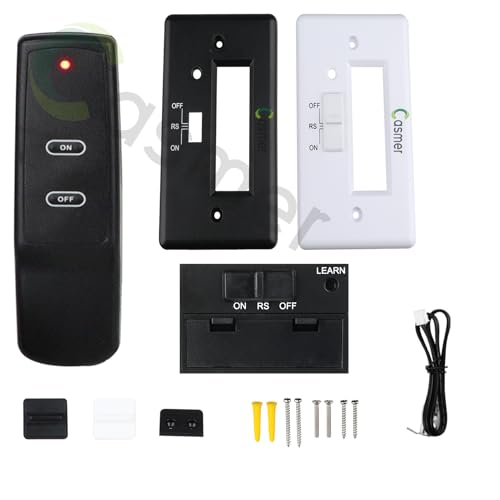
Casmer Fireplace Remote for Millivolt Valves
Casmer remote control for standard millivolt gas valves. Enables on/off from anywhere with enhanced control circuitry. Customers note easy installation and reliable performance
- enhanced control circuitry
- universal compatibility for millivolt valves
- easy installation