Best Aquarium Heaters for Freshwater Aquariums (2026)
We selected heaters based on fit for freshwater tank volumes, temperature control accuracy, durability/safety features, and overall value
The Verdict
- Best Overall: Fluval M 100-Watt Submersible Heater — Best submersible pick: compact unit for small to medium freshwater tanks with consistent in-tank heating
- Best Value: Inkbird aquarium heater controller with probe and thermometer — Best controller option: external probe and dual outlets let you monitor and regulate temperature precisely
This roundup identifies reliable aquarium heaters suited to freshwater tanks and explains why each unit earned a place on the list based on fit and value. Picks prioritize temperature accuracy, power sizing for tank volume, and durable controls so hobbyists can match a heater to their setup with confidence
Top Picks
-
1

Best Overall Fluval M 100-Watt Submersible Heater
Best submersible pick: compact unit for small to medium freshwater tanks with consistent in-tank heating
Submersible heater for freshwater and saltwater tanks with mirror finish for enhanced aesthetics. Delivers even heating with a compact design; some customers note durability concerns and temperature control variance
- even heating across tank
- mirror finish aesthetics
- compact, submersible design
-
2

Best Value Inkbird aquarium heater controller with probe and thermometer
Best controller option: external probe and dual outlets let you monitor and regulate temperature precisely
Inkbird dual heating controller for freshwater and saltwater tanks with a probe, suction tray, and day/night temp control. Users praise ease of setup and value, while some report mixed temperature accuracy
- dual heating outlets
- probe-based temperature control
- day/night automatic temperature controller
-
3
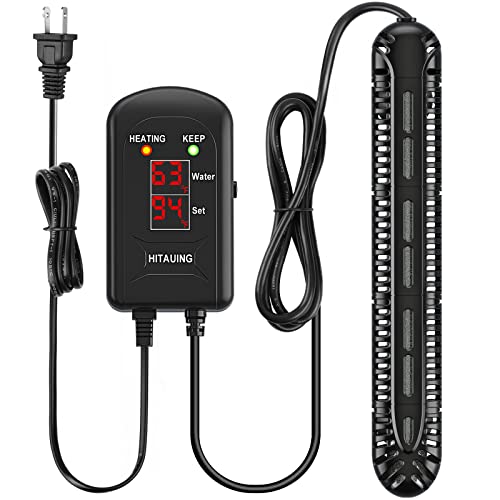
HiTauing 300W Aquarium Heater with LED Display
Best for larger setups: 300W output and LED display provide higher power and clear temperature readout
Submersible 300W heater for 40-75 gallon tanks with digital display and dual-suction setup. Quick heat up and stable temperature with 5 safety protections; easy setup and clear readout. Customers note reliable temperature control and value, though some report limited durability
- LED digital display
- 5 safety protections
- suitable 40-75 gallon tanks