Best Dog Pinch Collars for Behavior Correction (2026)
We selected collars based on fit adjustability, link thickness and count, release/safety features, construction material, and overall value for training use
The Verdict
- Best Overall: Herm Sprenger Chrome Plated Training Prong Collar with Quick Release — Best for quick removal: quick-release design with durable chrome plating for straightforward fit adjustments
- Best Value: Herm Sprenger prong dog training collar, 3.2mm x 23in — Best for adjustability: removable links and a narrower 3.2mm link size allow precise sizing for varied necks
This roundup evaluates pinch (prong) collars specifically for behavior correction, focusing on fit, link adjustability, build quality, and user safety. Picks were chosen from well-known manufacturers and compared by link size, release mechanism, material, and value for typical training scenarios
Top Picks
-
1

Best Overall Herm Sprenger Chrome Plated Training Prong Collar with Quick Release
Best for quick removal: quick-release design with durable chrome plating for straightforward fit adjustments
Chrome plated training prong collar for dogs with quick release snap. Adjustable links for a snug fit and controlled training. One customer notes ease of use and effective training
- adjustable link system
- quick release buckle
- effective training aid
-
2

Best Value Herm Sprenger prong dog training collar, 3.2mm x 23in
Best for adjustability: removable links and a narrower 3.2mm link size allow precise sizing for varied necks
Chrome-plated steel prong collar for dog training with adjustable links and center plate for even pressure. Helps control pulling and train behavior; easy to put on and take off, though some report difficulty unclamping
- center plate for even pressure
- interlocking, adjustable links
- German-made quality
-
3

Herm Sprenger Chrome Plated Training Prong Collar, 21-22 in
Best for simple sizing: compact link configuration that adapts to medium neck sizes with a quick-release option
Chrome plated steel training prong collar for dogs with quick release snap. Designed for safety and strength, suited for dogs up to ~18 inches neck size. Customers note effective training and ease of use, with some reports of breakage and quick-release issues
- quick release snap
- chrome plated steel
- neatly sized 21-22 inches
-
4

Herm SPRENGER Ultra-Plus Prong Dog Training Collar, 4 mm x 21–25"
Best for heavy-duty dogs: thicker 4mm links and wider size range designed for stronger handlers and larger breeds
Prong training collar with solid fastener plate for secure connection. Adjustable size by adding or removing links; country of origin Germany. Customer insight highlights effectiveness for training and control with dogs, including German Shepherds
- adjustable link system
- secure connection plate
- steel chrome-plated durability
-
5
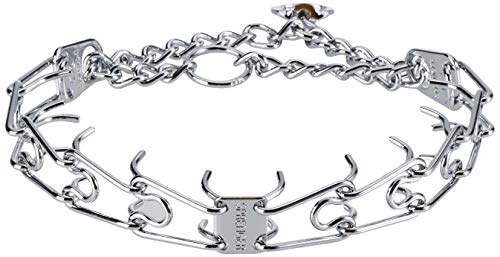
Herm Sprenger Dog Training Pinch Collar Chrome Plated Steel
construction: chrome-plated steel build with standard pinch design that balances durability and cost
Training collar with center plate and assembly chain, chrome plated steel, 22-inch overall length and 18-inch neck fit; includes swivel for leash flexibility. Customers note effectiveness and quality, with mixed ease of use and sizing
- center plate and assembly chain
- swivel for flexibility
- sturdy chrome plated steel