Best Boat Wire Terminals for Boat Wiring (2026)
We evaluated products for marine-grade materials, amperage capacity, connector variety, user ratings, and overall value for typical boat-wiring scenarios
The Verdict
- Best Overall: Blue Sea MaxiBus 4-stud BusBar (2127) 250A — 4-stud MaxiBus busbar for high-current boat wiring.
- Best Premium: Blue Sea MaxiBus BusBar with 6 studs, 250A — 6-stud MaxiBus bus bar with high-conductivity copper and heat-resistant base.
This roundup covers boat wire terminals and related connection hardware for marine electrical systems, focusing on fit, corrosion resistance, and value. Picks were chosen by evaluating connector types, stud counts, material quality, and user ratings from reputable marine electrical brands and kit suppliers
Top Picks
-
1

Best Overall Blue Sea MaxiBus 4-stud BusBar (2127) 250A
4-stud MaxiBus busbar for high-current boat wiring. Continuous 250A rating with up to 300V AC/48V DC. Ceramic-phenolic base, tin-plated copper for conductivity and resistance
- 250A continuous rating
- 4 studs for multiple connections
- tin-plated copper for corrosion resistance
-
2

Best Premium Blue Sea MaxiBus BusBar with 6 studs, 250A
6-stud MaxiBus bus bar with high-conductivity copper and heat-resistant base. Provides solid grounding and ease of installation in tight spaces for boat wiring and solar setups
- 6 studs for multiple connections
- high current capability (250A)
- corrosion-resistant copper with heat-rated base
-
3
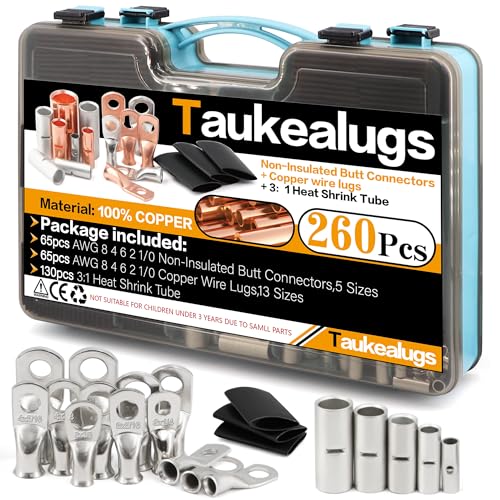
130Pcs Battery Ring Terminals & Heat Shrink Kit
Assorted copper battery ring terminals and crimp connectors with heat shrink tubing for secure marine wiring. Includes various gauge lugs and butt connectors with corrosion-resistant copper and adhesive-lined heat shrink. Customer note highlights quality copper and value, with mixed feedback on heat shrink tubing
- comprehensive terminal assortment
- tin-plated copper lugs and connectors
- two-side kit with organized box
-
4

532Pcs Solder Seal Wire Connectors & Heat Shrink Kit
Solder seal wire connector kit with heat shrink tubing and a 350W heat gun for quick sealing of wires. Includes 400pcs solder connectors, 132pcs heat shrink tubing, and a portable tool kit with instructions
- complete 532pc kit
- solder-seal connectors + heat shrink
- portable heat gun included