Best Circular Saw Blades for Ripping Hardwoods (2026)
We evaluated blades by diameter/arbor compatibility, kerf thickness, carbide type, tooth count and geometry, manufacturer reputation, customer ratings, and relative value
The Verdict
- Best Overall: Freud 8" x 22T Thin Kerf Rip Blade — Freud 8" thin kerf rip blade with 5/8" arbor for clean hardwood rips.
Top Picks
-
1
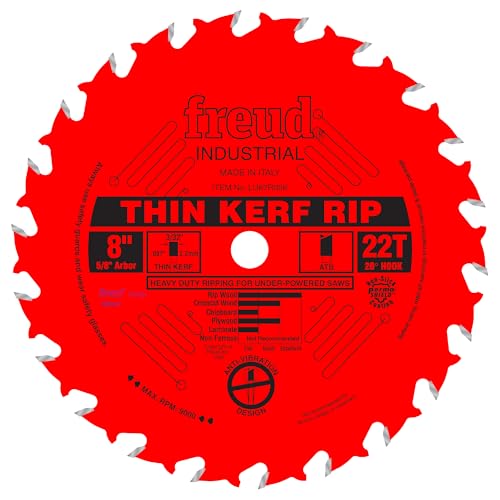
Best Overall Freud 8" x 22T Thin Kerf Rip Blade
Freud 8" thin kerf rip blade with 5/8" arbor for clean hardwood rips. Customers note smooth cuts, no tear out, and good value for money
- ATB grind for clean cuts
- thin kerf for less waste
- low burn and smooth finish
-
2

Freud Thin Kerf Rip Saw Blade with TiCo Carbide, 10" 24T
Thin kerf rip blade for low-power saws delivering smoother cuts with high-density TiCo carbide. Noted for burn resistance and clean finish on hard woods
- thin kerf for efficiency
- premium TiCo carbide blend
- burn resistance
-
3

Freud 10" Heavy-Duty Rip Saw Blade with TiCo Carbide 24T, 5/8" Arbor
durable ripping blade for hardwoods and softwoods with flat-top carbide teeth for glue-line accuracy. customers note sharp, long-lasting edge and flat bottom groove
- premium TiCo carbide blend
- flat-top teeth for precision
- designed for smooth fast ripping