Best Copper Sheets (2026 Guide)
We selected products by combining high user ratings and review volume with clear specification data (gauge/mm, dimensions, format) and intended use suitability
The Verdict
- Best Overall: 3Pcs Pure Copper Sheet, 20 Gauge, 6x12 in — Best for durable fabrication: 20-gauge pure copper sheets provide rigid, holdable panels for forming and decorative work
- Best Value: uxcell Copper Flashing Sheet Roll 3500mm x 200mm x 0.08mm — Best budget flashing option: thin copper flashing roll suited for roofing and trim where wide-length material is needed
This guide highlights top-rated copper sheets and foil rolls chosen for tools, craft, and industrial use, emphasizing material thickness, dimensions, and customer feedback. Picks were selected by aggregated rating and review volume plus key specs like gauge, dimensions, and intended use
Top Picks
-
1

Best Overall 3Pcs Pure Copper Sheet, 20 Gauge, 6x12 in
Best for durable fabrication: 20-gauge pure copper sheets provide rigid, holdable panels for forming and decorative work
Three 6x12 inch copper sheets, 20 gauge (0.81 mm), 99.9%+ pure copper with dual-sided film. Suitable for crafting, jewelry, and DIY repairs
- 3 sheets per package
- 0.81 mm thickness
- 99.9%+ pure copper
-
2

Copper foil sheet roll 6in x 25ft 0.08mm
Best for continuous runs: 6in x 25ft 0.08mm copper foil roll offers long, flexible coverage ideal for shielding and wrapping
Copper sheet roll made of 99.9% copper with a smooth, burr-free surface and luster. Flexible for bending, stretching, hammering, and rolling into various forms. Customer insight indicates value in shaping versatility
- 99.9% copper quality
- 0.08mm thickness
- 6in x 25ft roll
-
3
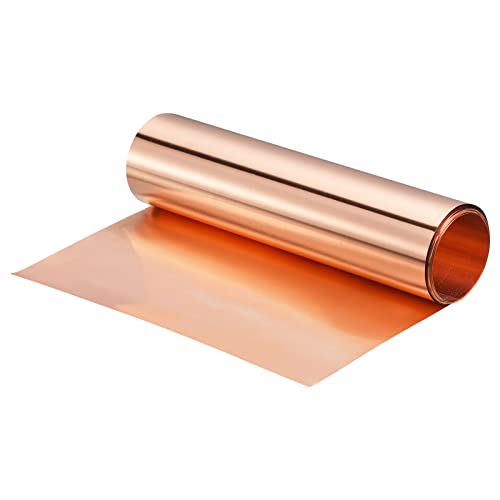
Best Value uxcell Copper Flashing Sheet Roll 3500mm x 200mm x 0.08mm
Best budget flashing option: thin copper flashing roll suited for roofing and trim where wide-length material is needed
Copper flashing sheet roll for DIY electrical and craft uses. Good copper quality and functionality noted by customers, with mixed feedback on thickness and durability
- high-purity copper
- quality copper appearance
- useful for DIY electricity projects
-
4
Copper foil sheet roll, 6in x 25ft, 0.05mm (YuJingKey)
Best for ultra-thin applications: 6in x 25ft 0.05mm foil roll gives very thin, flexible copper for fine electronics or craft shielding
Copper sheet roll made of 99.9% copper with a smooth, burr-free surface. Flexible foil that can be bent, stretched, hammered, and rolled into various forms. Customer feedback indicates interest in its versatility
- high-purity copper surface
- flexible for shaping
- ready-to-use sheet roll
-
5

Therwen 4 Pcs 12 x 12 in copper sheets, 24 gauge, 0.5mm
Best for craft projects: 12 x 12-inch 24-gauge copper sheets balance workability and thickness for hobby and decorative uses
Copper sheets set of 4, 12 x 12 in, 0.5mm thick for crafts and repairs. Useful for jewelry, washers, and small metal projects; customers note good quality and versatility
- multi-piece copper sheet set
- 12 x 12 inch plates
- 0.5mm thickness