Best Miter Saw Blades Under $200 (2026)
We ranked blades by value score using construction (carbide and tooth geometry), intended cut quality, fit compatibility, and price under $200
The Verdict
- Best Overall: CMT 8-1/2 in Miter Saw Blade 60T ITK grind 5/8 bore — Best thin-kerf option: ITK grind 60T profile for clean crosscuts with reduced splintering on trim
- Best Value: 12in miter saw blades 2-pack dw-3128/dw-3123 32T&80T tungsten carbide — two-pack: tungsten-carbide 32T and 80T combo gives a fast rip option and a finer finishing blade for flex use
Top Picks
-
1

Best Overall CMT 8-1/2 in Miter Saw Blade 60T ITK grind 5/8 bore
Best thin-kerf option: ITK grind 60T profile for clean crosscuts with reduced splintering on trim
Fine finish miter saw blade for crosscuts. Glass-smooth cuts on soft/hardwood and laminates. Customers note sharp, smooth cuts and durable performance
- 0.087 in kerf
- 60 teeth for smooth finish
- ITK grind for precise cuts
-
2

ITK Comp Miter 10" Saw Blade 60T/5/8 bore
Best 10" mid-range option: 60T thin-kerf geometry balances smooth finish and low motor load for general woodworking
ITK COMP miter saw blade, 10" with 60 teeth and 5/8" bore for fine crosscuts. Glass-smooth finish on miter cuts with thin kerf for minimal waste. Noted for durable, clean cuts through hardwoods among user feedback
- 10" blade, 60 teeth
- 0.102" kerf
- 5/8" bore
-
3
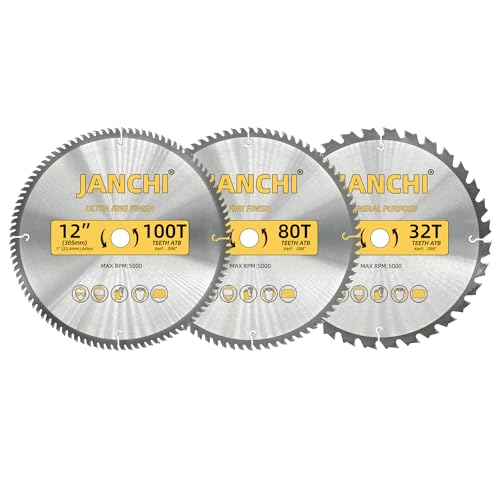
3-Pack 12-Inch Miter Saw Blades with 32/80/100 Teeth
Best versatile pack: three blade tooth counts (32/80/100) cover rough cuts to ultra-fine finishing needs in one set
Three 12-inch miter saw blades with 32, 80, and 100 teeth for general, fine, and ultra-fine finishes. customers note clean cuts and good value, with one report of smooth edge and paint retention
- three blades in one package
- 12-inch blades for common miter saw use
- varying tooth counts for progression from rough to fine finish
-
4

Best Value 12in miter saw blades 2-pack dw-3128/dw-3123 32T&80T tungsten carbide
two-pack: tungsten-carbide 32T and 80T combo gives a fast rip option and a finer finishing blade for flex use
12-inch miter saw blades, 2-pack with 32T/80T carbide teeth. Designed for smooth cuts and extended life. Some users note good cut quality and value, while others report wobbling and fit issues
- two-tooth variety for versatility
- tungsten carbide durability
- designed for smooth finishes
-
5

12 inch miter saw blade 80T fine finish with 1 in arbor
Best fine-finish 12" option: 80T carbide teeth and 1" arbor aimed at smooth, tear-out-free trim and plywood cuts
12 inch miter saw blade with 80T carbide teeth for fine finish cuts. Suitable for most 12 inch miter saws; sharp, durable, and stable. Some users note good quality and value, while others report wobble and fit issues
- 80T carbide teeth
- 12 in diameter
- 1 inch arbor compatibility