Best Miter Saw Blades (2026 Guide)
We selected blades based on reported user ratings, review volume, blade size and tooth configurations (32T–100T), grind type, and perceived value for common miter saw uses
The Verdict
- Best Overall: CMT 8-1/2 in Miter Saw Blade 60T ITK grind 5/8 bore — Best for fine finish: thin-kerf 8.5-inch blade with 60 teeth and ITK grind for cleaner miter cuts
- Best Value: 12in miter saw blades 2-pack dw-3128/dw-3123 32T&80T tungsten carbide — Best for carbide durability: two-pack 12-inch tungsten carbide blades that cover ripping and finishing needs
This roundup identifies top-rated miter saw blades chosen for their cutting geometry, tooth count variety, and user review volume to help pros and hobbyists pick the right blade. Selections prioritize blade size, tooth configuration, grind type, and consistent performance across common miter saw applications
Top Picks
-
1

Best Overall CMT 8-1/2 in Miter Saw Blade 60T ITK grind 5/8 bore
Best for fine finish: thin-kerf 8.5-inch blade with 60 teeth and ITK grind for cleaner miter cuts
Fine finish miter saw blade for crosscuts. Glass-smooth cuts on soft/hardwood and laminates. Customers note sharp, smooth cuts and durable performance
- 0.087 in kerf
- 60 teeth for smooth finish
- ITK grind for precise cuts
-
2

ITK Comp Miter 10" Saw Blade 60T/5/8 bore
Best for 10-inch saws: 60-tooth ITK grind thin-kerf design for smooth crosscuts and reduced tearout
ITK COMP miter saw blade, 10" with 60 teeth and 5/8" bore for fine crosscuts. Glass-smooth finish on miter cuts with thin kerf for minimal waste. Noted for durable, clean cuts through hardwoods among user feedback
- 10" blade, 60 teeth
- 0.102" kerf
- 5/8" bore
-
3
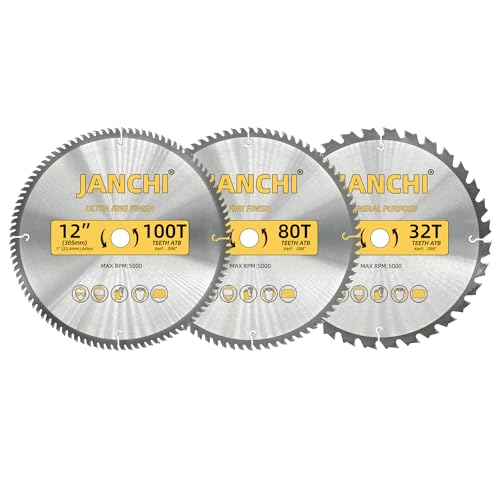
3-Pack 12-Inch Miter Saw Blades with 32/80/100 Teeth
pack: three 12-inch blades offering versatile 32/80/100 tooth options for rough to ultra-fine cuts
Three 12-inch miter saw blades with 32, 80, and 100 teeth for general, fine, and ultra-fine finishes. customers note clean cuts and good value, with one report of smooth edge and paint retention
- three blades in one package
- 12-inch blades for common miter saw use
- varying tooth counts for progression from rough to fine finish
-
4

Best Value 12in miter saw blades 2-pack dw-3128/dw-3123 32T&80T tungsten carbide
Best for carbide durability: two-pack 12-inch tungsten carbide blades that cover ripping and finishing needs
12-inch miter saw blades, 2-pack with 32T/80T carbide teeth. Designed for smooth cuts and extended life. Some users note good cut quality and value, while others report wobbling and fit issues
- two-tooth variety for versatility
- tungsten carbide durability
- designed for smooth finishes
-
5

12 inch miter saw blade 80T fine finish with 1 in arbor
Best fine finish 12-inch: 80-tooth configuration aimed at producing smooth, paint-ready crosscuts
12 inch miter saw blade with 80T carbide teeth for fine finish cuts. Suitable for most 12 inch miter saws; sharp, durable, and stable. Some users note good quality and value, while others report wobble and fit issues
- 80T carbide teeth
- 12 in diameter
- 1 inch arbor compatibility