Best Power Belt Sanders Under $50 (2026)
We selected items under $50 and ranked them by a composite value score based on motor specs, feature set (dust collection, speed control, accessories), versatility tags, and perceived build suitability for woodworking or metalwork
The Verdict
- Best Overall: WEN 6321 3 in. x 21 in. Belt Sander — Good for general handheld sanding: a 3×21 belt design with a mid-range motor and dust-bag for shop tasks
This roundup covers power belt sanders priced under $50, focused on compact corded, pneumatic, and attachment-style models suited for woodworking, metalwork, and sharpening. Selections are ranked by a value score that weights motor power, features (variable speed, dust collection, included belts), and user-relevant tags
Top Picks
-
1
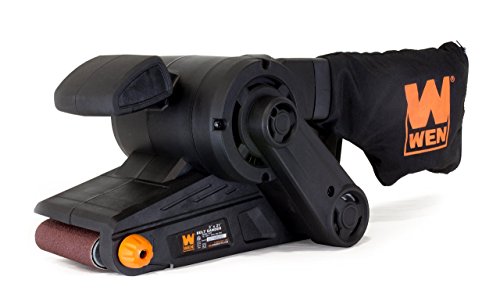
Best Overall WEN 6321 3 in. x 21 in. Belt Sander
Good for general handheld sanding: a 3×21 belt design with a mid-range motor and dust-bag for shop tasks
Compact 7-amp belt sander with detachable dust bag for easier cleanup and a lock-in trigger for continuous sanding. Customers note easy belt changes and lightweight design, though dust collection is mixed
- 7-amp motor with fast belt speed
- lightweight for reduced user fatigue
- lock-in safety feature
-
2

Skil 6 Amp 3x18 Belt Sander with Pressure Control
Best for controlled stock removal: pressure control and a 3×18 belt make it suited to woodworking detail work
6 A belt sander with pressure control tech and auto belt tracking for centered sanding. Noted for ease of use and power, with mixed feedback on dust collection and durability
- pressure control technology
- auto track belt alignment
- vacuum compatible
-
3

Mini belt sander for woodworking and metalworking
Well suited for small projects: compact mini layout designed for woodworking and light metalworking tasks
Compact belt sander with adjustable speed for sharpening and polishing. Suitable for small projects and tight spaces, praised for power and versatility in woodworking and metal work
- adjustable speed control
- all-in-one sharpening and polishing
- compact for tight spaces
-
4

Mini Electric Belt Sander Knife Sharpener
Handy for sharpening and bench use: mini belt configuration optimized for knife sharpening and small parts
Compact belt sander for small grinding and sharpening tasks. Notable for build quality and value for money, with easy operation for knife making and light polishing
- includes multiple grit belts
- dustproof cover
- adjustable speed with compact form
-
5

WEN 7.5-Amp Belt Sander HB321V
Versatile handheld option: variable-speed control and a more powerful motor for adjustable sanding across materials
Compact 7.5-amp belt sander with variable speed (620–1200 fpm) and easy belt changes. Users note solid functionality and power with manageable adjustment
- variable speed 620–1200 fpm
- lock-on switch
- quick-release belt tension
-
6
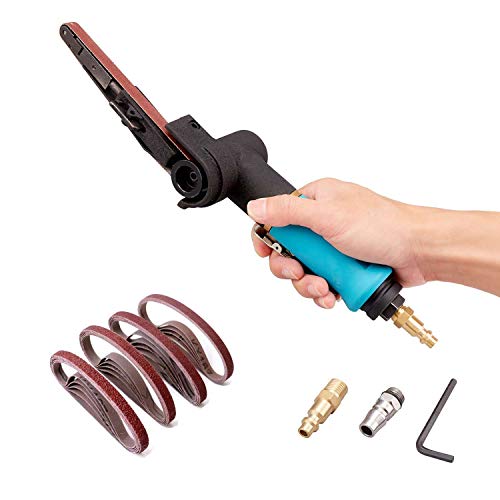
Pneumatic Air Belt Sander with 12 Belts (3/8in x 13in) and 1/4in Inlet
Ideal for metal polishing in an air-tool setup: pneumatic drive and included belts target metal finishing work
Pneumatic air belt sander for metal polishing with included belts. Offers metal-friendly grinding and rust-resistant stainless steel build, supporting aluminum, iron, and steel. A customer notes good value for money but mixed performance and durability concerns
- includes multiple belts
- stainless steel, rust-resistant
- 3/8in belt grinder for metals
-
7

Belt Sander Adapter for Angle Grinder 15mm Belts
Great if you already own an angle grinder: adapter converts a grinder into a narrow-belt sander for rust and detail work
This belt sander adapter converts an angle grinder into a detailing sander for 15mm belts. Features a triangle guide design for tube and pipe sanding and a precision pulley to reduce belt sway. Includes 60 and 120 grit belts and is suitable for rust removal and woodworking
- detailing belt sander conversion
- tube/pipe sanding capability
- belt-stability with guide pulleys