Best Sanding Pads Under $50 (2026)
We ranked products by a value score combining material type, grit applicability, pack size, and usefulness across common sanding and polishing workflows under $50
The Verdict
- Best Overall: Electroplated Diamond Hand Polishing Pads 60 Grit (3pcs) BSRTTOOL — Best for concrete polishing: electroplated diamond pads built for aggressive 60-grit hand polishing on hard surfaces
- Best Value: 3M Scotch-Brite General Purpose Hand Pad 6x9 — Best general-purpose hand pad: flexible 6x9 format suited to everyday scuffing and surface prep tasks
Top Picks
-
1

Best Overall Electroplated Diamond Hand Polishing Pads 60 Grit (3pcs) BSRTTOOL
Best for concrete polishing: electroplated diamond pads built for aggressive 60-grit hand polishing on hard surfaces
Electroplated diamond polishing pads for dry or wet use on concrete, granite, marble, and glass. Includes 3 pieces of 60 grit; designed for fast material removal and edge cleaning. Customers note durability and sharpness in edge work
- electroplated diamond pad
- 3-piece set
- 60 grit hand polishing
-
2

Best Value 3M Scotch-Brite General Purpose Hand Pad 6x9
Best general-purpose hand pad: flexible 6x9 format suited to everyday scuffing and surface prep tasks
Universal surface conditioning hand pad designed for various applications. Used by hand, with a hand block, or inline sanders; ideal for starting abrasive tasks like cleaning, graining, denibbing, and defuzzing. Customers note its durability and dependable performance
- universal surface conditioning
- hand-held or tool-compatible
- effective for starting abrasive tasks
-
3
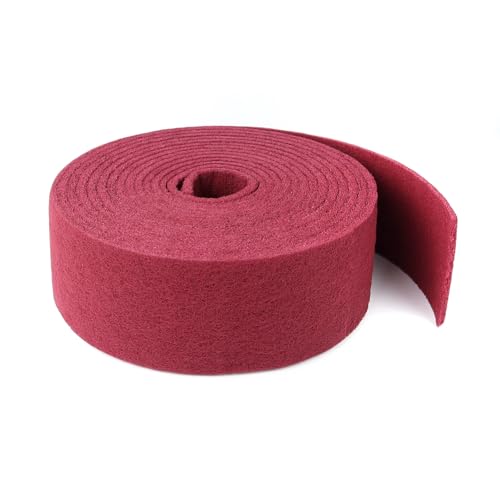
Maroon General Purpose Scuff Pads, 5in x 30ft
Best continuous roll option: 5in x 30ft maroon non-woven scuff pad ideal for consistent 320-grit surface prep
Premium maroon scuff pads with 320 grit abrasive for fine finishing on flat, contoured, or hard-to-reach surfaces. Reusable non-woven pads resist tearing and can be used dry or wet for consistent scratch patterns and finishes. Customers note good value and versatility, plus ability to cut to size
- 320 grit abrasive for fine finishing
- non-woven, tear-resistant
- versatile dry/wet use
-
4

3M Scotch-Brite General Purpose Hand Pad, Very Fine, 6x9 in, 30 pack
Best finishing hand-pad pack: very-fine 6x9 pads in a multi-pack designed for scuffing and light finishing
Very fine aluminum oxide hand pad for cleaning, finishing, and surface prep. Improves blending and scuffing with minimal material removal. Customer notes show value in versatile use
- aluminum oxide abrasive
- very fine grade
- large pack