Best Syringe Lab Filters (2026 Guide)
We selected products with the highest combined ratings and review volumes across PTFE and PES membranes, common pore sizes (0.22 and 0.45 µm), and standard disc diameters (25 mm and 33 mm)
The Verdict
- Best Overall: Syringe Filter PTFE 25mm 0.45µm 100/pack — Best for solvent-based filtration: PTFE membrane in a compact 25 mm format for hydrophobic samples
- Best Value: Syringe filter PTFE 25mm 0.22µm, PP housing, 100/pack — Best for routine small-volume sterile filtering: 25 mm PTFE 0.22 µm with PP housing for solvent compatibility
- Best Premium: SimPure PTFE syringe filter 25mm 0.22um hydrophobic membrane (500 pcs) — Best for high-volume PTFE use: large 500-piece 25 mm PTFE 0.22 µm pack for labs with heavy solvent filtration demand
This roundup covers top-rated syringe lab filters used for sample clarification and sterile filtration across PTFE and PES membranes, multiple diameters, and common pore sizes. Selections were based on aggregate product ratings and review volume to highlight frequently recommended options for laboratory use
Top Picks
-
1
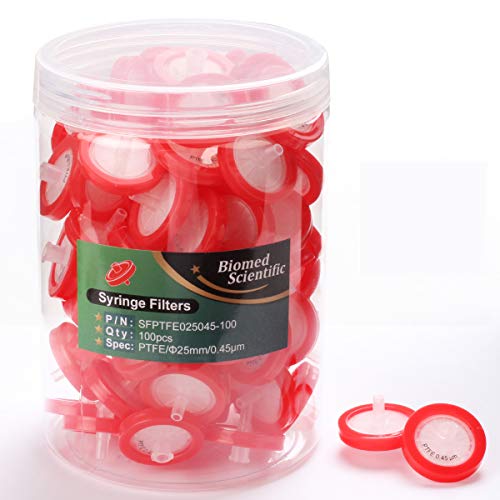
Best Overall Syringe Filter PTFE 25mm 0.45µm 100/pack
Best for solvent-based filtration: PTFE membrane in a compact 25 mm format for hydrophobic samples
PTFE membrane syringe filter with PP housing; 25mm diameter and 0.45µm pore size. Provides broad chemical compatibility and reproducible units. Customers note easy visual inspection and durable build
- PTFE membrane with wide chemical stability
- 25 mm diameter, 0.45 µm pore size
- 100 per pack with PP housing
-
2
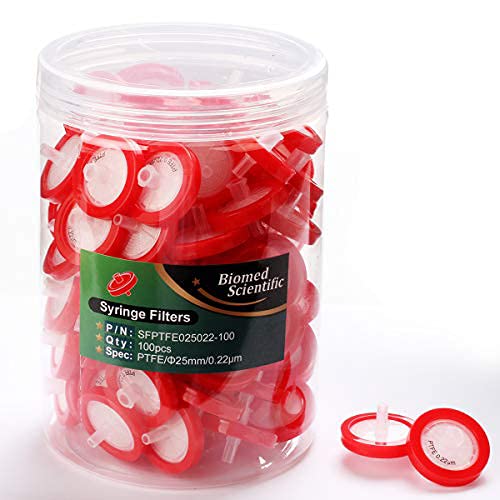
Best Value Syringe filter PTFE 25mm 0.22µm, PP housing, 100/pack
Best for routine small-volume sterile filtering: 25 mm PTFE 0.22 µm with PP housing for solvent compatibility
PTFE membrane syringe filter with PP housing, 25mm diameter and 0.22µm pore size. Provides broad chemical compatibility and reproducible results; suitable for visual inspection of filtered material per user feedback
- ptfe membrane with pp housing
- 0.22µm pore size
- 100 per pack
-
3
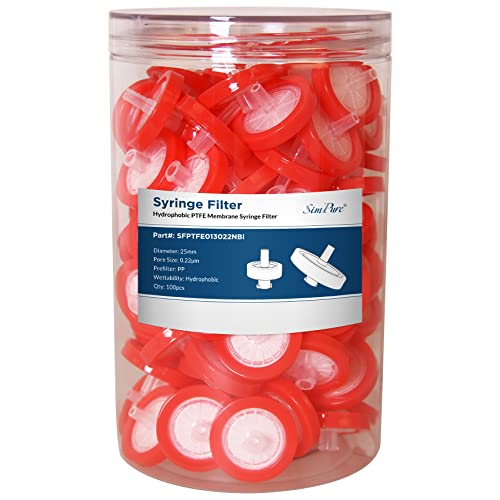
SimPure PTFE syringe filter, 25mm, 0.22um, 200 pcs
for PTFE bulk users: 25 mm 0.22 µm pack sized for higher consumption workflows
PTFE hydrophobic syringe filter with 25mm disc and 0.22µm pores. Suitable for HPLC/GC needle filtration and broad chemical compatibility. Customers note effective impurity removal and good value, with mixed views on filtration capacity and sterility
- PTFE hydrophobic membrane
- uniform 25mm disc, 0.22µm
- broad chemical compatibility
-
4

Syringe filter PES 33mm 0.22µm sterile, hydrophilic, 50 pack
Best for aqueous sterile work: 33 mm hydrophilic PES 0.22 µm for higher flow and low protein adsorption
PES membrane syringe filters, sterile and hydrophilic, 33 mm, 0.22 µm pore size. Designed for reliable sterile filtration with high throughput. Customer note indicates solid performance in filtration processes
- 33 mm diameter filter
- 0.22 µm pore size
- individually packed
-
5

Sterile PES Syringe Filters 0.22µm 33mm, Pack of 50
Best for low-protein adsorption needs: sterile 33 mm PES 0.22 µm filters designed for biological samples
Hydrophilic PES membrane syringe filters enable high flow and low protein adsorption for precise filtration of particles and microorganisms. Suitable for HPLC, microbiology, and sample prep
- hydrophilic PES membrane
- 0.22µm pore size
- 33mm membrane diameter
-
6
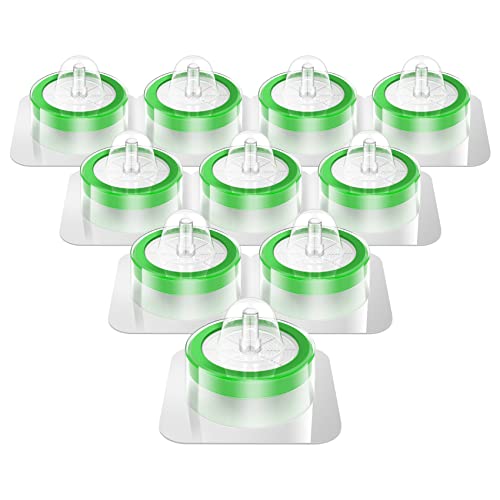
SimPure sterile syringe filters PES 0.22 um, 33 mm, 100-pack
Best for larger sterile stock: 33 mm PES 0.22 µm in a 100-pack for frequent sterile filtration tasks
Sterile PES syringe filters with 33 mm membrane diameter and 0.22 μm pore size. Suitable for small-volume sample sterilization with high throughput. Customer note: effective at filtering impurities and quality/value for money
- sterile syringe filters
- 33 mm membrane diameter
- 0.22 μm pore size
-
7
Best Premium SimPure PTFE syringe filter 25mm 0.22um hydrophobic membrane (500 pcs)
Best for high-volume PTFE use: large 500-piece 25 mm PTFE 0.22 µm pack for labs with heavy solvent filtration demand
PTFE hydrophobic syringe filter with 25mm disc and 0.22µm pore size for lab filtration. High chemical compatibility and stable performance; designed for high-throughput use. customer insight: mixed/positive sentiment around functionality
- PTFE hydrophobic membrane
- uniform 25mm disc
- 0.22µm pore size