Automotive Replacement Belt Tensioners
Replacement belt tensioners for automotive accessory belts, including hydraulic and mechanical tensioner assemblies and pulleys for many makes and models. Catalog of 23 indexed products with average rating 4.30 and price range $33–$104, covering budget through mid-range options. Brands include A-Premium among others
Top Products

ACDelco Gold Drive Belt Tensioner Assembly with Pulley
ACDelco
Budget
ACDelco Drive Belt Tensioner Assembly with Pulley
ACDelco
Budget
A-Premium Belt Tensioner Assembly with Pulley
A-Premium
Budget
A-Premium Belt Tensioner Assembly with Pulley for multiple Dodge/Jeep/Mitsubishi/Ram 1500 models
A-Premium
Budget
Drive Belt Tensioner Pulley Assembly for Acura/Honda
X AUTOHAUX
Budget
Belt Tensioner Assembly with Pulley for Jeep 4.0L
A-Premium
Mid-Range
BDFHYK Belt Tensioner Assembly for 4.3L/5.0L/5.7L GM vehicles
BDFHYK
Budget
AISIN OE Hydraulic Timing Belt Tensioner for multiple sedans and SUVs
AISIN
Mid-Range
Belt Tensioner Assembly with Pulley for Honda/Acura
A-Premium
Budget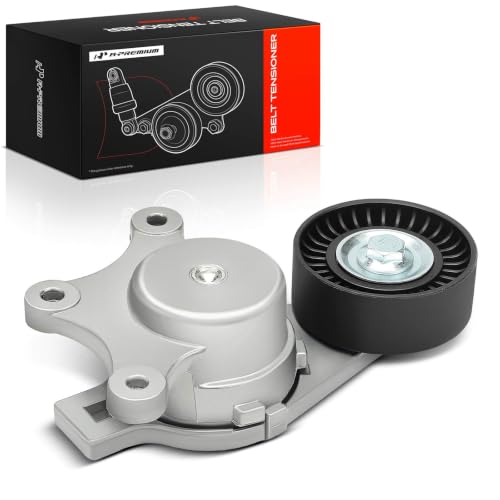
A-Premium Belt Tensioner Assembly with Pulley for Ford/Mazda
A-Premium
Budget
Belt Tensioner w/Pulley Assembly for Toyota & GM 1.8L
doiplent
Budget
Belt Tensioner Assembly with Pulley for Honda/Acura 3.5L
ISINSWIFT
Budget
PHILTOP Belt Tensioner Assembly for BMW 3 Series & X Models
PHILTOP
Budget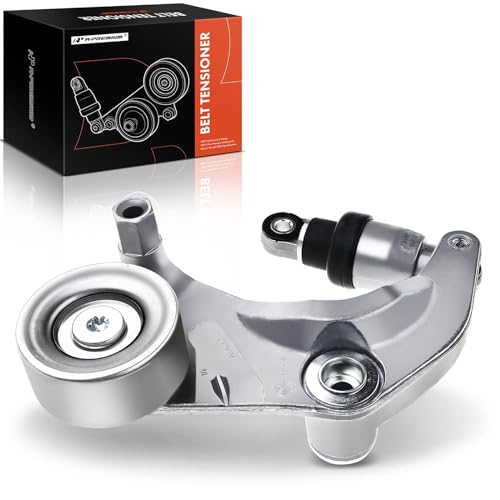
Belt Tensioner Assembly with Pulley for Honda Civic 2006 1.8L
A-Premium
Budget
Doiplent Belt Tensioner Assembly for multiple Honda/Acura models
doiplent
Budget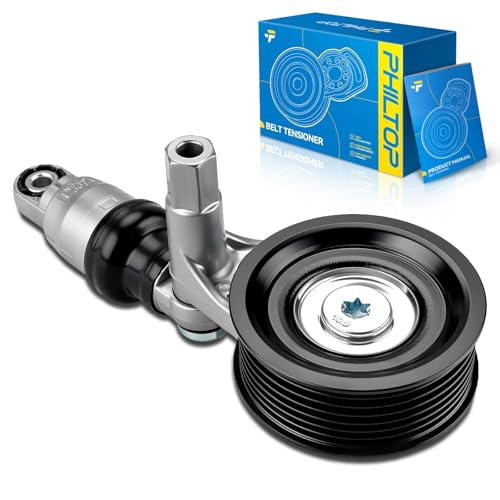
PHILTOP Belt Tensioner Pulley for Honda/Acura
PHILTOP
Budget
Doiplent Belt Tensioner with Pulley Assembly for Honda/Acura
doiplent
Budget
Belt Tensioner and Pulley Assembly for Ford/Mazda/Mercury 05-12
ISINSWIFT
Budget
Belt Tensioner Assembly with Pulley for Toyota/Lexus (2005-2018) - A-Premium
A-Premium
Mid-Range
Gates DriveAlign Automatic Belt Drive Tensioner
Gates
Mid-Range
Belt Tensioner Assembly with Pulley for Honda Civic (2007-2011) 1.8L
A-Premium
Mid-Range
Doiplent Belt Tensioner w/Pulley Assembly for Honda Odyssey/Pilot/Accord Crosstour
doiplent
Mid-Range
Belt Tensioner Assembly with Pulley for Nissan/-Rogue 2.5L
ISINSWIFT
BudgetRoundups
Frequently Asked Questions
What does a belt tensioner do and how do I know if it needs replacing?
A belt tensioner maintains proper tension on the accessory drive (serpentine) belt to prevent slipping and ensure accessories run smoothly. Replace it if you hear squealing, notice belt glazing or fraying, observe excessive belt movement, or detect bearing noise or play when the engine is off
How do I choose the correct replacement tensioner for my vehicle?
Select a tensioner by matching your vehicle's make, model, engine code, and year; verify pulley count, mounting bolt pattern, and belt routing; and confirm the replacement lists compatible vehicle applications or OEM part numbers
Are aftermarket tensioners reliable compared with OEM parts?
Many aftermarket tensioners meet or exceed functional requirements, but quality varies across brands; check specifications (bearing type, spring design, material), user ratings, and warranty length, and prefer parts that reference OEM part numbers or industry standards
Can I install a belt tensioner myself and what tools are required?
DIY installation is possible for mechanically proficient owners; common tools include a socket set, breaker bar or specialized tensioner tool to relieve belt tension, and torque wrench to the specified bolt torque. Follow a repair manual or manufacturer instructions and observe safety precautions
Should I replace the belt when I replace the tensioner?
Yes; replacing the drive belt with the tensioner is recommended because a worn belt can accelerate wear on a new tensioner and may hide underlying issues. Inspect belt condition and replace if cracked, glazed, stretched, or aged
What are typical failure modes and expected lifespan of a tensioner?
Common failures include worn bearings, weakened spring tension, and pulley misalignment; lifespan varies by vehicle and driving conditions but typically ranges from 50,000 to 100,000 miles. Regular inspections during belt service help catch early problems
How important is pulley alignment and what causes misalignment?
Pulley alignment is critical to prevent belt wear and noise; misalignment can be caused by incorrect installation, warped pulleys, bent brackets, or incompatible aftermarket parts. Verify pulleys are coplanar and the tensioner pivots freely during installation