Automotive Replacement Suspension Ball Joints
Replacement suspension ball joints for cars and light trucks, including MOOG and TRQ among indexed brands, covering control-arm and upper/lower joint types. 133 products are indexed, with average rating 4.27 and price range roughly $32–$200, offering budget through mid-range options
Top Products
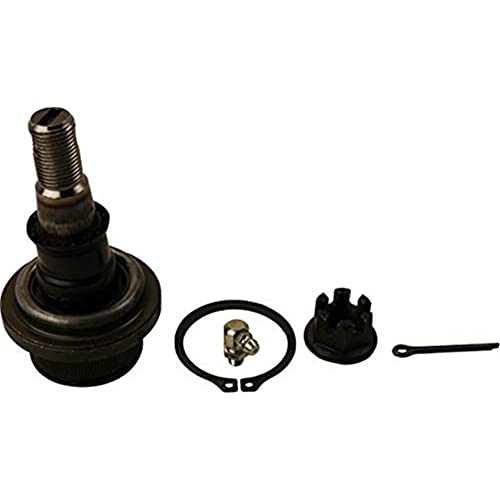
MOOG Front Lower Suspension Ball Joint for Silverado 1500
MOOG
Budget
MOOG K6292 Front Upper Suspension Ball Joint for Chevy K1500
MOOG
Mid-Range
Detroit Axle Front Lower Ball Joint for 02-06 Escalade, 02-06 Avalanche, 00-06 Suburban, 03-05 Express, 03-05 Savana
Detroit Axle
Budget
Front Upper Ball Joint Set for Ford Explorer/Mountaineer/Aviator (2002-2005)
TRQ
Budget
Front lower ball joint set for 1992-1996 Honda Prelude
TRQ
Budget
Driver & passenger side upper ball joint set for multiple Honda/Acura/Isuzu models
TRQ
Budget
Front lower ball joint kit for Volvo 700/900 series
TRQ
Budget
Ball Joint & Bracket & Puller Removal Kit 2-Set for Polaris ATV/UTV
JAVIK
Budget
MOOG K6696 Front Upper Suspension Ball Joint for Silverado 2500 HD
MOOG
Budget
Front Upper Control Arm Ball Joint for Silverado/Sierra 1999-2006
Youxmoto
Budget
Front lower ball joint set for 83-05 chrysler / 84-05 dodge / 84-01 plymouth
TRQ
Budget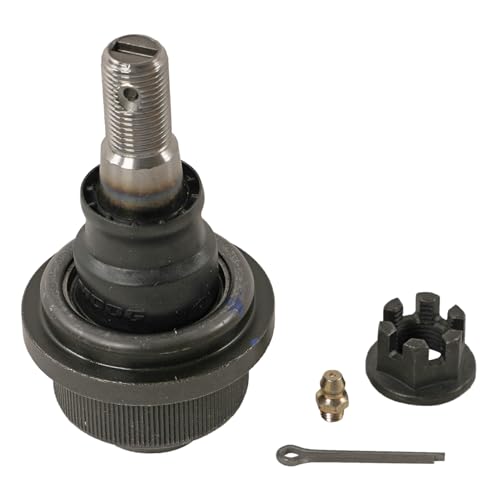
MOOG K6693 Front Lower Ball Joint for Silverado 2500 HD
MOOG
Mid-Range
TRQ Front Lower Ball Joint Set for Dodge Dakota/Durango
TRQ
Mid-Range
TRQ Front Upper Ball Joint Set for Toyota 4Runner Sequoia Tacoma Tundra
TRQ
Mid-Range
TRQ Front Lower Ball Joint Set for 2005-2010 Mustang
TRQ
Mid-Range
TRQ Front Upper Ball Joint Set for Honda/Isuzu
TRQ
Mid-Range
Metrix Premium Chassis Parts 2 pc Front Upper Ball Joint Kit
METRIX PREMIUM CHASSIS PARTS
Budget
MOOG Front Lower Suspension Ball Joint for Ford F-150
MOOG
Mid-Range
TRQ Front Lower Ball Joint Set for Lexus GX470 / Toyota 4Runner / FJ Cruiser
TRQ
Mid-Range
Front upper ball joint set for Land Rover Range Rover (2003-2012)
TRQ
Mid-Range
TRQ Front Lower Ball Joint Set for Dodge Sprinter 2002-2006
TRQ
Mid-Range
Front lower ball joint set for Hyundai Sonata, XG300/350, Amanti, Optima
TRQ
Mid-Range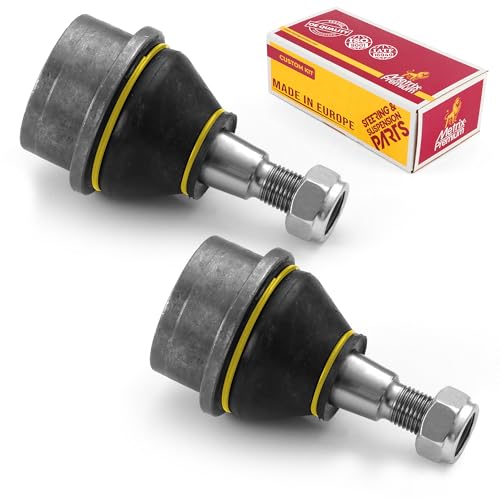
Metrix premium front lower ball joint kit for multiple Dodge/Jeep models
METRIX PREMIUM CHASSIS PARTS
Budget
Front lower ball joint set for Kia Sportage 1995-2002
TRQ
Mid-RangeRoundups
- Best Automotive Replacement Suspension Ball Joints for Front Suspension Repair (2026)
- Best Automotive Replacement Suspension Ball Joints Under $200 (2026)
- Best Automotive Replacement Suspension Ball Joints Under $100 (2026)
- Best Automotive Replacement Suspension Ball Joints Under $50 (2026)
- Best Automotive Replacement Suspension Ball Joints (2026 Guide)
Frequently Asked Questions
How do I know which replacement ball joint fits my vehicle?
Match the ball joint to your vehicle by year, make, model, and submodel (engine and suspension type), confirm whether you need an upper or lower joint and check OEM or aftermarket part numbers and mounting style (press-in, bolt-on, or threaded stud) against your vehicle’s original component
What are the main differences between budget and premium ball joints?
Differences include materials and manufacturing tolerances: budget options often use basic steel and simpler seals, while premium units use higher-grade alloys, better dust boots/seals, improved bearings, and tighter tolerances that can increase durability and steering stability
Are ball joints sold individually or in sets, and which should I buy?
Ball joints are sold both individually and in pairs/sets; buy the specific joint that corresponds to the worn component (upper or lower) or consider replacing both sides on the same axle for balanced wear and consistent handling
What symptoms indicate my ball joints need replacement?
Common signs include clunking or knocking noises over bumps, uneven or accelerated tire wear, looseness or play in the steering, and vibration; a torn boot or visible excessive movement when prying the wheel can also indicate failure
Can I install replacement ball joints myself, and what tools are required?
DIY installation is possible but may require a ball-joint press or removal tools, torque wrench, jack stands, and possibly a pickle fork or press adapters; follow a vehicle-specific service manual and ensure proper torque and alignment after installation
How long do replacement ball joints typically last and what affects their lifespan?
Lifespan varies widely but commonly ranges from 50,000 to 150,000 miles; factors influencing life include driving conditions, load and towing, quality of the part, maintenance (intact dust boot/grease), and exposure to road salt or contaminants
Do replacement ball joints require greasing or special maintenance?
Some ball joints are sealed and maintenance-free, while others have grease fittings and require periodic greasing per manufacturer recommendations; always check the part specification and keep the dust boot intact to prevent contamination