Powersports Shocks
This category covers replacement and upgrade motorcycle and off-road shocks and struts for powersports vehicles, including coilovers and hydraulic dampers. Average ratings are about 4.23 across 10 products, with prices generally $55–$100 and brands such as GZYF represented
Top Products

Gabriel 70064 Ultra Front Shock Absorber
Gabriel
Mid-Range
GZYF rear shock absorber for multiple brands, 320mm
GZYF
Mid-Range
GZYF Motorcycle Rear Air Shock Absorbers (320mm)
GZYF
Mid-Range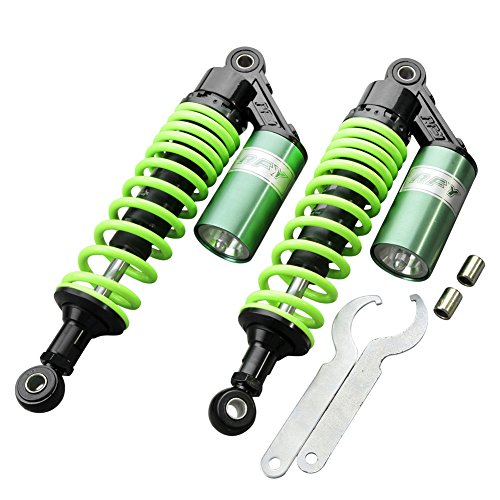
GZYF 320mm Rear Air Shock Absorber for Motorcycles
GZYF
Mid-Range
GZYF 320mm Rear Shock Absorber for multiple brands
GZYF
Mid-Range
Newsmarts 12.5in Adjustable Motorbike Air Shock Absorber (Pair) for Various Brands
Newsmarts
Mid-Range
Newsmarts 13.5" Rear Nitrogen Shock Absorber for 340mm eye-to-eye
Newsmarts
Mid-Range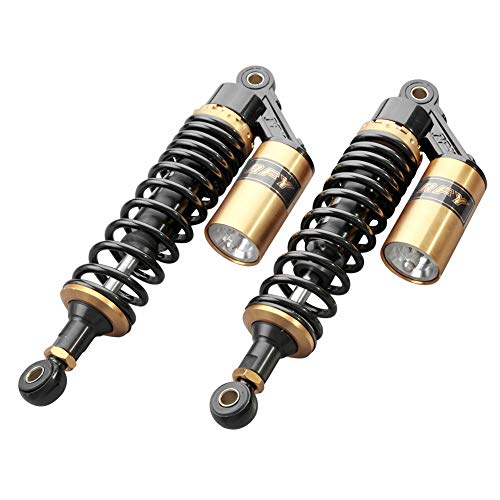
Newsmarts 2pc 12.5" motorcycle air shocks rear nitrogen suspension
Newsmarts
Mid-Range
Newsmarts adjustable 15.75" motorcycle air shocks (2-pack) for multiple brands
Newsmarts
Mid-Range
GZYF 400mm Motorcycle Shocks Air Absorbers
GZYF
Mid-RangeRoundups
Frequently Asked Questions
How do I choose the right shocks for my vehicle?
Match shocks to your vehicle make, model, year, and intended use (street, towing, off-road). Check whether your vehicle requires twin-tube or monotube designs, and verify correct mounting style and length; consult the vehicle’s service manual or fitment guides
What are the main differences between shock types and which is better for everyday driving?
Monotube shocks generally offer better heat dissipation and consistent damping for performance use, while twin-tube shocks provide a softer ride and are often more affordable; for everyday driving, twin-tube or touring-style shocks typically balance comfort and control
How much should I expect to spend on replacement powersports shocks?
Powersports shocks in auto and garage categories commonly range from budget options under $50 to higher-performance units over $150, with an average around $75 to $80 for many aftermarket choices
What features matter most when comparing shock models?
Look at damping adjustability (if you need tunability), construction material and seals for durability, gas-charged versus hydraulic design, mounting hardware compatibility, and manufacturer warranty or stated service life
Can I install shocks myself, and what basic tools or steps are required?
Many shoppers can replace shocks with basic tools: jack stands, a jack, ratchet and socket set, penetrating oil, and torque wrench. Follow vehicle-specific procedures: safely lift and support the vehicle, remove wheel and old shock, compress or align as needed, install new shock with correct torque, and check for leaks or unusual noises
How can I maintain shocks to extend their service life?
Keep mounting points clean and free of corrosion, inspect seals and bushings periodically for leaks or wear, avoid overloading the vehicle, and replace shocks in axle pairs to maintain balanced handling
When should I replace my shocks—what are common signs of failure?
Replace shocks if you notice excessive bouncing after bumps, nose-diving during braking, uneven tire wear, fluid leaks at the shock body, or a marked decline in ride stability and handling