Powersports Sprockets
This category covers motorcycle and powersports sprockets—replacement front and rear sprockets, gear sets, and related mounting hardware—available across budget to mid-range price points (avg $50). Ten products are indexed with an average rating of 4.52; notable brands include JMCHstore
Top Products

JMCHstore 60T Rear Sprocket for Mini Bikes (6-hole 420/40/41)
JMCHstore
Budget
JMCHstore 50T Rear Chain Sprocket 6-Hole for 40/41/420 Chain
JMCHstore
Budget
JMCHstore 60T 3+4 hole Sprocket for 420 chain
JMCHstore
Mid-Range
YOXUFA 48T Sprocket Hub for Go Kart 1" Bore 420 Chain
YOXUFA
Budget
JMCHstore 40T Rear Sprocket for 420 chain (6-hole) 40T/41T
JMCHstore
Budget
60T Sprocket 420 Chain Kit for Mini Bike (90 links rear, 42 links front) 40mm bore
CILOYU
Mid-Range
Universal 35 Chain 53T Split Sprocket with Adapter for Predator 212cc Go Kart
VCUJSUC
Budget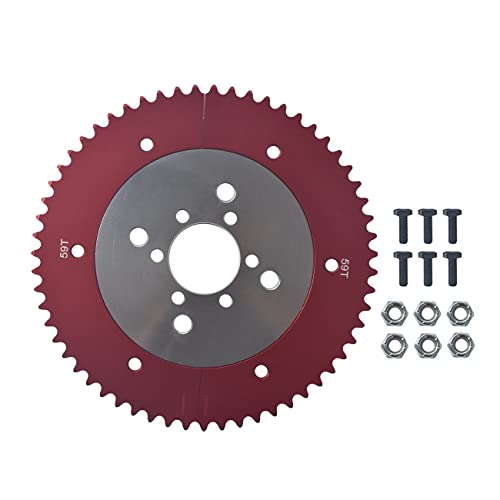
Universal 35 Chain 59T Split Sprocket with Adapter for Predator 212cc Go Kart
VCUJSUC
Budget
53T universal mini bike sprocket adapter (silver)
VCUJSUC
Budget
16" Rear Wheel Tire Assembly with Brake Rotor and 428 Sprocket
RedCap
Mid-RangeRoundups
Frequently Asked Questions
How do I choose the correct sprocket size for my powersports vehicle?
Match the sprocket tooth count and mounting pattern to your vehicle make/model and chain pitch (commonly 520, 525, 530 for ATVs and UTVs). Check your owner's manual or measure the existing sprocket's tooth count and bolt pattern to ensure compatibility
Should I change front or rear sprockets to alter acceleration or top speed?
Changing to a smaller front sprocket or larger rear sprocket increases acceleration but lowers top speed, while a larger front or smaller rear sprocket favors higher top speed at the expense of low-end acceleration. Make changes in small steps and consider chain length and gearing balance
What materials and coatings should I look for in a durable sprocket?
Common durable options include hardened steel or chromoly for strength and wear resistance; aluminum sprockets are lighter but wear faster unless they have a steel tooth ring. Look for heat-treated finishes or corrosion-resistant coatings like black oxide or zinc for longer life in wet conditions
How often should I replace my sprockets and how can I tell they’re worn?
Inspect sprockets each time you check the chain; replace when teeth appear hooked, asymmetrical, or excessively thin. Many users replace sprockets when installing a new chain to ensure even wear — typical replacement intervals depend on riding conditions but worn teeth and poor chain engagement are the key indicators
Can I reuse my existing chain with a new sprocket?
Reusing a chain with new sprockets is not recommended if the chain shows significant wear or elongation because a worn chain will accelerate sprocket wear and can cause poor engagement; if the chain is nearly new and within wear limits, it can be reused with compatible sprockets
Are replacement sprockets easy to install and what tools are required?
Installation is generally straightforward for someone with basic mechanical skills and requires common tools such as a socket set, torque wrench, breaker bar or impact, and sometimes a chain tool for removal or length adjustment; consult your vehicle's service manual for torque specs and steps
How should I care for sprockets to maximize lifespan?
Keep the chain properly lubricated and tensioned, clean grit and debris from the drivetrain, inspect for damage regularly, and avoid aggressive misalignment; consistent maintenance reduces wear and extends both chain and sprocket life