Powersports Starters
Replacement and upgrade starters for powersports vehicles including ATVs, UTVs, scooters and small motorcycles. Products span budget to mid-range options with prices generally $33–$80 (average about (price varies)) and an average rating of 4.45; brands include OLIFANT among others
Top Products
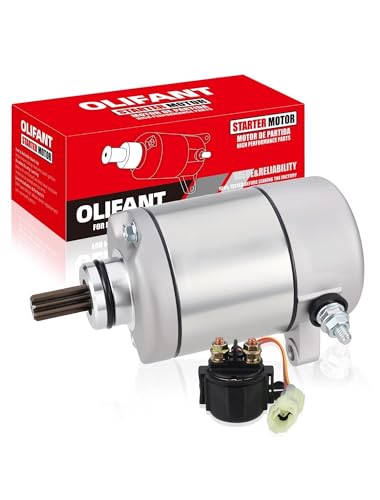
Starter & Relay for Honda Recon 250 ES 2005-2007
OLIFANT
Budget
Starter compatible with Briggs & Stratton engines (7HP-18HP)
Parts Player
Budget
Recoil starter compatible with Champion generators 420cc-500cc
WOTIAN
Budget
Starter compatible with Honda TRX300/TRX250 Four Trax
Parts Player
Budget
Starter compatible with Kawasaki lawn mowers
Parts Player
Budget
NICHE Starter Motor Assembly High Torque for Honda FourTrax Foreman Rancher 420
NICHE
Mid-Range
Starter Motor for Arctic Cat & Suzuki Quad
OLIFANT
Budget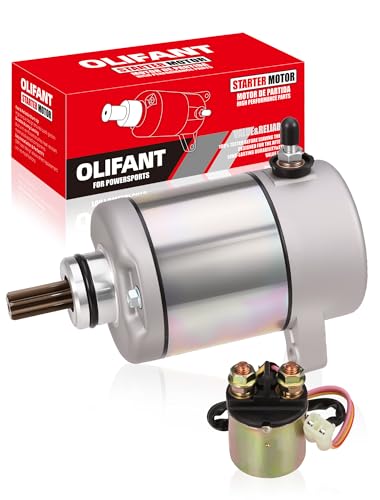
Starter motor for Honda Rancher 350 TRX350 (2000-2006)
OLIFANT
Budget
Starter replacement for Honda Toro GX340 GX390
Parts Player
Budget
Starter for Suzuki Eiger/KingQuad 400 (OLIFANT) 2002-2010
OLIFANT
Budget
Starter Motor for Honda Foreman 500/400/450 2005-2011
OLIFANT
Budget
Starter replacement compatible with Kawasaki, John Deere, Cub Cadet
Parts Player
Mid-Range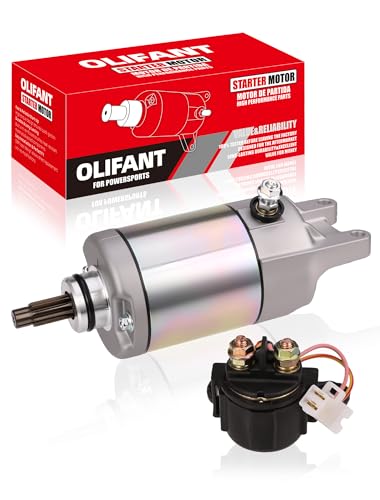
Starter Motor for Honda FourTrax 300 TRX300 ATV
OLIFANT
Budget
Electrical Starter for Polaris Sportsman/Ranger 500 (1995-2014) - OLIFANT
OLIFANT
Budget
Caltric Starter for Kawasaki Mule 610 4x4 KAF400
Caltric
Mid-Range
Starter & Bendix Relay for Polaris Xplorer Trail Boss Scrambler
Soarider
Mid-Range
Starter & Relay Replacement for Honda TRX450ER
Soarider
Budget
Starter & Relay Replacement for Honda TRX500
Soarider
Budget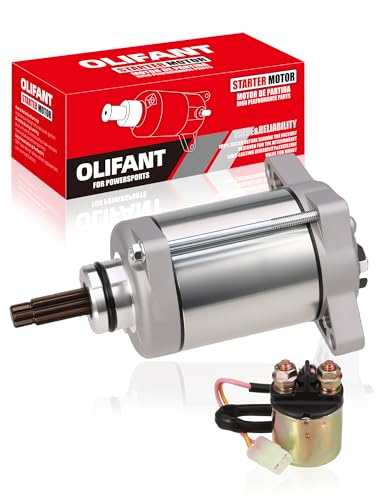
Starter for Honda ATV/UTV 12V OLIFANT
OLIFANT
Mid-Range
Polaris ATV Starter Replacement for multiple models
BDELI
Budget
Starter & Relay Replacement Compatible with Honda Rancher 420, Foreman 500, Pioneer 500
Soarider
Budget
NICHE Starter Motor Assembly High Torque for Yamaha quad bikes
NICHE
Budget
Starter & Relay for Polaris 335-500 (OLIFANT)
OLIFANT
Mid-Range
Starter & Relay for Polaris ATV/UTV models
OLIFANT
Mid-RangeRoundups
Frequently Asked Questions
How do I choose the right starter for my powersports vehicle?
Match the starter to your vehicle make, model, engine displacement, and electrical system (voltage and mounting pattern). Check OEM part numbers or compatibility lists from the manufacturer and confirm connector types and pinouts before purchase
What are the main types of starters and how do they differ?
Common types include gear reduction starters, direct-drive starters, and starter motors with integrated solenoids; gear reduction starters provide higher torque at lower RPM for smaller motors, while direct-drive units are simpler and may be used on larger engines
What should I look for in terms of quality and durability?
Look for starters with sealed housings, durable brush materials, solid bearings or bushings, and reliable solenoids; check customer ratings and warranty length as indicators of quality across brands
How much can I expect to pay for a powersports starter?
Prices vary by type and application, with budget options often under $50 and higher-spec or OEM-equivalent units costing more; averages in a mixed-category catalog are typically in the low tens of dollars to several hundred depending on fitment and features
Can I install a powersports starter myself or should I get professional installation?
If you have basic mechanical skills, the right tools, and follow a model-specific service manual, many starters are user-installable; however, professional installation is recommended if access is tight, electrical diagnosis is needed, or you are unfamiliar with battery safety and torque specs
What maintenance or care extends starter life?
Keep battery terminals clean and charged, ensure ground and power connections are tight and corrosion-free, avoid prolonged starting cycles, and inspect wiring and mounting bolts periodically to prevent premature failure
How do I troubleshoot a starter that won't engage or spins without cranking the engine?
Check battery voltage and load, inspect starter relay/solenoid and wiring for continuity and corrosion, verify starter mounting and starter-to-flywheel engagement, and test the starter bench-wise if accessible to isolate electrical versus mechanical issues