Activity Cubes
Activity cubes for babies and young children combine tactile, sensory, and fine-motor activities in compact wooden or plastic blocks designed for play and developmental learning. The category spans budget to mid-range options (avg price (price varies)) and includes brands such as VEVOR among its 34 indexed products with an average rating of 4.53
Top Products

VTech Sort and Discover Activity Cube – Pink
VTech
Budget
Toyventive Wooden Activity Cube for Toddlers
TOYVENTIVE
Mid-Range
Bravmate 8-in-1 Wooden Activity Cube
ShenZhen MaxLink Century Technology Co.,Ltd
Budget
Learning Cube - Educational Music Activity Center for Babies
Best Learning Materials Corp.
Budget
Wooden 6-in-1 Activity Cube with Bead Maze for Baby
Play22
Budget
HELLOWOOD 8-in-1 Wooden Activity Cube
HELLOWOOD
Mid-Range
Space Rocket Activity Cube Toy for Baby, 4-in-1 Montessori Busy Toy
WDMIYA
Budget
Color Cube 80mm with Stand in Cyan Magenta Yellow
iKeelo
Mid-Range
Qilay Wooden Activity Cube for Toddlers (Large) 5 in 1
Qilay
Mid-Range
Qilay 5-in-1 Wooden Activity Cube for Toddlers
Qilay
Mid-Range
Jenaai 1000-Piece Linking Counting Cubes
Jenaai
Mid-Range
Wooden Activity Cube 7-in-1 Montessori Toy
FOPNETS
Mid-Range
Jenaai 500 Pcs Math Linking Cube with Storage Container
Jenaai
Budget
Jenaai 1000 Pieces Linking Counting Cubes, Colorful Plastic Math Blocks
Jenaai
Mid-Range
Wooden 7-in-1 Activity Cube for Toddlers
Duchong
Mid-Range
Wooden 9-in-1 Activity Cube for Toddlers
FOPNETS
Mid-Range
Wooden Activity Cube for toddlers (12-36 mo)
Vomocent
Mid-Range
VEVOR Orca Activity Busy Board Wall
VEVOR
Mid-Range
Dinosaur activity busy board wall panel for kids
VEVOR
Mid-Range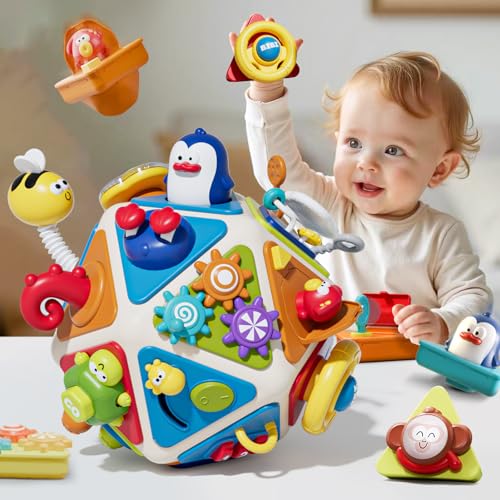
20-in-1 Toddler Busy Board Cube Toys
Vanvimen Toys
Mid-Range
Caterpillar Activity Wall Busy Board – 12 Interactive Games for Kids
VEVOR
Mid-Range
Wooden 7-in-1 Activity Cube for 12-18 Months (Pink)
Duchong
Mid-Range
Busy Board 6-in-1 Montessori Sensory Toy for Toddlers
GUANGDONG HENGGUAN TECHNOLOGY INDUSTRIAL CO.,LTD
Budget
VEVOR Dog Activity Busy Board Panel, 12 Wall Activities Board
VEVOR
Mid-RangeRoundups
Frequently Asked Questions
How do I choose the right activity cube for my child's age and developmental stage?
Look for age recommendations on the product, choose simpler shapes and large, easy-to-grasp elements for infants (6–12 months), and select more complex puzzles, bead mazes, and fine-motor activities for toddlers (12–36 months). Ensure activities match skills you want to develop, such as sensory exploration for younger babies and problem-solving or hand-eye coordination for older toddlers
What safety features should I check before buying an activity cube?
Verify that the cube is made from non-toxic, BPA-free materials or finished with child-safe paint, has no small detachable parts for under-3s, smooth edges, secure fastenings, and meets relevant regional safety standards (e.g., ASTM, EN71). Also confirm stability for standing play and that any moving parts won't pinch fingers
How much should I expect to spend on an activity cube and what affects the price?
Activity cubes typically range from budget options under $50 to higher-end models above $100, with the average price for many assortments around $60–$80. Price is influenced by materials (solid wood vs. plastic), number and complexity of activities, brand reputation, and included certifications or educational design
What materials are best for durability and easy cleaning?
Solid or engineered wood with a sealed, non-toxic finish and high-quality plastics are most durable; wood offers sturdiness while plastic can be easier to wipe. For cleaning, choose surfaces that tolerate mild soap and water, avoid submerging pieces with decals or fabric, and check manufacturer care instructions for spot cleaning or disinfecting
Are activity cubes good for multiple children or longer-term use?
Cubes with a variety of activities and adjustable difficulty or multi-sided play tend to engage children longer and work well for siblings; look for robust construction and replaceable parts if you expect heavy or shared use. For cooperative play, choose larger models that allow two children to interact without crowding
Do activity cubes support specific developmental skills?
Yes—most cubes target fine motor skills, hand-eye coordination, problem-solving, sensory exploration, and early counting or shape recognition depending on included activities like bead mazes, sliders, gears, and shape sorters. Selecting cubes with targeted features can support specific learning goals
What should I consider about size and placement in my home?
Measure available floor space and consider cube dimensions and height relative to your child; smaller cubes are portable and fit in play areas while larger, heavier models are better as stationary activity centers. Also consider storage needs, whether you want a tabletop option, and if the cube needs to be secured to prevent tipping