Distribution Connecting Blocks
Distribution connecting blocks for electronics and gadgets, including terminal strips, bus bars, and DIN-mount distribution blocks for power and signal routing. The category lists 19 products averaging 4.66 stars with prices typically $35–$157 (avg $57) and includes brands like jamgoer
Top Products

DAIERTEK 300A Copper Bus Bar 12V 3x3/8 M10 Studs & 10x M5 Screws
DAIERTEK
Budget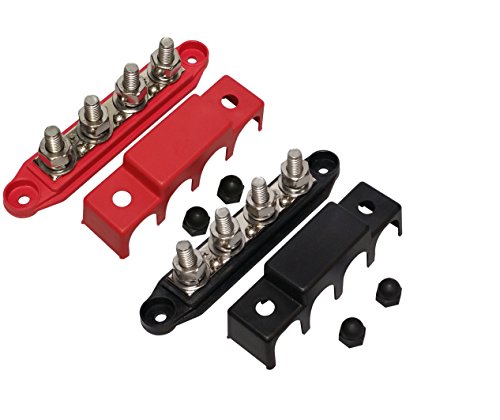
Red & Black 4-Stud Bus Bar Power Distribution Block
JQuad
Budget
DaierTek 300A Bus Bar 12V Power Distribution Block with Cover
DAIERTEK
Mid-Range
Red & Black 5/16" 4 Stud BusBAR Power Distribution Block
JQuad
Mid-Range
Heavy duty bus bar with 8x 3/8" terminals for 12-48V DC
Gloaso
Mid-Range
Litime 300A Bus Bar with 4 M8 Posts, DC 48V
Litime
Budget
BusBar Dual 250A 4-Post Power Distribution Block
Bay Marine Supply
Mid-Range
Heavy Duty 400A 12-48V Modular Bus Bar with 8 M10 Studs
AMOMD
Mid-Range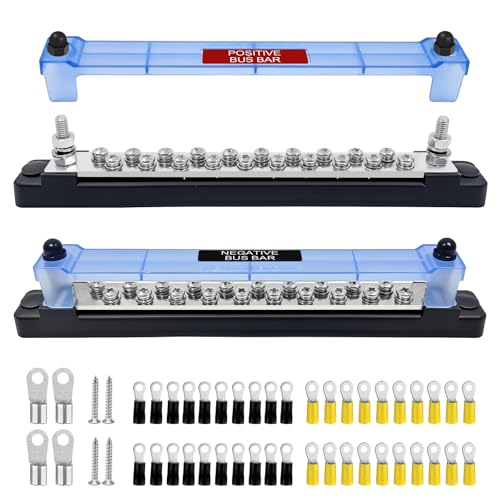
LENKRAD 12V/48V Power Ground Bus Bar 150A, 2 Packs
LENKRAD
Mid-Range
Bus Bar 5 Post 300A with Lugs & Heat Shrink Kit
Taxutor
Mid-Range
300A Battery Distribution Block 12V-48V with 4 x 5/16" M8 terminals
Generic
Mid-Range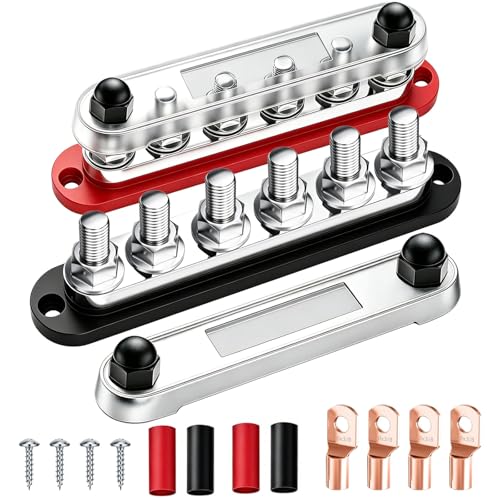
350A 12V-48V Bus Bar Power Distribution Block with Cover
Seamaka
Budget
600A 3x M10 Bus Bar Power Distribution Block
jamgoer
Mid-Range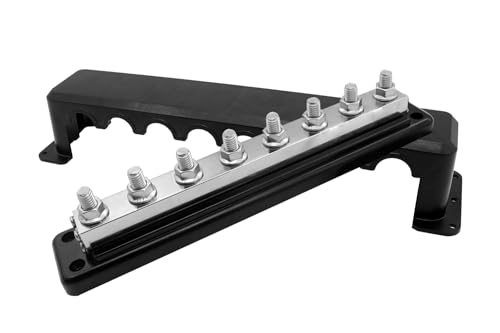
600A bus bar distribution block with 8x M10 studs (48V/AC 300V) black
jamgoer
Mid-Range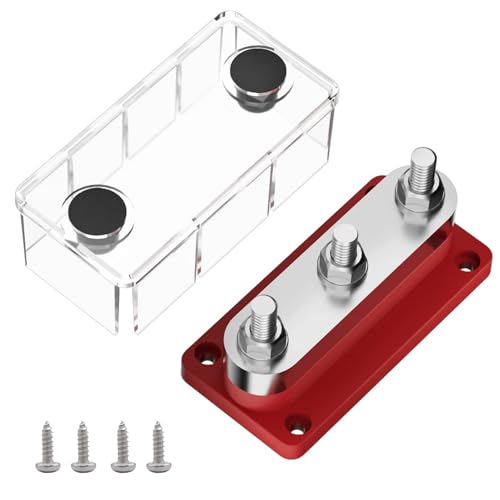
600A Power Distribution Block Bus Bar with Cover
Hptmesx
Mid-Range
1-6 Power Distribution Block Module 40A
FUAUJUE
Mid-Range
400 A Power Distribution Block with Cover
Hptmesx
Mid-Range
2 Pcs 600A Copper Bus Bar with M10 Studs (8-Way) 48V DC
AMOMD
Mid-Range
600A Bus Bar Power Distribution Block (48V DC) with 8 M10 Studs
jamgoer
Mid-RangeRoundups
Frequently Asked Questions
What are distribution connecting blocks and what are common uses in electronics?
Distribution connecting blocks are multi-terminal connectors that organize and route power or signals between multiple wires or modules; they are commonly used for power distribution, grounding, signal splitting, and organizing wiring in control panels, audio systems, home automation, and prototyping
How do I choose the right type and size of connecting block for my project?
Choose based on current and voltage requirements, number of circuits you need to join, wire gauge compatibility, and physical mounting constraints; check the block's rated amperage/voltage, terminal count, and supported AWG range to ensure safe and reliable connections
What electrical ratings and certifications should I look for?
Look for rated maximum current and voltage that exceed your application’s needs, insulation material ratings (temperature and dielectric strength), and relevant safety markings or standards compliance for your region (for example, UL or IEC listings where applicable)
Are there different terminal styles and which is best for my wiring?
Common terminal styles include screw terminals, push-in (spring) terminals, and barrier or feed-through terminals; screw terminals are versatile for repeated changes, push-in terminals are faster for fixed wiring, and barrier blocks provide enhanced isolation between circuits
How should I maintain and install connecting blocks for long-term reliability?
Ensure proper torque on screw terminals, strip wires to correct length without nicking conductors, use correct wire ferrules for stranded wire when recommended, keep terminals clean and dry, and periodically inspect for looseness or corrosion
What are typical price ranges and how do they vary by features?
Prices vary with size, materials, and ratings; basic small blocks can be found under $20, mid-range multi-position or higher-rated blocks commonly fall between $20 and $100, and specialty or industrial-grade units cost more depending on certifications and heavy-duty construction
Can distribution connecting blocks handle both power and low-voltage signal wiring on the same unit?
It's best to avoid mixing high-power and low-voltage signal wiring on the same block unless the design provides adequate isolation; separate blocks or dedicated isolated channels reduce noise and safety risks