Electric Guitar Necks
Replacement and upgrade electric guitar necks and neck assemblies, including maple and rosewood fingerboards and varied scale lengths for bolt-on and set-neck guitars. 15 indexed products average 4.22 stars, with mid-range prices around $47–$110 and brands like RuiJOTWAT represented
Top Products

Matte Yellow Tele-style Electric Guitar Neck with 22 Frets
WEAQEN LAWV
Mid-Range
22-fret Mahogany Rosewood Neck for LP Electric Guitar, 24.72" scale
Ogdni
Mid-Range
MECCANIXITY 22-fret ST guitar neck, 9.5" radius, maple
MECCANIXITY
Mid-Range
22 fret replacement maple neck for Stratocaster (lacquer)
RuiJOTWAT
Mid-Range
22-fret guitar neck with binding inlay for lp-style electric guitar
Ogdni
Mid-Range
Maple guitar neck 22-fret 25.5in bolt-on with rosewood fretboard
Generic
Mid-Range
22-Fret Maple Electric Guitar Neck, Yellowish Matte
Fendirocik
Mid-Range
Strat guitar neck 22 fret 25.5" maple & rosewood fingerboard (ST style) for right hand
Amuic
Mid-Range
Vintage maple guitar neck for TL Tele, 21 frets
RuiJOTWAT
Mid-Range
Electric Guitar Neck 24 Fret 25.5" Maple Fingerboard (Jackson Style) Locking Nut
Ogdni
Mid-Range
22 Fret Electric Guitar Neck with Maple Neck & Rosewood Fingerboard for Strat
RuiJOTWAT
Mid-Range
Strat guitar neck 22 fret, 25.5" maple, right hand
Amuic
Mid-Range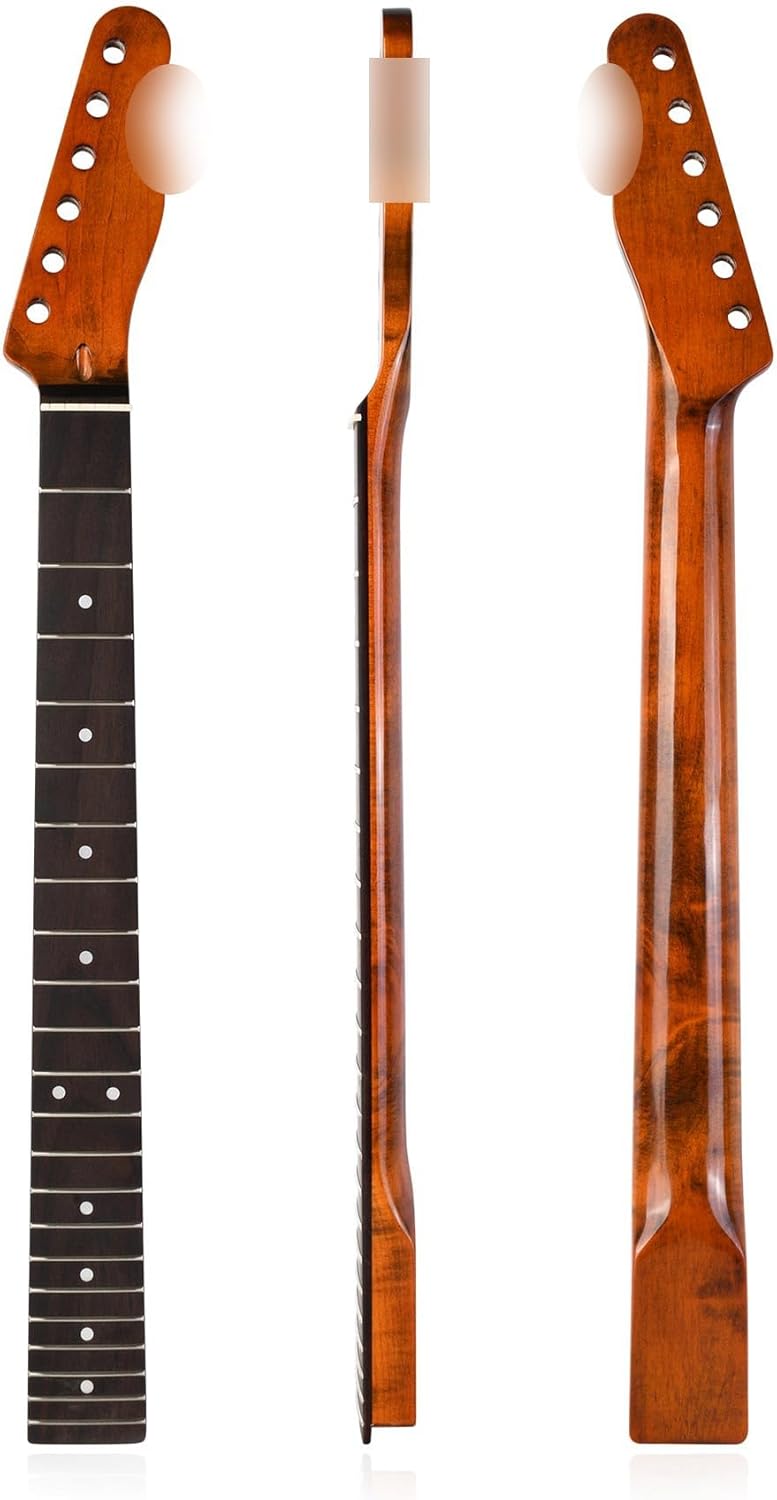
Maple neck for TL Tele with rosewood fingerboard, 22 frets
RuiJOTWAT
Mid-Range
Tele Guitar Neck 22 Frets 25.5'' Maple for TL Style Guitars
Amuic
Mid-Range
Tele Guitar Neck 22 Frets 25.5'' Maple for TL style guitar parts
Amuic
Mid-RangeRoundups
Frequently Asked Questions
How do I choose the right neck profile and scale length for my playing style?
Pick a neck profile (slim, C, V, etc.) that matches your hand size and preferred grip—slimmer profiles suit fast single-note playing, thicker profiles can feel more comfortable for chordal rhythm; scale length (commonly 24.75" or 25.5") affects string tension and tone, with longer scales giving tighter tension and brighter tone while shorter scales feel slinkier and emphasize warmth
What woods and finishes should I look for and how do they affect tone and feel?
Common neck woods like maple, mahogany, and rosewood influence sustain, warmth, and brightness—maple is bright and stable, mahogany warmer and resonant; finishes range from gloss (smoother look, can feel tacky) to satin (matte, faster feel) and unfinished/treated options that emphasize natural grip and speed
Do I need a truss rod and how do I check neck setup compatibility with my guitar body?
Most replacement necks include an adjustable truss rod to correct neck relief; ensure the neck’s heel shape, bolt pattern (4-bolt, 3-bolt), scale length, and pocket dimensions match your guitar body or be prepared for woodworking modifications to fit
How much should I expect to spend and what does price usually reflect?
Electric guitar necks range from budget options under $50 to several hundred dollars; price typically reflects wood quality, craftsmanship, included hardware (nut, tuners, truss rod), and whether the neck is a direct-fit replacement or requires setup
What basic maintenance does a neck require to stay playable?
Keep the neck clean of sweat and grime, occasionally condition unfinished or rosewood fingerboards with appropriate oil, check and adjust truss rod and action as seasonal humidity changes, and inspect frets and nut for wear to maintain playability
Can I install a replacement neck myself or should I seek professional help?
Simple bolt-on neck swaps can be done by a confident DIYer with basic tools and measurements, but routed, glued, or set-neck replacements, or any fit requiring fret-end dressing, refretting, or precise setup, are best handled by a qualified tech to avoid damage and ensure proper intonation