Fish Finders & Depth Finders
Fish finders and depth finders are electronic marine instruments that use sonar and GPS to map underwater terrain, locate fish, and report depth for recreational and commercial boating. The category includes transducers, combo chartplotter/sonar units, and handheld depth gauges, with about 119 products averaging a 4.46 rating and brands like Humminbird and Garmin represented
Top Products

Pro Power Water-Resistant Battery & Charger Kit for 12V electronics
Nocqua
Mid-Range
Garmin Striker 4 fishfinder with transducer, 3.5" GPS
Garmin
Mid-Range
Humminbird Helix Cable Collector Tray
Humminbird
Budget
Scotty Ball-Mount Fish Finder & Universal Mount Plate
Scotty
Mid-Range
Humminbird HELIX unit cover for 8/9 G4N (black) 14.75 x 9.63 x 3.75 in
Humminbird
Mid-Range
Lowrance Sun cover for hds-9 Gen3
Lowrance
Budget
Humminbird HELIX 7 silicone unit cover, black
Humminbird
Mid-Range
Lowrance HOOK2 Bullet Transducer for HOOK2 4 & 4X, Gray
Lowrance
Mid-Range
Lowrance HOOK2 4x Fish Finder
Lowrance
Mid-Range
Garmin Striker Vivid 4cv with GT20 transducer and Scotty ball-mount
Garmin
Premium
Lowrance Transom-Mount 83/200 kHz Skimmer Transducer w/Temp
Lowrance
Mid-Range
Stern Pad Standard Size Black Screwless Transducer Mounting Kit
SEAWORTHY INNOVATIONS
Budget
Garmin Striker Vivid 4cv fishfinder with GT20 transducer
Garmin
Premium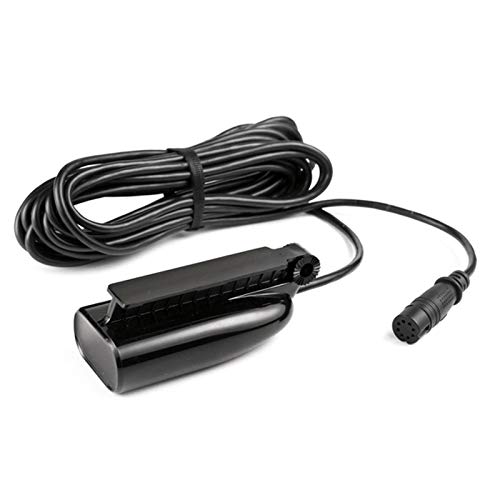
Lowrance SplitShot Transducer for HOOK2 Fish Finders
Lowrance
Mid-Range
Scotty 2-1/4" Ball Mount with Fish Finder Plate
Scotty
Mid-Range
Garmin Striker 4cv with transducer, 4" GPS fishfinder
Garmin
Premium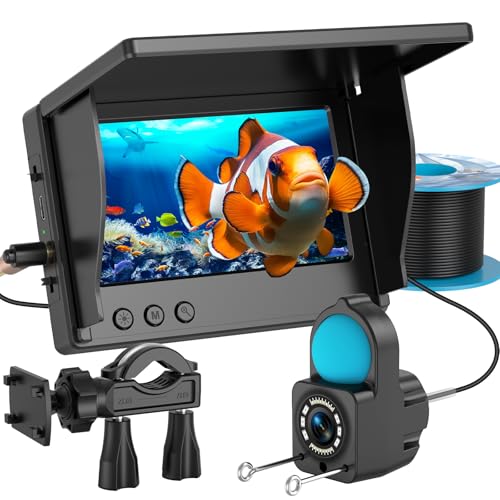
Underwater fishing camera with 4.3" LCD, 1080p & infrared
TMACTIME
Mid-Range
Underwater fishing camera 4.3'' w/ 32GB – ice fishing DVR
FishPro
Mid-Range
Portable wireless fish finder with color display
Venterior
Mid-Range
DepthTrax 2B Boat Mount in-Dash Depth Finder
HawkEye
Mid-Range
Handheld Fish Finder with LCD Display & Transducer
Yoocylii
Mid-Range
Humminbird HDR 650 In Dash Depth Sounder
Humminbird
Mid-Range
Lowrance SplitShot Transducer for HOOK2 Fish Finders (Gray)
Lowrance
Mid-Range
Underwater fishing camera 4.3" IPS HD
FishPro
Mid-RangeRoundups
Frequently Asked Questions
How do I choose the right fish finder for my boat or fishing style?
Match transducer type and mounting to your craft (portable, transom, in-hull) and choose power and frequency based on fishing conditions: higher frequencies (200+ kHz) for detailed shallow-water imaging, lower frequencies (50–83 kHz) for deeper water, and CHIRP or side/down imaging for structure and target separation
What features matter most for accuracy and target identification?
Look for CHIRP sonar or multiple frequency support, adequate power (wattage) for depth range, high-resolution displays, and imaging modes such as downscan and sidescan; GPS/chartplotter integration and configurable sensitivity settings also improve target identification
How much should I expect to spend and what do different price tiers get me?
Prices vary from basic portable/entry units for budget anglers to advanced combo units; expect basic fish finders at lower price tiers under a few hundred, mid-range units with CHIRP and GPS in the mid hundreds, and high-end multi-function displays with advanced imaging and networking above that; the category average is several hundred dollars
Can I install a fish finder myself, and what mounting/transducer considerations are there?
Many users can self-install transom or portable units using provided kits, but in-hull or thru-hull transducers and complex wiring for networking/GPS may require professional installation; ensure correct transducer placement clear of turbulence and prop wash for accurate readings
What maintenance is required to keep a fish finder working reliably?
Regularly clean the display and transducer, check and secure wiring connections, protect the unit from prolonged sun and moisture exposure, and update firmware when available to maintain performance and compatibility
How important is GPS and mapping/chartplotter integration?
GPS and mapping allow waypoint marking, route tracking, and overlaying sonar on charts, which is valuable for returning to productive spots and navigating; choose units with built-in GPS or NMEA/plotter compatibility if navigation and mapping matter to you
Will a fish finder work effectively in freshwater and saltwater?
Most fish finders function in both environments, but saltwater can affect sonar performance and corrosion risk; choose units and transducers rated for saltwater use and consider power and frequency suited to the typical depths and conditions you fish