Jewelry Pliers
Jewelry pliers include round-nose, chain-nose, flat, and specialty cutters for bending, trimming, and shaping wire and findings, suited to hobbyists and small-scale makers. Eleven indexed products average a 4.61 rating and span mid-range prices around $33–$74, with brands like The Beadsmith represented
Top Products

10-Piece Jewelry Pliers Set for Beading and Jewelry Making
VOUIU
Budget
Beadsmith Fashion Color Pliers Set of 8 with Case
The Beadsmith
Mid-Range
Shynek Jewelry Pliers set of 10 professional tools
shynek
Budget
Beadsmith Fashion Color Pliers - Slimline Set of 8 with Case
The Beadsmith
Mid-Range
Toolour Jewelry Pliers Set for DIY Beading and Jewelry Making
Toolour
Budget
Beadsmith Fashion Color Pliers Set with Bubblegum Clutch
The Beadsmith
Mid-Range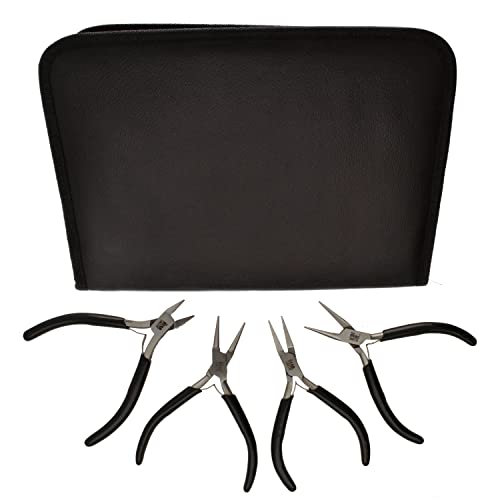
Beadsmith Slim Line Pliers Set, 4 pcs with extra-fine tips
The Beadsmith
Budget
Toolour Jewelry Pliers Set with 8pcs Pliers for Beading Wire Kit
Toolour
Mid-Range
Pliers - Wubbers Parallel Round Jaws 3 mm & 3 mm
Wubbers
Mid-Range
Wubbers Parallel Rectangle Pliers 8x4 mm
Wubbers
Mid-Range
SOONAN 8-Piece Jewelry Pliers Set
SOONAN
Mid-RangeRoundups
Frequently Asked Questions
What types of jewelry pliers should I buy for general home jewelry making and repair?
A basic set typically includes round-nose pliers for bending loops, chain-nose or flat-nose pliers for gripping and flattening, and side-cutting or flush-cutting pliers for trimming wire; needle-nose pliers and crimping pliers are useful additions for more detailed work
How do I choose the right material and finish for jewelry pliers?
Look for pliers made from hardened steel or alloy for durability; corrosion-resistant finishes such as nickel or chrome plating extend tool life, while cushioned or vinyl handles improve grip and comfort during extended use
What price range should I expect for quality jewelry pliers for hobby use?
Hobby-grade individual pliers commonly fall under $50 each, with sets and higher-end tools ranging upward; many shoppers find reliable quality in the budget-to-mid price range around the category average
How do I care for and maintain jewelry pliers to keep them working well?
Keep pliers clean and dry, wipe them after use, apply a drop of light machine oil to the joint occasionally, and avoid cutting hardened steel or using them as general-purpose pliers to prevent edge damage and misalignment
What features indicate more precise or professional-grade jewelry pliers?
Look for tight, smooth pivot joints with minimal play, finely machined tips that align evenly, ergonomic handles that reduce hand strain, and options with specialized jaws (e.g., nylon or teflon-coated) for non-marring work
Are there pliers that prevent marring or scratching delicate metals and finishes?
Yes—pliers with nylon, teflon, or rubber-coated jaws, or those with smooth, polished stainless-steel faces, are designed to minimize marring; some users also wrap classic jaws with protective tape for temporary protection
How do I know when a pair of pliers needs to be replaced or professionally repaired?
Replace or repair pliers if the pivot becomes loose or seized, the cutting edges are chipped or burrred, tips no longer align, or if excessive corrosion compromises function; well-made pliers can often be serviced, but worn cutting edges may require replacement