Mechanical Engineering (Books)
A focused collection of mechanical engineering books addressing HVAC, thermal systems, and home comfort design, useful for practitioners and advanced hobbyists. Prices range from budget to premium (avg $109), and authors include technical names such as Enrico Zio among others. Average rating 4.80 across 18 indexed titles
Top Products

Computational Methods For Reliability And Risk Analysis
Enrico Zio
Mid-Range
Basic Boiler and Refrigeration Operator Exam Prep Book
Dan Ringo
Mid-Range
Composite Materials in Maritime Structures
R. A. Shenoi
Mid-Range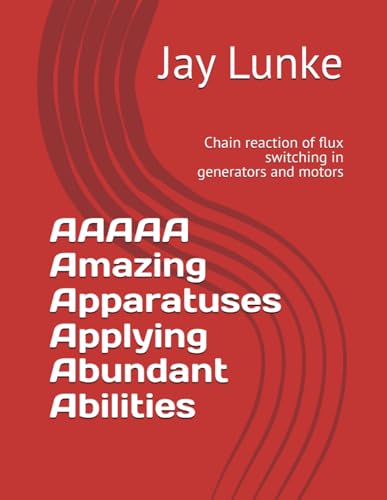
Amazing Apparatuses Applying Abundant Abilities: Chain reaction of flux switching in generators and motors
Jay Lunke
Budget
Introduction To The Basics Of Reliability And Risk Analysis, An
Enrico Zio
Mid-Range
Theoretische Grundlagen der Elektrotechnik 1 (German Edition)
Roland Sue, Peter Burger, Ute Diemar, Bernd Marx, Tom Strohla
Mid-Range
Numerical Simulation of Non-Newtonian Flow
M. J. Crochet
Mid-Range
Physik fuer technische Berufe: Grundlagen, Formelsammlung, Versuchsbeschreibungen
Alfred Boge, Jurgen Eichler, Walter Schlemmer, Gert Boge
Mid-Range
Thermodynamics compact (German edition)
Bernhard Weigand, Jurgen Kohler, Jens von Wolfersdorf
Budget
Lifetime Controlling Defects in Tool Steels (Springer Theses)
Christian Rudolf Sohar
Mid-Range
Essential Astrophysics
Shantanu BasuPranav Sharma
Mid-Range
Introduction to Computational Fluid Dynamics
Anil W. Date
Mid-Range
PEM Fuel Cell Modeling and Simulation Using Matlab
Colleen Spiegel
Premium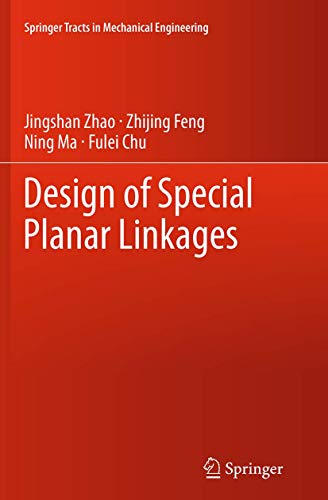
Design of Special Planar Linkages
Jingshan Zhao, Zhijing Feng, Ning Ma, Fulei Chu
Mid-Range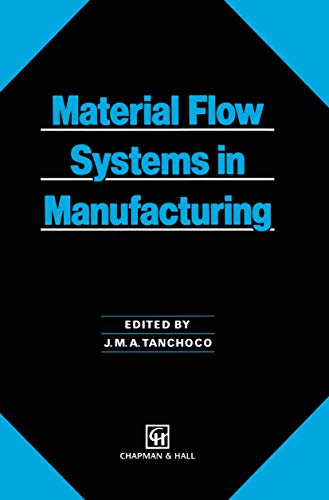
Material Flow Systems in Manufacturing
J.M. Tanchoco
Premium
Micromachining Using Electrochemical Discharge Phenomenon
Rolf Wuthrich
Premium
Centrifugal Pump Users Guidebook: Problems and Solutions
Shmariahu Yedidiah
Premium
The Physics of Carbon Nanotube Devices
Francois Leonard
PremiumRoundups
Frequently Asked Questions
How do I choose a mechanical engineering book for home comfort & decor topics?
Pick books that match your goal: conceptual overviews for design principles, applied texts for HVAC or thermal comfort calculations, and illustrated or project-based books for practical DIY decor and product design; check the table of contents and sample chapters to confirm coverage of topics you need
What technical background do I need to use these books effectively?
Many titles range from introductory to advanced; basic algebra and high-school physics are enough for practical, design-oriented books, while analytical or research texts may require undergraduate-level mechanics, thermodynamics, and heat transfer knowledge
What formats and editions should I consider when buying a mechanical engineering book?
Consider recent editions for updated standards and references; choose print for hands-on work and diagrams, and digital for searchable text and portability; verify that the edition includes any modern standards or example software versions you plan to use
How much should I expect to spend on books in this niche?
Books in technical engineering niches typically range from lower-cost introductory titles to higher-priced specialized texts; in this category the average price is around $100, with individual titles commonly spanning from under $50 to several hundred dollars depending on depth and format
What key features should I look for in a book about home comfort systems and decor?
Look for clear coverage of thermal comfort, HVAC fundamentals, materials and insulation, energy efficiency, case studies or worked examples, practical design calculations, and illustrations or CAD/diagram support for implementation
Are there care or maintenance guides included in these books?
Many applied texts include sections on routine maintenance, troubleshooting, and longevity recommendations for systems and materials; verify the table of contents or index for chapters on maintenance, inspection schedules, and common failure modes
How can I evaluate the credibility of an author or title in this field?
Check the author's academic or industry affiliations, citations and references within the book, publication by established technical publishers or university presses, and whether the book is frequently cited or used in course syllabi related to mechanical engineering and building systems