Nuclear Physics (Books)
Top Products

Lectures on quantum chromodynamics
A. V. Smilga
Mid-Range
Fractional Calculus: An Introduction for Physicists
Richard Herrmann
Mid-Range
Original Scientific Papers Wissenschaftliche Originalarbeiten (German Edition)
Walter Blum, Helmut Rechenberg, Hans-Peter Durr
Mid-Range
Quantum Mechanics: Genesis and Achievements
Alexander Komech
Mid-Range
Astroparticle Physics
Claus Grupen
Mid-Range
The Scientific Legacy of Beppo Occhialini
Pietro Redondi, Giorgio Sironi, Pascuale Tucci, Guido Vegni
Mid-Range
Geometry of the Fundamental Interactions: Riemann's Legacy to High Energy Physics and Cosmology
M. D. Maia
Mid-Range
Electromagnetic Waves For Thermonuclear Fusion Research
Ernesto Mazzucato
Mid-Range
Neutron Diffusion: Concepts and Uncertainty Analysis for Engineers and Scientists
S. Chakraverty, Sukanta Nayak
Premium
Self-Organization of Hot Plasmas: The Canonical Profile Transport Model
Yu.N. Dnestrovskij
Mid-Range
The Physics of Atoms and Quanta: Introduction to Experiments and Theory
Hermann Haken, Hans C. Wolf, W.D. Brewer
Mid-Range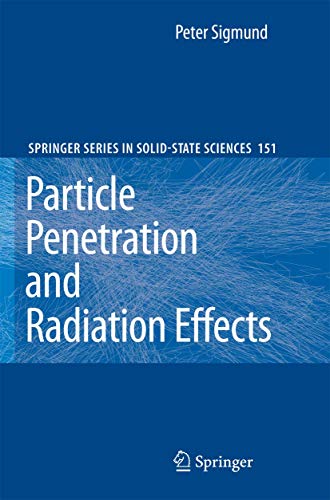
Particle Penetration and Radiation Effects: General Aspects and Stopping of Swift Point Charges
Peter Sigmund
Mid-Range
Magnetohydrodynamics in Binary Stars (Astrophysics and Space Science Library, 456)
C. G. Campbell
Premium
Electron: A Centenary Volume
Michael Springford
Premium
Leptons And Quarks (Special Edition Commemorating The Discovery Of The Higgs Boson)
Lev Borisovich Okun
Mid-RangeRoundups
Frequently Asked Questions
How do I choose the right nuclear physics book for my level (beginner, intermediate, advanced)?
Check the book’s prerequisite math and physics topics in the description; beginners typically need books that introduce quantum mechanics and basic nuclear concepts, intermediate readers look for treatments of nuclear models and reactions, and advanced texts focus on detailed formalisms, many-body theory, or research-level topics
What formats are common and which should I pick (paperback, hardcover, e-book)?
Hardcover offers durability for frequent reference, paperback is lighter and cheaper to ship, and e-books are convenient for search and portability; choose based on whether you need a physical reference for study problems or prefer digital access
How much should I expect to pay for nuclear physics books?
Specialized nuclear physics texts are typically in the higher academic price range; you can expect a spread from lower-cost paperbacks up to several hundred dollars for advanced or new hardcovers, with averages for niche academic titles often around the mid-hundreds depending on edition and publisher
Which features indicate a book is suitable as a course textbook versus a reference monograph?
Course textbooks usually include worked examples, problem sets, pedagogical structure, and chapter summaries; reference monographs focus on comprehensive derivations, advanced topics, and may lack homework problems or introductory exposition
Are translations or editions important when buying older nuclear physics works?
Yes—newer translations and revised editions often correct errors, update notation, and add commentary; verify edition and translator information if historical or classical works are being consulted for research or citation
How can I assess the rigor and suitability of a book for research purposes?
Look for extensive references, derivations, discussion of limitations, and citations in recent papers; advanced monographs used in research typically assume strong mathematical background and include current theoretical frameworks or experimental data
What care or storage considerations apply to academic physics books?
Store books upright on shelves away from direct sunlight and humidity, handle large hardcovers with support to avoid spine stress, and use bookmarks instead of folding pages to preserve condition for long-term use