Relativity Physics (Books)
A focused selection of 22 relativity physics books suitable for home reference and decor, spanning introductory to advanced texts with mid-range to premium pricing (about $33–$212, avg $90). Titles include academic and illustrated works from authors such as Alexander S. Blum and Jurgen Renn, with an average rating of 4.77
Top Products

Spacetime and Geometry: An Introduction to General Relativity
Sean M. Carroll
Mid-Range
The Multi-Universe Cosmos: Origin of the Universe
A.K. A. Velan
Budget
Geometry of Minkowski Spacetime: Introduction to the Mathematics of Special Relativity
Gregory L. Naber
Mid-Range
Marcel Grossmann: For the Love of Mathematics (Springer Biographies)
Claudia Graf-Grossmann, William D. Brewer
Budget
Einstein's Enigma or Black Holes in My Bubble Bath
C.V. Vishveshwara
Budget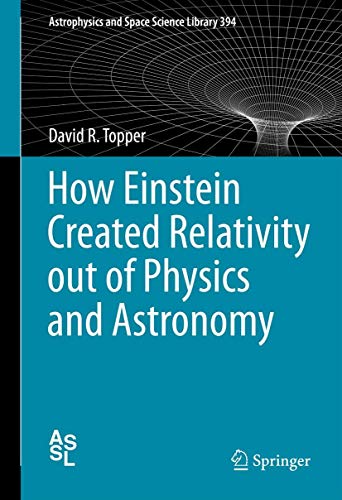
How Einstein Created Relativity out of Physics and Astronomy
David Topper
Mid-Range
Introductory Quantum Physics And Relativity
Jacob Dunningham
Mid-Range
Out of this World: Colliding Universes, Branes, Strings, and Other Wild Ideas of Modern Physics
Stephen Webb
Budget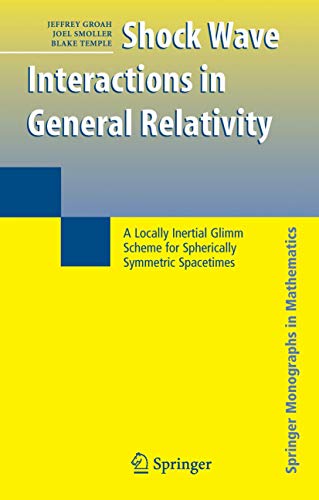
Shock Wave Interactions in General Relativity: A Locally Inertial Glimm Scheme for Spherically Symmetric Spacetimes
Jeffrey Groah, Joel Smoller, Blake Temple
Mid-Range
General Relativistic Dynamics: Extending Einstein's Legacy Throughout The Universe
Fred I Cooperstock
Mid-Range
Einstein's Space-Time: An Introduction to Special and General Relativity
Rafael Ferraro
Mid-Range
Beyond Einstein Gravity: A Survey of Gravitational Theories for Cosmology and Astrophysics
Salvatore Capozziello, Valerio Faraoni
Premium
The Invisible Universe: Dark Matter and Dark Energy (Lecture Notes in Physics, 720)
Eleftherios Papantonopoulos
Mid-Range
Particle Physics in the New Millennium: Proceedings of the 8th Adriatic Meeting
Josip Trampetic, Julius Wess
Mid-Range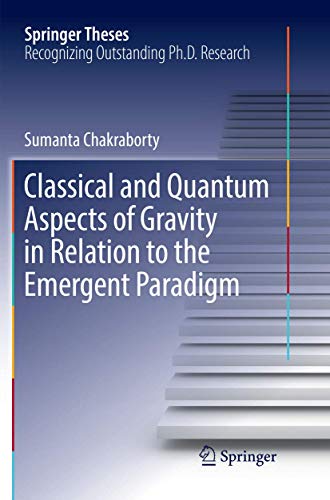
Classical and Quantum Aspects of Gravity in Relation to the Emergent Paradigm
Sumanta Chakraborty
Premium
Black Hole Gravitohydromagnetics (Astrophysics and Space Science Library, 355)
Brian Punsly
Premium
The Search for Non-Newtonian Gravity
Ephraim Fischbach, Carrick L. Talmadge
Mid-Range
The Renaissance of General Relativity in Context (Einstein Studies)
Alexander S. Blum, Roberto Lalli, Jurgen Renn
Mid-Range
Fundamentals of Cosmology
Rich
Mid-Range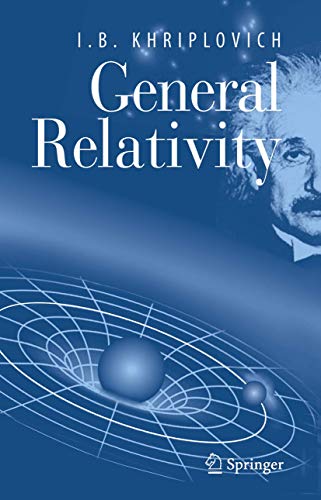
General Relativity by I.B. Khriplovich
I.B. Khriplovich
Mid-Range
The General Theory of Relativity: A Mathematical Exposition
Anadijiban Das, Andrew DeBenedictis
Premium
Back-in-Time and Faster-than-Light Travel in General Relativity
Serguei Krasnikov
PremiumRoundups
Frequently Asked Questions
How do I choose a relativity physics book for a home study or decor shelf?
Look for the intended audience (popular, undergraduate, or advanced), the book's scope (special vs. general relativity), and format (large-format or illustrated editions suit decor), and check average ratings and excerpts to confirm clarity and visual appeal
What price range should I expect for relativity physics books in the home comfort & decor niche?
Relativity physics books in this niche typically span budget paperbacks under $50 to higher-priced hardcover and illustrated editions; averages for similar collections are around $80–$100
Which features indicate a physics book will also work well as a decorative item?
Features include hardcover or cloth binding, larger trim size, high-quality illustrations or diagrams, attractive dust jackets or typographic design, and durable paper that holds up on display
Are these books suitable as gifts for non-specialists interested in science?
Yes—choose popular-level titles or illustrated introductions that explain concepts qualitatively; avoid dense textbooks or highly technical monographs for general-interest recipients
How can I assess the technical level before buying a relativity book online?
Read the publisher's description, table of contents, preface, sample chapters, and reviewer comments to gauge prerequisites, mathematical depth, and whether the text prioritizes conceptual explanation or formal derivations
What care and storage tips keep physics books looking good on a home shelf?
Store books upright away from direct sunlight and moisture, use bookends to prevent leaning, dust regularly, and handle illustrated plates or large-format pages gently to avoid creasing
Do popular and academic relativity books differ a lot in page layout and illustrations?
Yes—popular books often use more full-color illustrations, larger type, and wider margins for readability and display appeal, while academic texts prioritize dense equations, smaller type, and extensive references