Thermodynamics (Books)
Technical and academic books on thermodynamics and heat transfer applied to home comfort, HVAC design, and building physics. Titles include textbooks and reference works from authors such as A. Satya Narayanan; 19 products indexed with an average rating of 4.71 and mid-range pricing
Top Products

Concise Manual Of Engineering Thermodynamics, A
Liviu F Radulescu
Mid-Range
Superconductivity: Discoveries and Discoverers by Kristian Fossheim
Kristian Fossheim
Mid-Range
Thermodynamics for Physicists, Chemists and Materials Scientists (Undergraduate Lecture Notes in Physics)
Reinhard Hentschke
Mid-Range
Fundamentals of Propulsion
V. Babu
Mid-Range
Theoretical Physics 5: Thermodynamics
Wolfgang Nolting
Mid-Range
Stabilization of NavierStokes Flows (Communications and Control Engineering)
Viorel Barbu
Mid-Range
Introduction to Waves and Oscillations in the Sun (Astronomy and Astrophysics Library)
A. Satya Narayanan
Mid-Range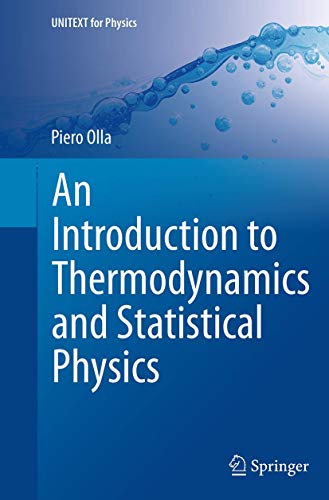
Introduction to Thermodynamics and Statistical Physics (UNITEXT for Physics)
Piero Olla
Mid-Range
Basics of Plasma Astrophysics (UNITEXT for Physics) by Marco Velli
Marco Velli
Mid-Range
Flowing Matter (Soft and Biological Matter)
Federico Toschi, Marcello Sega
Mid-Range
Times Arrow: The Origins of Thermodynamic Behavior
Michael C. Mackey
Mid-Range
Modeling Solid Oxide Fuel Cells: Methods, Procedures and Techniques
Roberto Bove, S. Ubertini
Mid-Range
Electron-Phonon Interaction in Conventional and Unconventional Superconductors
Pegor Aynajian
Mid-Range
Thermodynamics of Information Processing in Small Systems
Takahiro Sagawa
Premium
Methods in Statistical Mechanics: A Modern View (Lecture Notes in Physics)
Osvaldo Civitarese, Manuel Gadella
Mid-Range
Blast Waves: Shock Wave and High Pressure Phenomena
Charles E. Needham
Premium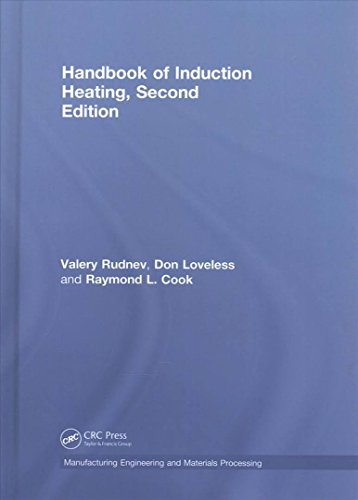
Handbook of Induction Heating (Manufacturing Engineering and Materials Processing)
Valery Rudnev, Don Loveless, Raymond L. Cook
Premium
Theory and Applications of Viscous Fluid Flows
Radyadour Kh. Kh. Zeytounian
Mid-Range
Modeling Explosions and Blast Waves
K. Ramamurthi
Mid-RangeRoundups
Frequently Asked Questions
What topics should I expect in thermodynamics books relevant to home comfort?
Look for coverage of heat transfer (conduction, convection, radiation), thermodynamic properties of materials, HVAC principles, human thermal comfort models, and case studies on insulation, glazing, and passive design strategies
Is it worth buying a higher-priced or academic thermodynamics book for practical home projects?
Higher-priced academic books typically offer rigorous theory and detailed derivations useful for advanced analysis, while mid-range practical books focus on applied methods and design guidelines that are often sufficient for most home comfort and decor projects
How can I tell if a book balances theory and practical application?
Check the table of contents and sample chapters for a mix of theoretical sections, worked examples, problem sets, and applied chapters that discuss building systems, material properties, or design case studies
Are there specific authors or types of publishers to look for in this niche?
Look for authors with engineering, physics, or building-science backgrounds and publishers known for technical or academic books; university presses and specialist engineering publishers often produce reliable texts in thermodynamics and building comfort
What formats and supplementary materials are helpful when studying thermodynamics for home comfort?
Books with solved problems, appendices of material properties, worked examples, and companion resources (e.g., problem solution manuals, datasets, or simulation code) help bridge theory and practice; physical copies are useful for reference, while searchable digital editions aid quick lookup
How should I maintain and use a thermodynamics book to get the most out of it?
Use the book actively by working through problem sets, taking notes, applying examples to real home scenarios, and cross-referencing material property tables; store it in a dry place to protect pages and any fold-out charts