Wine Making Starter Sets
Wine Making Starter Sets include basic fermenters, carboys, airlocks, siphons and starter ingredient kits for home winemaking, typically priced mid-range (about $50–$110, average $84). Fourteen products are indexed with an average rating of 4.41; top brands found include VEVOR and Craft a Brew
Top Products

Home Brew Ohio 1 Gal Wine From Fruit Kit with Mini Auto-Siphon
Home Brew Ohio
Mid-Range
Fontana French Cabernet Sauvignon Wine Kit (6 gallon) makes 30 bottles
FONTANA
Mid-Range
Fontana Italian Pinot Grigio wine kit (6 gallon) - makes 30 bottles
FONTANA
Mid-Range
Fontana Pinot Noir Wine Kit 6 Gallon DIY Kit
FONTANA
Mid-Range
VEVOR 5 Gal Alcohol Still with Copper Tube Kit
VEVOR
Premium
Alcohol still 3-gallon stainless steel distiller with copper tube
VEVOR
Mid-Range
Alcohol Still 8Gal/30L Distiller Kit, Stainless & Copper Tubing
VEVOR
Mid-Range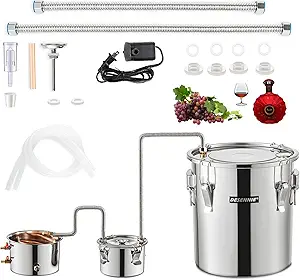
Shine Still Alcohol Distiller Kit 8 Gallon with Copper Coil
DESENNIE
Premium
Juice Box fruit wine kit for beginners
Craft a Brew
Mid-Range
Shine Still 8 Gal Alcohol Distiller with Copper Coil Kit
DESENNIE
Premium
Shine Still Alcohol Distiller Kit with Copper Tube and Stainless Pot
DESENNIE
Mid-Range
Craft A Brew Fruit Wine Making Kit for Beginners
Craft a Brew
Mid-Range
VEVOR Alcohol Still 8GAL/30L with Thumper Keg
VEVOR
Premium
Complete Mead Making Kit with 1-Gallon Glass Fermentation Jar
Bold I'Land
Mid-RangeRoundups
Frequently Asked Questions
What comes in a typical wine making starter set and what additional items will I need?
Starter sets usually include a primary fermenter (carboy or bucket), airlock, siphon/tubing, basic hydrometer, sanitizer, and sometimes yeast and instructions; you may still need bottles, corks or caps, a corker, cleaning brushes, and specific additives or fruit if not provided
How do I choose between glass carboys and plastic fermenting buckets?
Glass carboys are non-porous and less likely to scratch or retain odors but are heavier and breakable; food-grade plastic buckets are lighter, easier to handle, and usually less expensive but can scratch and retain bacteria if not maintained carefully
Is a hydrometer necessary and what does it tell me?
A hydrometer is recommended because it measures specific gravity, allowing you to track fermentation progress and estimate alcohol content; some kits include one, while others provide a refractometer as an alternative
What size starter set should I buy for a beginner looking to make small batches?
Most beginners start with 1 to 6 gallon (about 4 to 23 liter) kits; 1–3 gallon kits are good for experimenting and limited space, while 5–6 gallon kits are common for standard home batches producing several bottles
How much should I expect to spend on a starter kit and ongoing supplies?
Starter kit prices commonly range from budget options under $50 to more complete kits over $150, with an average around $80; ongoing costs include yeast, additives, bottles, corks, and sanitizer, which vary by batch size and frequency
What sanitation practices are essential to avoid spoiled batches?
Thorough cleaning and sanitizing of all equipment before and after use is essential; use a no-rinse sanitizer for contact surfaces, avoid cross-contamination, and replace any scratched plastic parts that can harbor bacteria
Can I make wine from fruit other than grapes with a starter set?
Yes; most starter sets are adaptable for fruit, juice, or concentrate wines, but you may need to adjust sugar, acidity, and nutrient levels and follow recipes specific to the fruit to achieve balanced fermentation and flavor