Ball Nose End Mills
Ball nose end mills are rotary cutting tools with hemispherical tips for contouring, 3D profiling, and finishing in materials like aluminum, steel, and plastics. The category includes 16 indexed products averaging a 4.58 rating and mid-range pricing (about $33–$130, average $52), with brands such as SHARPRO represented
Top Products
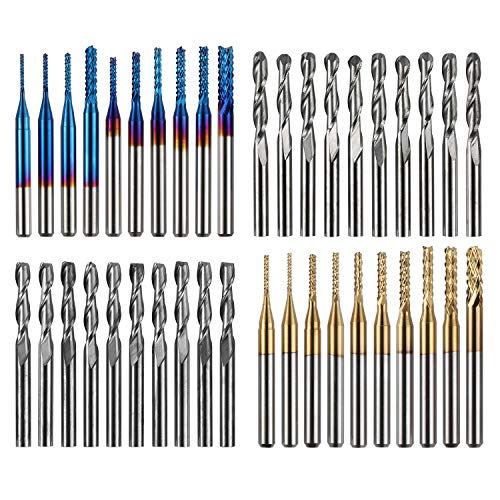
Genmitsu 40pcs End Mills CNC Router Bits, 1/8" Shank, 2-Flute Flat & Ball Nose
Genmitsu
Budget
Tools Extra Long Ball Nose Carbide End Mill, 2 Flute, 1/4 Shank
WEXWE
Mid-Range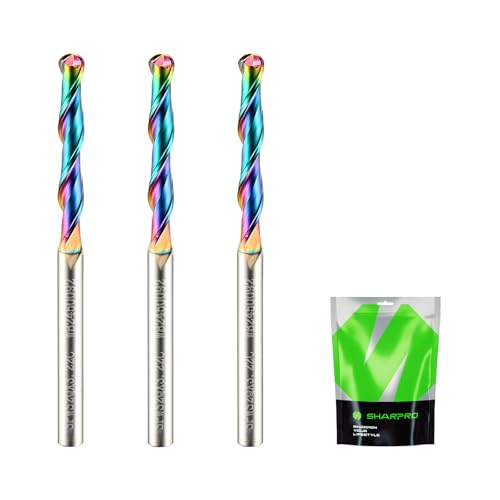
1/8 Ball Nose CNC Router Bits 1/8 Shank Carbide Up Cut (3pcs)
SHARPRO
Budget
Ball Nose CNC Router Bit 1/4" shank, carbide up-cut 1" CL 2-1/4" OVL (3pcs)
SHARPRO
Mid-Range
Tools Extra Long Ball Nose Carbide End Mill 2pcs 3/8 shank
WEXWE
Mid-Range
Ball Nose CNC Router Bit 1/8 shank, carbide up-cut end mill (5pcs)
SHARPRO
Budget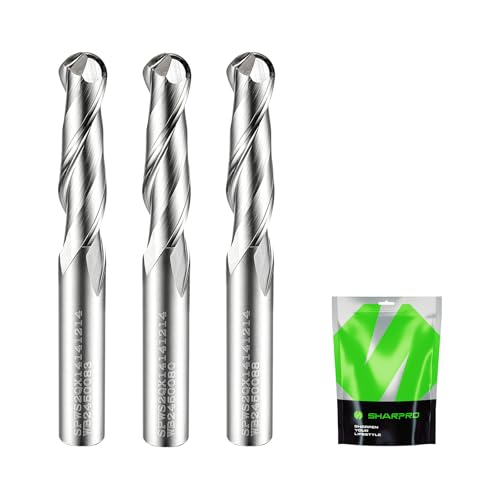
Ball Nose CNC Router Bits 1/4 in Shank, Carbide End Mill 1" cutting length
SHARPRO
Mid-Range
1/8 Ball Nose CNC Router Bits 1/8 Shank, Carbide End Mill (5PCS)
SHARPRO
Mid-Range
FoxAlien 1/8 Shank CNC Router Bits Kit for Engraving and Milling
FoxAlien
Mid-Range
Carbide Ball Nose End Mills 2 Flute 5/16 Inch SHK. (3PCS)
SHARPRO
Mid-Range
ISB 4Flutes Carbide Ball Nose End Mill, micro grain carbide
XYunEnZ
Mid-Range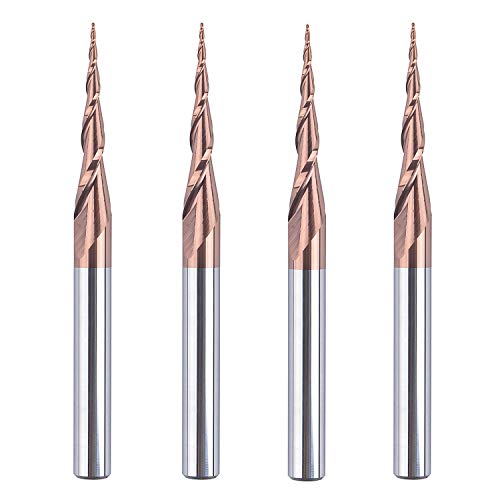
SpeTool 4Pcs Tapered Ball Nose End Mills 1/4" shank 0.5mm tip
SpeTool
Mid-Range
1/4 Ball Nose CNC Router Bits 1/4 Shank, Carbide Up Cut (5PCS)
SHARPRO
Mid-Range
1/2" Extra Long Carbide Ball Nose End Mill, 4 Flute, AlTiN Coat, 4" OAL
JIANXING
Mid-Range
ISB 4-flute carbide ball nose end mill (3/8")
XYunEnZ
Mid-Range
ISB 4Flutes Carbide Ball Nose End Mill - Micro Grain
XYunEnZ
PremiumRoundups
- Best Ball Nose End Mills for 3D Carving (2026)
- Best Ball Nose End Mills for Aluminum Engraving (2026)
- Best Ball Nose End Mills for Hardwood Carving (2026)
- Best Ball Nose End Mills for Wood Engraving (2026)
- Best Ball Nose End Mills Under $200 (2026)
- Best Ball Nose End Mills Under $100 (2026)
- Best Ball Nose End Mills Under $50 (2026)
- Best Ball Nose End Mills (2026 Guide)
Frequently Asked Questions
What is a ball nose end mill and when should I use one?
A ball nose end mill has a hemispherical tip that produces rounded profiles and smooth 3D contours; it is used for milling complex surfaces, 3D sculpting, mold and die work, and finishing curved features
How do I choose the right diameter, flute count, and material for a job?
Choose diameter based on feature size and reach; more flutes give better surface finish but reduced chip clearance (use 2–3 flutes for softer metals and higher chip loads, 4+ flutes for finishing and harder alloys). Select cutter material/coating to match the workpiece: solid carbide for hard materials and rigidity, carbide with TiAlN/TiN coatings for heat and wear resistance, and HSS for low-cost, low-rigidity applications
What spindle speed and feed rate guidelines should I follow?
Speeds and feeds depend on material, cutter diameter, and flute count; as a starting point, use conservative surface footage for hard materials and increase cautiously, maintaining proper chip load per tooth (consult tooling charts). For finishing with ball nose cutters, use shallower axial and radial depths of cut and slower feed in the final passes to avoid scalloping
How do I minimize scallop height and improve surface finish with ball nose end mills?
Reduce stepover (radial depth of cut), decrease axial depth for finish passes, use higher spindle speed with appropriate feed to maintain chip load, and consider smaller corner radius or finishing-specific cutters; climb milling and proper toolpath strategy also improve finish
How should I care for and store ball nose end mills to prolong tool life?
Keep cutters clean and dry, store in protective holders or foam to prevent chipping, inspect for wear or chipping before use, and regrind or replace when cutting performance degrades; use correct speeds/feeds and sufficient coolant or air blast to reduce heat and buildup
Are there budget-friendly options and what should I expect for cost versus performance?
Budget options typically use HSS or lower-grade carbide and cost less than premium coated carbide; expect shorter tool life and lower cutting speeds with budget cutters, while mid-range solid carbide cutters with coatings offer better durability and performance at higher cost
What safety precautions should I follow when using ball nose end mills?
Secure the workpiece and tooling properly, wear eye and hearing protection, avoid manual contact with spinning cutters, use appropriate guards and coolant, and follow machine-specific lockout and emergency procedures