Barbed Hose Fittings
Barbed hose fittings for joining flexible tubing and hose in fluid, pneumatic, and irrigation applications, available in materials like brass and stainless steel. The category averages a 4.59 rating across 13 indexed products, with mid-range prices around $49 and offerings from brands such as EFIELD
Top Products

Pex 1/2 in. x 1/2 in. Female Sweat Copper Adapter (25 pcs)
EFIELD
Budget
Brass Hose Barb Splicer T Union Fitting 1/4" x 1/4" x 1/4"
Vis
Budget
Pex 3/4 in. x 3/4 in. 90° Brass Barb Crimp Fitting
EFIELD
Budget
(Pack of 25) EFIELD PEX 3/4 in Tee Barb Crimp Fittings
EFIELD
Mid-Range
EVIL ENERGY 8AN Female to 3/8
EVIL ENERGY
Budget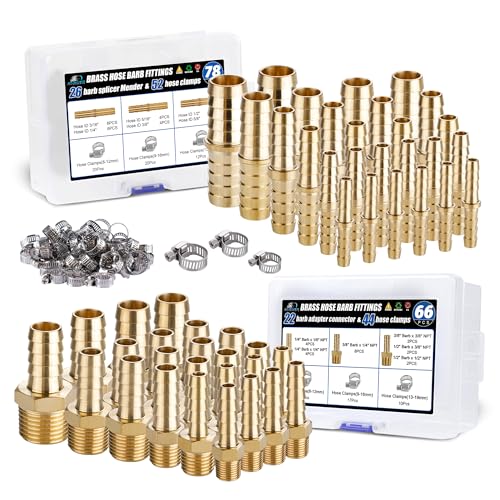
Brass hose barb fittings set with clamps (48 pcs) and adapters
Ailbiuko
Mid-Range
PPSU Barb Crimp PEX Elbow Fittings 1/2" (50 pcs)
EFIELD
Budget
Derno 3-Way Tee Fitting 2" Stainless Steel
DERNORD
Budget
Brass Hose Barb Fittings 1/2" NPT Male (30pc) Kozelo
Kozelo
Mid-Range
KOOTANS Barbed Hose Fittings Kit 80pc 1/8–1/2" Barb to NPT
KOOTANS
Mid-Range
KOOTANS 132pcs Brass Hose Barb Fittings Kit
KOOTANS
Mid-Range
5/8" hose ID to 3/4" male NPT brass 90° elbow
EDGE INDUSTRIAL
Mid-Range
Brass Hose Barb Fittings & Clamps Set 86Pcs
Ailbiuko
Mid-RangeRoundups
Frequently Asked Questions
How do I choose the right barb size and material for my hose?
Match the barb outer diameter to the hose inner diameter and choose a material compatible with the fluid and environment—brass or stainless steel for corrosion resistance, nylon or plastic for lightweight, non-corrosive applications
Do I need clamps with barbed hose fittings and which type is best?
Clamps are recommended to prevent leaks; use stainless steel worm-drive or ear (crimp) clamps for higher pressure and reliability, and spring clamps for low-pressure or flexible tubing
What pressure and temperature limits should I check before buying?
Check the fitting material and hose ratings—plastic barbs typically handle low to moderate pressure and lower temperatures, while brass and stainless fittings support higher pressures and wider temperature ranges; always ensure both hose and fitting specs exceed your system requirements
How do I install and remove a barbed hose fitting without damaging the hose?
Heat the hose end slightly or use soapy water to ease installation, push the hose fully onto the barb until it seats against the shoulder, then secure with a clamp; for removal, cut the hose behind the barb or use twisting and rolling while pulling, taking care not to tear the hose
How can I prevent leaks and extend the life of a barbed connection?
Use the correct hose-to-barb fit, proper clamps, avoid sharp bends and excessive tension, protect fittings from chemical exposure, and inspect periodically for wear, cracks, or corrosion
What price range should I expect for barbed hose fittings and when is it worth paying more?
Individual barbed fittings typically range from budget options under $5 to higher-end specialty pieces; pay more for stainless steel, precision-machined parts, or fittings with certifications when durability, chemical compatibility, or pressure ratings are critical