Bore Gauges
Bore gauges for measuring internal diameters in machining and inspection, including telescoping, dial, and electronic types. Thirteen products indexed with an average rating of 4.41 and mid-range pricing (about $43–$120, average ~(price varies)); brands include Neoteck among others
Top Products
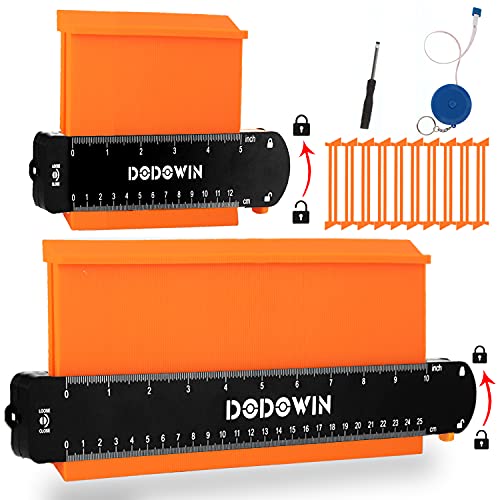
Contour Gauge Tool for Woodworking and Measuring
DODOWIN Tech
Mid-Range
Saker Contour Gauge Profile Tool with Adjustable Lock
Saker
Mid-Range
Industrial Tools Dial Bore Gauge Kit (2"-6" Range) – 0.001" Graduation
BINGOX
Mid-Range
Bore gauge set with digital indicator, self-centering dial
Neoteck
Mid-Range
Neoteck digital bore gauge set 2-6 in with dial indicator
Neoteck
Mid-Range
Dial Bore Gauge 2-6 in, 0.001 in, Inside Dial Indicator
High Eagle
Mid-Range
Dial Indicator Bore Gauge Set 2"-6"/0.001" Extender
HDLNKAK
Mid-Range
Digital Dial Indicator Bore Gauge 2"-6" with Carbide Anvils
HDLNKAK
Mid-Range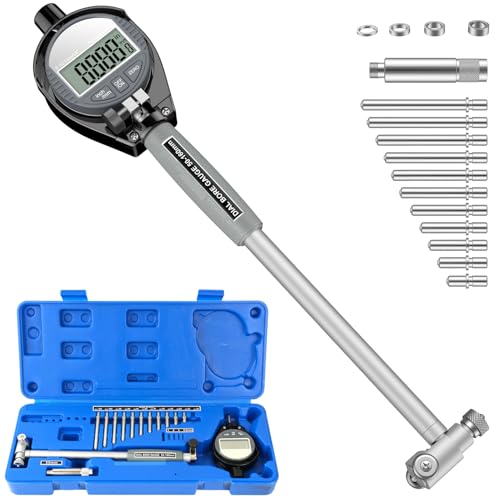
Digital Bore Gauges Set with LCD Dial Indicator (2"-6")
HDLNKAK
Mid-Range
Neoteck 6-10" Digital Bore Gauge with 6 Anvils and 9.8" depth
Neoteck
Mid-Range
Neoteck 1.4-6in Digital Bore Gauge with 15 Anvils
Neoteck
Mid-Range
Neoteck Digital Dial Indicator Bore Gauge with 0.7-6 in range
Neoteck
Premium
Neoteck Digital Dial Indicator Bore Gauge with 0.7"-6" Range
Neoteck
PremiumRoundups
Frequently Asked Questions
How do I choose the right type of bore gauge for my measurement needs?
Select based on measurement range (small dial bore gauges for 0–2 in, telescoping or electronic gauges for larger bores), required accuracy (mechanical dial gauges for general use, digital for finer resolution), and the work environment (robust or sealed models for shop use)
What accuracy and resolution should I expect from typical bore gauges?
Common mechanical dial bore gauges typically offer accuracy in the thousandths of an inch (0.001 in) with similar resolution, while digital bore gauges can offer higher resolution (0.0005 in or 0.01 mm); check specifications for repeatability and calibration data
Are digital bore gauges worth the price compared with dial or telescoping types?
Digital gauges provide easier readout, data output for recording, and often finer resolution, but mechanical dials can be more affordable and durable for routine shop checks; consider how important digital readout, data transfer, and resolution are for your work
What accessories or blades/heads do I need to accurately cover my bore size range?
Many bore gauges use interchangeable anvils or extension rods; choose a kit with probe heads that cover your smallest to largest bores or plan to buy additional heads so you can set and calibrate the gauge at the desired nominal diameter
How should I calibrate and zero a bore gauge before use?
Calibrate using a micrometer or ring gauge at the target nominal diameter: set the reference on the micrometer, insert the bore gauge, rock to find minimum reading, and adjust the dial or zero the digital readout to match the reference
What maintenance and storage practices extend the life and accuracy of a bore gauge?
Keep gauges clean and lightly oiled, store in protective cases away from moisture and impact, avoid excessive force on the measuring head, and have them periodically checked against calibrated standards to detect drift
What price range should I expect for reliable bore gauges and kits?
Entry-level mechanical or telescoping bore gauges and basic kits often fall under $50, while mid-range dial and many digital kits commonly sit around tens to low hundreds of dollars; higher-precision or complete multi-head digital kits cost more