Electrical Adapters
This category covers electrical adapters and related power-conversion tools for industrial and professional use, including plug adapters, step-down/step-up converters, and multi-outlet power modules. The 72 indexed products average a 4.64 rating and mid-range pricing (about $33–$100, average ~(price varies)), with brands like Ceptics and TESSAN represented
Top Products

Ceptics 70W World Travel Plug Adapter with GaN Tech
Ceptics
Mid-Range
TESSAN US-to-UK 3-Pack Type G Plug Adapter
TESSAN
Budget
TESSAN universal travel adapter with 65W GaN and 4 USB ports
TESSAN
Mid-Range
TESSAN Universal Travel Adapter with 65W GaN and 4 USB Ports
TESSAN
Mid-Range
Dryer adapter cord 4-prong to 3-prong NEMA 10-30P to 14-30R
WimiSom
Budget
Ceptics international power plug adapter travel set
Ceptics
Mid-Range
Ceptics World Travel Adapter Kit 2 USB-A & USB-C (WPS-5B)
Ceptics
Mid-Range
TESSAN Universal European Travel Plug Adapter Kit
TESSAN
Budget
OREI travel plug adapter M8 Max: 3 USB + USB-C 18W, 2 USA outlets
OREI
Mid-Range
European Travel Plug Adapter 3 Pack – Type C with 4 outlets and 3 USB
TESSAN
Budget![[10-Feet] NEMA 5-15P to 5-15R/5-20R/6-15R/6-20R AC Adapter Cable](https://m.media-amazon.com/images/I/41OryeMUInL._SL500_.jpg)
[10-Feet] NEMA 5-15P to 5-15R/5-20R/6-15R/6-20R AC Adapter Cable
Plugrand
Budget
CircleCord Dryer Adapter 4P to 3P, 10 AWG 1.5 ft
CircleCord
Budget
TESSAN Universal Travel Adapter 65W GaN with 5 USB Ports
TESSAN
Mid-Range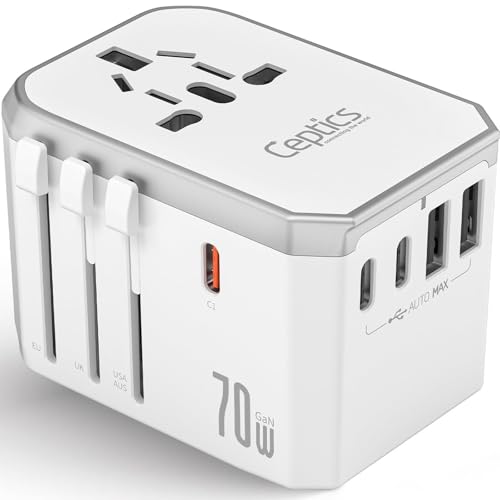
Ceptics 6-in-1 Universal Travel Adapter with PD USB-C and 2x USB-A/2x USB-C
Ceptics
Mid-Range
JMFONE 35W PD Travel Adapter with USB-A/C Ports
JMFONE
Budget
Universal Travel Adapter with PD Fast Charging (45W) and 5 Ports
VYLEE
Budget
15ft NEMA 5-15P to 5-15R/5-20R/6-15R/6-20R AC adapter
Plugrand
Mid-Range
LENCENT GaN III 65W Travel Adapter with 2 USB & 3 USB-C PD
LENCENT
Mid-Range
LENCENT Universal Travel Adapter with 100W PD, 4 USB ports
LENCENT
Mid-Range
Ceptics Switzerland sev 1011 travel power plug adapter
CEPTICS
Mid-Range
VINTAR European Travel Adapter Kit with 3 USB Ports & 4 AC Outlets
VINTAR
Mid-Range
LENCENT 100W GaN3 Universal Travel Adapter with 4 USB ports
LENCENT
Mid-Range
ETL 10Pack Right Angle NEMA 5-15P 3-Prong Plug, 15A 125V
Vellcon
Budget
Acer 70W GaN Universal Travel Plug Adapter
acer
Mid-RangeRoundups
- Best Electrical Adapters for International Business Trips (2026)
- Best Electrical Adapters for International Travel (2026)
- Best Electrical Adapters for Compact Travel Kit (2026)
- Best Electrical Adapters Under $200 (2026)
- Best Electrical Adapters Under $100 (2026)
- Best Electrical Adapters Under $50 (2026)
- Best Electrical Adapters (2026 Guide)
Frequently Asked Questions
How do I choose the right electrical adapter for my tools and industrial equipment?
Match the adapter to the device’s plug type, voltage, current (amps), and grounding requirements; confirm the adapter’s maximum voltage and amperage ratings meet or exceed your equipment’s specifications and choose grounded or three-prong adapters when your tool requires an earth connection
What types of adapters are common in the Tools & Industrial category?
Common types include plug-to-socket converters (different country or plug form factors), inline voltage and current adapters, heavy-duty extension couplers, and multi-outlet or USB-enabled adapters designed for workshop use; many are built for higher current and tougher environments than consumer models
Are there safety features I should look for in industrial electrical adapters?
Look for overload protection, surge protection, grounding/earth connections, flame-retardant housing, secure locking connectors for vibration resistance, and third-party safety certifications (e.g., UL, CE) appropriate for your region
How much should I expect to spend on a quality electrical adapter for tools and industrial use?
Prices vary by function and build quality; expect budget options under $50 for basic adapters and rugged or feature-rich industrial adapters in higher ranges, with an average price for many products in this category around the mid tens of dollars to low hundreds depending on complexity
Can I use a consumer-grade adapter for workshop or industrial tools?
Consumer-grade adapters may lack necessary current capacity, grounding, or mechanical robustness; only use them if their voltage, amperage, grounding, and safety ratings explicitly match the industrial tool’s requirements
How do I maintain and inspect electrical adapters to ensure long life and safety?
Regularly inspect for cracks, exposed conductors, discoloration, loose connections, and damaged pins; keep adapters dry and clean, avoid overloading them, and replace any adapter with visible damage or signs of overheating
What compatibility checks should I perform when replacing an adapter?
Verify plug shape and polarity, confirm voltage and current ratings, ensure proper grounding, and check connector sizes and locking features; if using in a different country, also confirm local voltage and frequency compatibility or use a proper voltage converter