Extension Cords
Extension cords for Tools & Industrial applications, including heavy-duty, retractable, and multi-outlet reels designed for jobsite and workshop use. The category spans budget through premium options (about $32–$390, avg ~(price varies)) with brands like IRON FORGE CABLE represented. Average user rating across 550 products is 4.72
Top Products

GoGreen 12/3 SJTW Outdoor Extension Cord, 25 ft (GG-14025BK)
Power By GoGreen
Budget
GoGreen 16/3 100ft Outdoor Extension Cord, 2-Pole
Power By GoGreen
Budget
GoGreen 14/3 50ft Outdoor Extension Cord, 50 ft, 14/3 SJTW
Power By GoGreen
Budget
GE 3-Outlet Flat Extension Cord 25 ft
GE
Budget
GE 3-Outlet Flat Extension Cord, 25 ft
GE
Budget
Iron Forge Cable 25 ft outdoor extension cord, 16/3, 2-pack
IRON FORGE CABLE
Budget
GoGreen 14/3 SJTW Outdoor Extension Cord 100 ft
Power By GoGreen
Mid-Range
UltraPro 50 ft indoor extension cord with 3 outlets
UltraPro
Budget
Monoprice 1 ft 3-prong extension cord, 16 AWG, 13A
Monoprice
Mid-Range![[UL Listed] Cable Matters 16 AWG Heavy Duty 50ft 3 Prong Extension Cord](https://m.media-amazon.com/images/I/41Ko4IWVYqL._SL500_.jpg)
[UL Listed] Cable Matters 16 AWG Heavy Duty 50ft 3 Prong Extension Cord
Cable Matters
Budget
50 ft 3-outlet extension cord, 16/3 SJTW, grounded
K KASONIC
Budget
Maximm 50 Ft Rotating Flat Plug Extension Cord, 16/3 AWG, 3-Outlet, White
Maximm
Mid-Range
Clear Power 16/2-2-Prong Orange Power Cord 100 ft
Clear Power
Budget
K KASONIC 100-Feet 3-Outlet Extension Cord
K KASONIC
Budget
Clear Power Outdoor Extension Cord 100 ft, 16/3 SJTW, 3-Prong Grounded Plug
Clear Power
Budget
Iron Forge Cable 50 ft Outdoor Extension Cord, 16/3, 3 prong
IRON FORGE CABLE
Mid-Range
GoGreen 14/3 100ft Lighted Outdoor Extension Cord
Power By GoGreen
Mid-Range
Slimline 3 ft Indoor Flat Plug Extension Cord, 3 Outlets
Woods
Mid-Range
Monoprice 3-prong extension cord, 3 ft, 16AWG
Monoprice
Mid-Range
Clear Power 16 GA 3Prong Cords with Lighted Locking Connector (Black, 80 ft)
Clear Power
Mid-Range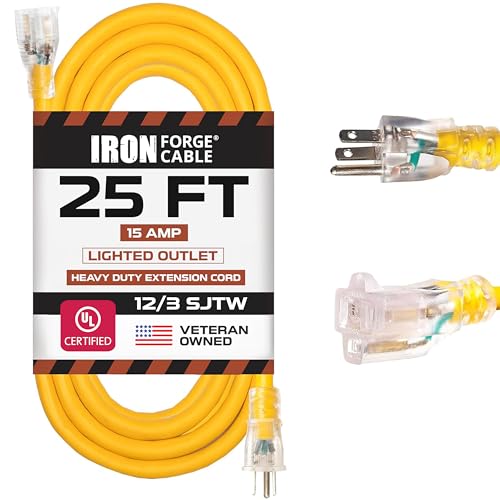
IRON FORGE CABLE 25 ft Lighted Outdoor Extension Cord
IRON FORGE CABLE
Budget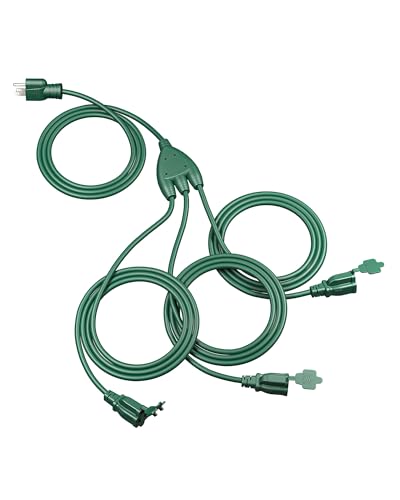
DEWENWILS 25 Ft Outdoor Extension Cord with 3 Outlets
DEWENWILS
Budget
Outdoor Extension Cord 50 ft 16/3 3-prong SJTW
PLUGTUL
Budget
Nekteck 360 Rotating Flat Plug 1 ft Extension Cord, 14AWG, 3 Prong, 6 Pack
Nekteck
BudgetRoundups
Frequently Asked Questions
How do I choose the right length and gauge for an extension cord?
Select a length that reaches without excessive slack; longer cords require thicker wire (lower gauge number) to prevent voltage drop. For light-duty household tools use 16 AWG for up to about 50 feet, 14 AWG for medium loads up to about 75 feet, and 12 AWG or thicker for heavy tools or longer runs
What safety features should I look for in an industrial extension cord?
Look for cords with grounded three-prong plugs, heavy-duty insulation (rubber or thermoplastic elastomer), strain relief at ends, and ratings for outdoor or wet-location use (e.g., SJTW/SJEOW markings). Ground fault circuit interrupter (GFCI) protection is recommended when working in damp environments
How do I match an extension cord to my tool's power requirements?
Check the tool’s amperage or wattage on its nameplate, then choose a cord gauge and length that safely carry that current (refer to an ampacity chart). Ensure the cord's voltage and amperage ratings meet or exceed the tool's requirements
Are there different cord types for indoor vs. outdoor use?
Yes. Outdoor cords are labeled for outdoor use and built with weather- and UV-resistant jackets (e.g., SJTW, SJEOW), while indoor cords have lighter insulation and are not rated for exposure to moisture, sunlight, or extreme temperatures
How should I store and maintain extension cords to extend their life?
Coil cords loosely without tight bends, avoid kinking, keep connectors clean and dry, inspect for cuts or exposed conductors before each use, and store them off the ground in a dry, cool place away from direct sunlight and chemicals
What are common signs an extension cord is unsafe and needs replacement?
Replace a cord if you see frayed or exposed wires, melted or discolored insulation, cracked plugs, sparking or intermittent connections, or if the cord becomes excessively hot under normal load
How do heavy-duty or industrial extension cords differ in price and construction?
Industrial cords typically cost more because they use thicker conductors (lower AWG), tougher jackets for abrasion, oil and chemical resistance, and higher temperature ratings; prices commonly range from budget options under $50 to premium styles above that depending on length and specifications