Flowmeters
Flowmeters in Tools & Industrial measure fluid or gas flow rates and include paddlewheel, turbine, thermal mass, and rotameter-style instruments for workshop and process use. The category spans budget through mid-range options (about $33–$405, average ~(price varies)) and features brands like DAE among 77 indexed products with an average rating of 4.43
Top Products

DAE water meter 1/2" measuring in gallon + couplings
DAE
Mid-Range
DAE AS130U-50RP 1/2" Hot Water Meter with Pulse Output
DAE
Mid-Range
DAE AS200U-75 Water Meter, 3/4" NPT Couplings
DAE
Mid-Range
DAE AS200U-75RP hot water meter with pulse output
DAE
Mid-Range
Uniweld NV1 Nitro Vue Flow Indicator with 1/4 inch Fittings
Uniweld
Mid-Range
DAE AS250U-100P 1" Water Meter with Pulse Output
DAE
Mid-Range
DAE 1" Hot Water Meter with Pulse Output, Gallon
DAE
Mid-Range
Watflow DN15 Water Meter 1/2" NPT, Gallon Flow Meter
Watflow
Budget
Watflow DN15 water meter with 1/2" NPT
Watflow
Budget
Watflow DN15 Water Meter 1/2" NPT, Gallon Flow Meter with Pulse Output
Watflow
Budget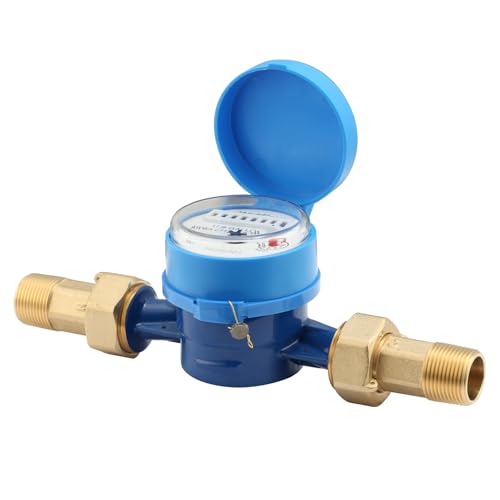
Watflow DN20 water meter 3/4" NPT with pulse output
Watflow
Budget
Watflow DN20 Water Meter 3/4" NPT with Pulse Output
Watflow
Mid-Range
Watflow DN20 water meter 3/4" NPT multi-jet
Watflow
Mid-Range
DAE AS250U-100 1" Water Meter with Gallon Measure
DAE
Mid-Range
Watflow DN20 Water Meter 3/4in NPT, Brass, Gal/Flow Meter
Watflow
Mid-Range
Flow-Rite BA-FLW-80 Flow Indicator (3/4" NPT x Female Coupler)
Flow-Rite
Mid-Range
DAE AS320U-125P water meter with pulse output
DAE
Premium
DAE MJ-50f NTEP Non Lead Water Meter 1/2" NPT, Cubic Feet, Pulse Output
DAE
Mid-Range
DAE MJ-50n NTEP NSF61 Water Meter, 1/2" NPT, Pulse Output
DAE
Mid-Range
DAE AS320U-150P 1-1/2" Water Meter with Pulse Output
DAE
Premium
DAE V-75RP Vertical Water Meter with Pulse Output
DAE
Mid-Range
DAE 3/4" NPT Water Meter with Pulse Output
DAE
Mid-Range
DAE MJ-75R Non Lead Hot Water Meter, 3/4" NPT, Pulse Output
DAE
Mid-Range
DAE MJ-50m Non Lead Water Meter 1/2" NPT, Cubic Meter
DAE
Mid-RangeRoundups
Frequently Asked Questions
How do I choose the right type of flowmeter for my application?
Select by fluid type (liquid, gas, steam), required accuracy, flow range, operating pressure and temperature, and whether you need invasive (in-line) or clamp-on/non-invasive installation; match these to common types like turbine, ultrasonic, magnetic, and rotameter based on compatibility and accuracy needs
What accuracy and flow range should I look for?
Choose a meter whose accuracy specification and turndown ratio cover your expected minimum and maximum flow; typical industrial accuracies range from ±0.2% for high-precision instruments to ±2–5% for general-purpose meters, and ensure the meter's minimum measurable flow is below your lowest expected flow
What materials and wetted parts are important for chemical compatibility?
Pick meters with wetted materials (stainless steel, Hastelloy, PVDF, PTFE, etc.) compatible with your fluid's chemical properties, temperature and abrasiveness; check manufacturer compatibility charts or consult fluid corrosion data when handling acids, strong solvents or slurries
How do I decide between a portable and a permanently installed flowmeter?
Use portable meters for periodic spot checks, commissioning, or troubleshooting; choose permanent in-line or clamp-on meters for continuous monitoring and process control, weighing factors like installation cost, measurement continuity, and accessibility
What power, output and communication options should I consider?
Ensure the meter supports your power source (battery, loop power, mains) and outputs needed for your system—analog (4–20 mA), pulse, frequency, or digital buses (Modbus, HART, etc.)—and confirm compatibility with your data logger or control system
How should I maintain and calibrate a flowmeter?
Perform routine checks for fouling, leaks and mechanical wear, clean sensors per manufacturer guidance, and schedule recalibration at intervals based on process criticality (commonly annually or semiannually) or after repairs to maintain accuracy
What budget should I expect and how do costs vary by type?
Prices vary by technology and features: simple mechanical or rotameters are lower-cost, while ultrasonic, magnetic, and high-accuracy turbine or Coriolis meters are higher-cost; expect a broad range from entry-level budget units to advanced industrial meters with averages reflecting midrange options