Industrial Lubricants
Industrial lubricants for tools and machinery, including penetrating oils, multi-purpose sprays, greases and specialty fluids for maintenance and corrosion prevention. The category spans budget to premium options (about 73 products, average price ~(price varies)) and features brands like WD-40 and Mobil among top sellers
Top Products
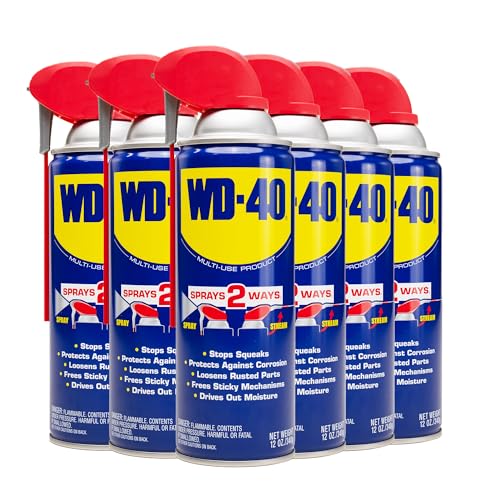
WD-40 Multi-Use Product with Smart Straw (2 Ways) 12 oz
WD-40
Mid-Range
WD-40 Specialist Silicone Lubricant with SMART STRAW SPRAYS 2 WAYS 11 OZ
WD-40 Specialist
Mid-Range
Blaster Silicone Lubricant Spray 11oz (case of 6) – silicone spray for metal parts
Blaster
Budget
Blaster 16-SL Industrial Silicone Lubricant - 11oz (12 pack)
Blaster
Mid-Range
WD-40 Original Formula multi-use spray with smart straw
WD-40
Mid-Range
WD-40 Original Formula Multi-Use with Smart Straw 2 Ways
WD-40
Mid-Range
WD-40 Specialist Dry Lube PTFE Spray (10 oz) with Smart Straw
WD-40 Specialist
Mid-Range
3-IN-ONE Fast-Acting Penetrant Drip Oil, 4 OZ (12-Pack)
3-IN-ONE
Mid-Range
Johnsen's Premium Starting Fluid - 10.7 oz (12 pack)
Johnsen's
Mid-Range
3-IN-ONE PTFE Lubricant, 4 oz, 12-pack
3-IN-ONE
Mid-Range
Kroil Original Penetrating Oil (16.5oz)
KROIL
Budget
Food-grade silicone grease for professional use (4 x 4 oz tubes)
THE FRYOILSAVER COMPANY
Budget
Super Lube 41050 Synthetic Grease (NLGI 2) 5 lb
Super Lube
Premium
Dow Corning Molykote 55 O-ring Grease 5.3oz
Dow Corning
Mid-Range
Mobil Synthetic gear oil 75W-90, 1 gal jug
Mobil
Mid-Range
FLEX-HONE Oil for honing metals, 1 gal bottle
Flex-Hone
Mid-Range
Fluid Film corrosion inhibitor, multi-purpose penetrant & lubricant
Fluid Film
Mid-Range
CRC 3084 Dry Moly Lube, 11 oz net weight aerosol (Dark Gray) – pack of 3
CRC
Mid-Range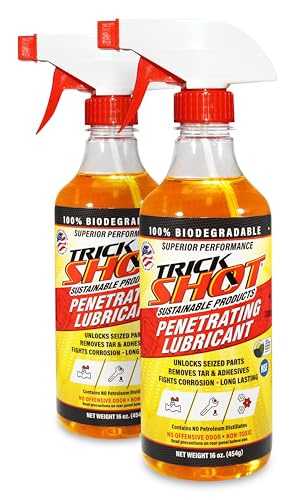
Non-Toxic Penetrating Oil 3-in-1 Lubricant | Eco-Friendly, Food Grade & Biodegradable
TrickShot Penetrating Lubricant
Mid-Range
Weld-Kleen 350 Anti-Spatter Liquid, 1 gal
Weld Aid Products, Inc
Budget
3-IN-ONE Lock Dry Lube 2.5 oz (12-Pack)
3-IN-ONE
Mid-Range
CRC 3-36 Multipurpose Lubricant & Corrosion Inhibitor 1 Gallon
CRC
Mid-Range
All-Trans Supreme Automatic Transmission Fluid 1-Gallon
Schaeffer's
Mid-Range
WD-40 Multi-Use Product, 16 oz, 12-pack
WD-40
PremiumRoundups
Frequently Asked Questions
How do I choose the right industrial lubricant for my application?
Select by application type (bearings, gears, chains, high-temperature, food-contact), base oil type (mineral, synthetic, PAO), viscosity grade to match operating temperatures and load, and any required certifications (NSF for food contact, ISO viscosity classes)
What is the difference between penetrating lubricants, greases, and gear oils?
Penetrating lubricants are low-viscosity sprays for freeing rusted parts and light lubrication; greases are semi-solid, staying in place for bearings and seals; gear oils are high-viscosity fluids formulated for gear protection under heavy loads and often include extreme-pressure additives
How should I interpret viscosity ratings and temperature ranges?
Viscosity ratings (e.g., ISO VG numbers, SAE grades) indicate flow under set conditions—higher numbers mean thicker oil; check product temperature range to ensure the lubricant remains fluid at low temps and maintains film strength at high temps for your operating environment
Are synthetic lubricants worth the extra cost compared with mineral oil products?
Synthetic lubricants generally offer better thermal stability, oxidation resistance, longer life, and improved performance in extreme temperatures, which can reduce maintenance frequency and component wear; whether they're worth it depends on operating conditions and total lifecycle costs
How do I store and handle industrial lubricants safely?
Store in original, labeled containers away from heat and direct sunlight, keep lids closed to prevent contamination, follow the Safety Data Sheet for handling, and use proper dispensing equipment to avoid spills and cross-contamination
How often should I re-lubricate machinery and how do I monitor lubricant condition?
Re-lubrication intervals depend on duty cycle, load, environment and lubricant type; use manufacturer recommendations as a baseline, monitor by visual inspection, contamination checks, temperature trends, and oil analysis for wear particles and oxidation to determine actual intervals
What certifications or specifications should I look for for industrial use?
Look for industry standards relevant to your equipment such as ISO viscosity classes, API service categories for engines, manufacturer OEM approvals, NSF H1/H2 for incidental food contact, and MIL or DIN specifications where applicable