Industrial Pressure Gauges
Industrial Pressure Gauges listings for tools and industrial use, including dial, digital, and compound gauges for HVAC, hydraulic and pneumatic systems. Prices range from budget to premium (about $33–$720, avg $107) across 33 indexed products; top brands include MEASUREMAN
Top Products

Yellow Jacket 3-1/8" Blue Compound Pressure Gauge, 30", 0-350 psi
Yellow Jacket
Budget
Yellow Jacket pressure gauge 3-1/8" 0-800 psi
Yellow Jacket
Mid-Range
Winters 2-1/2" Dial Industrial Pressure Gauge
Winters Instruments
Mid-Range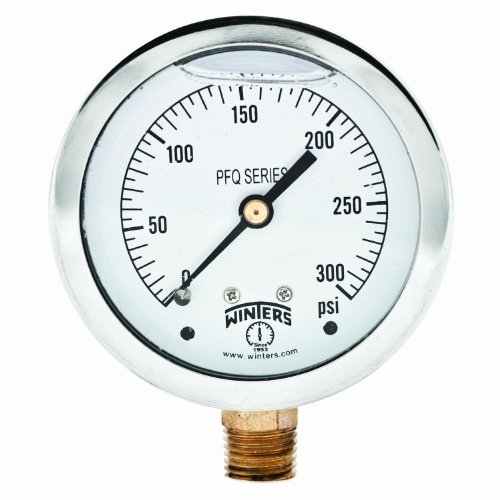
Winters 2-1/2" Dial Liquid Filled Industrial Pressure Gauge
Winters Instruments
Budget
MEASUREMAN Manifold Pressure Test Kit 0-10 wc, 1/4 in NPT, 40 in Hose
MEASUREMAN
Mid-Range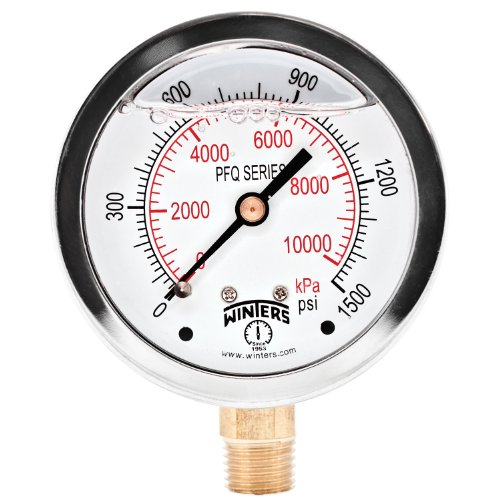
Winters 2-1/2
Winters Instruments
Budget
Glycerin-filled 2.5" Panel Mount Pressure Gauge, 0–1500 psi
PIC Gauges
Budget
PIC Gauge PRO-204L-254P Glycerin Filled Panel Mount Pressure Gauge
PIC Gauges
Budget
Yellow Jacket 78060 gas pressure test kit, 0-35"Wc
Yellow Jacket
Mid-Range
CRL door pressure gauge HMC035
CRL
Mid-Range
MEANLIN Measure 0-35 WC Manifold Gas Pressure Test Kit
MEANLIN MEASURE
Budget
MEASUREMAN 3-1/8" Dial Digital Pressure Gauge 0-100psi
MEASUREMAN
Mid-Range
MEASUREMAN Digital Hydraulic Pressure Gauge 2-1/2" Dial 1/4" NPT
MEASUREMAN
Mid-Range
Elitech PG-30Pro Blue Refrigeration HVAC Digital Pressure Gauge
Elitech
Mid-Range
Elitech PG-30Pro Refrigeration HVAC Digital High Pressure Gauge 87 refrigerants
Elitech
Mid-Range
Elitech SMG-1L single manifold gauge for 87+ refrigerants
Elitech
Mid-Range
MEASUREMAN dial pressure gauge 0-10000 psi
MEASUREMAN
Mid-Range
MEASUREMAN 2-1/2" Dial Digital Vacuum Gauge, 1/4" NPT Lower Mount
MEASUREMAN
Mid-Range
MEASUREMAN 3-1/8 Inch Dial Digital Pressure Gauge, 0-3000 psi
MEASUREMAN
Mid-Range
MEASUREMAN digital industrial pressure gauge, 2-1/2" dial, 0-100 psi
MEASUREMAN
Mid-Range
MEASUREMAN Dial Pressure Gauge 0-300psi 1/4 NPT
MEASUREMAN
Mid-Range
S281 High Precision Digital Hydraulic Pressure Gauge 0.2% FS
YIYADECO
Mid-Range
MEASUREMAN 4" dial hydraulic pressure gauge, 0-10000 psi
MEASUREMAN
Mid-Range
Elitech PGW-800 HVAC Digital High Pressure Gauge 1/8" NPT
Elitech
Mid-RangeRoundups
Frequently Asked Questions
How do I choose the correct pressure gauge range for my application?
Select a gauge whose maximum scale is about 1.5 to 2 times the normal operating pressure; this provides accuracy and prevents over-range damage while keeping the reading in the middle of the dial for best resolution
What types of pressure gauges are available and which suits industrial use?
Common types include analog bourdon tube gauges for general industrial use, diaphragm gauges for low-pressure and corrosive media, and digital gauges for higher precision and data logging; choose based on pressure range, media compatibility, accuracy, and whether you need electronic output
How important is gauge accuracy and how is it specified?
Accuracy is typically given as a percentage of full scale (e.g., ±1% FS); for critical measurements pick a lower percentage and ensure the gauge is calibrated for the pressure range you will use most often
What materials and connections should I consider for compatibility and durability?
Match wetted materials (brass, stainless steel, or special alloys) to the process fluid to prevent corrosion, and verify thread type/size (NPT, BSP) and mounting style (bottom, back, panel) to ensure proper installation
How should I maintain and calibrate pressure gauges to ensure reliable readings?
Inspect gauges regularly for mechanical damage or leaks, isolate and remove spikes with snubbers or gauges with dampening for pulsating systems, and have gauges calibrated periodically against a traceable standard—frequency depends on use but commonly annually
Are digital gauges better than analog gauges for industrial applications?
Digital gauges offer higher resolution, easier reading, and features like data logging and multiple units, while analog gauges are rugged, require no power, and are often preferred for simple, continuous visual monitoring; choose based on feature needs, environment, and power availability
What should I consider regarding budget and total cost of ownership?
Factor in initial price, required accuracy and materials, calibration frequency, expected service life, and potential downtime costs—higher upfront cost for more durable or accurate gauges can reduce replacement and calibration expenses over time