Infrared Thermometers
Handheld infrared thermometers for spot temperature readings in tools & industrial use, including pistol and pen-style models for HVAC, electrical, and maintenance work. 32 products indexed, average rating 4.51, price range about $34–$148, with brands like KLEIN TOOLS and ThermoPro represented
Top Products
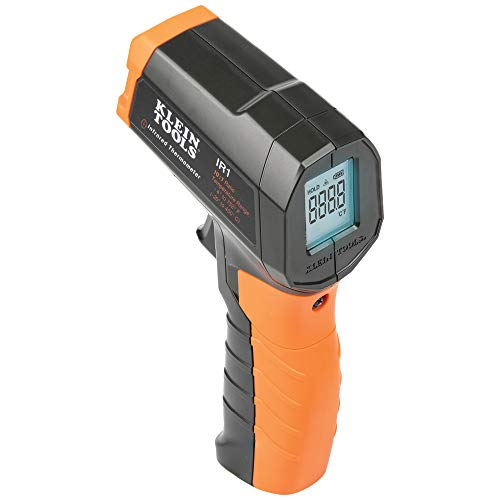
Klein Tools IR1 Infrared Thermometer
KLEIN TOOLS
Mid-Range
ThermoPro Infrared Thermometer Gun
ThermoPro
Budget
MESTEK infrared thermometer gun with adjustable emissivity
MESTEK
Mid-Range
ThermoPro infrared thermometer with long probe
ThermoPro
Mid-Range
MESTEK infrared thermometer with probe, non-contact and humidity
MESTEK
Mid-Range
Digital infrared thermometer gun with wide temp range
DEASOMIYE
Budget
Klein Tools IR07 Dual Infrared Thermometer with Probe
KLEIN TOOLS
Mid-Range
ThermoPro 2-in-1 Infrared & Meat Thermometer TP420
ThermoPro
Mid-Range
Non-Contact infrared thermometer with LCD display
ADC
Mid-Range
Infrared Thermometer Gun with K-type Probe, 50:1, backlit, dual laser
SQECH
Mid-Range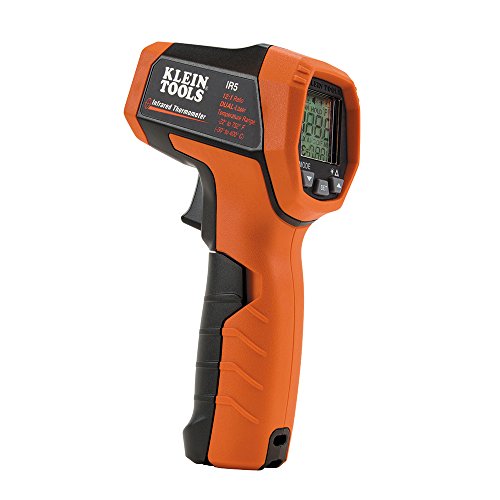
Klein Tools IR5 Dual Laser Infrared Thermometer
KLEIN TOOLS
Mid-Range
VEVOR infrared thermometer with dual laser
VEVOR
Budget
HoMedics non-contact infrared forehead thermometer
Homedics
Mid-Range
Blackstone Infrared Thermometer with Probe
BLACKSTONE
Budget
Infrared thermometer with K probe and 501:1 distance
MESTEK
Mid-Range
Infrared Thermometer Pyrometer with 50:1 D/S, -58F to 1796F
SURPEER
Mid-Range
eT650D Temperature Gun by ennoLogic - Dual Laser IR Thermometer
ennoLogic
Mid-Range
Infrared Thermometer Gun with K-type Probe
SURPEER
Budget
Fluke 62 Max Infrared Thermometer
Fluke
Premium
50:1 Infrared Thermometer with K-Type Thermocouple
MOONASCEND
Mid-Range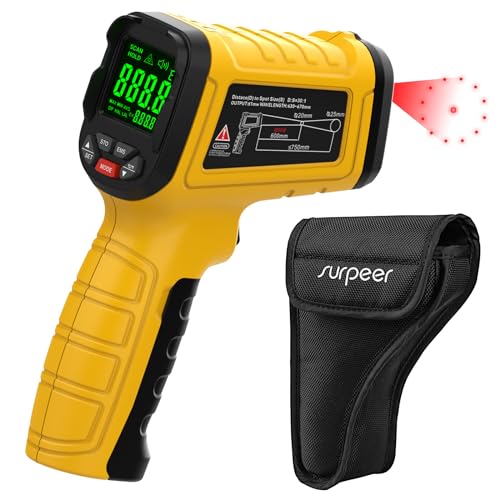
Infrared Thermometer Pyrometer -50F to 2552F, 30:1, Laser IR Temp Gun
SURPEER
Mid-Range
Infrared thermometer gun with K-type probe for high temp readings
SURPEER
Mid-Range
Infrared Thermometer Gun with Probe and Emissivity
Temirup
Mid-Range
Infrared thermometer gun, -58F to 2732F, non-contact
MOONASCEND
Mid-RangeRoundups
Frequently Asked Questions
How do I choose the right infrared thermometer for industrial or tool use?
Pick a model with an appropriate temperature range and accuracy for your tasks, a narrow field-of-view (high distance-to-spot ratio) for measuring small or distant targets, and features you need such as adjustable emissivity, data hold/logging, and a rugged or dust-/water-resistant housing
What is emissivity and why does it matter?
Emissivity is a material's efficiency in emitting thermal radiation; infrared thermometers assume an emissivity value when converting infrared energy to temperature. For accurate readings on non-painted or reflective surfaces, choose a thermometer with adjustable emissivity or use emissivity correction methods (stick-on tape, spray) or measure a nearby known-emissivity surface
How accurate are infrared thermometers and what affects their accuracy?
Typical handheld infrared thermometers claim accuracies around ±1–3% or ±1–2°C, but accuracy depends on correct emissivity setting, distance-to-spot ratio, ambient conditions, and surface reflectivity. For critical measurements, verify readings against a contact thermometer or use proper emissivity and target-sizing techniques
What is distance-to-spot (D:S) ratio and how do I use it?
D:S ratio specifies the diameter of the area measured relative to distance (for example 12:1 measures a 1-inch spot at 12 inches). Ensure the target is larger than the calculated spot size or move closer or use a higher D:S ratio model to avoid averaging surrounding temperatures
Are infrared thermometers suitable for measuring human body temperature?
Most industrial infrared thermometers are designed for surface and equipment temperatures and may not meet medical accuracy standards; use devices specifically calibrated and marketed for clinical/medical use when measuring body temperature
How should I care for and maintain an infrared thermometer?
Keep the lens clean and free of scratches, avoid exposure to extreme temperatures or moisture beyond the device rating, store in a protective case, replace batteries as recommended, and periodically check accuracy against a known-temperature reference
What can I expect to pay and how do prices differ by features?
Prices for handheld infrared thermometers commonly range from budget options under $50 to higher-end units over $150; more expensive models generally offer wider ranges, better accuracy, higher D:S ratios, adjustable emissivity, data logging, and more rugged housing