Lab Analytical Balances
Lab analytical balances for precision mass measurements used in labs and industrial settings, including compact benchtop models and higher-capacity units. The 21 indexed products average a 4.40 rating and span budget to mid-range prices (about $48–$140), with brands like Bonvoisin represented
Top Products

VEVOR Lab Scale Analytical Balance 3000g x 0.01g
VEVOR
Mid-Range
Lab Scale 2000g/0.01g Digital Scale for Lab & Kitchen
WELLiSH
Mid-Range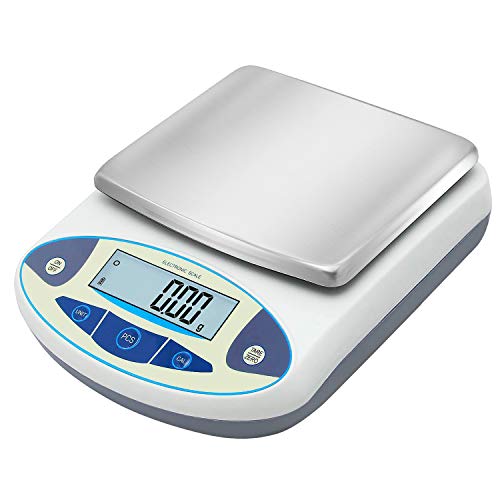
Bonvoisin 1000g x0.01g analytical balance
Bonvoisin
Premium
Lab Scale 6000gx0.01g Analytical Balance
Srora
Mid-Range
Bonvoisin 3000g Analytical Balance 0.01g Precision
Bonvoisin
Premium
Lab scale 5000gx0.01g high precision digital analytical balance
RUISHAN
Premium
Bonvoisin Lab Scale 5000g x 0.01g Electronic Analytical Balance
Bonvoisin
Mid-Range
Bonvoisin Lab Scale 2000g × 0.01g High Precision Balance
Bonvoisin
Premium
Bonvoisin 500g x 0.01g Analytical Balance
Bonvoisin
Mid-Range
Lab Scale 3200g x 0.01g High Precision Balance
UXILAII SCIENTIFIC
Mid-Range
Large Range Lab Scale 6kg Precision Electronic Balance
RUISHAN
Premium
Lab Scale 5000g x 0.01g Digital Analytical Balance
Srora
Mid-Range
Lab Scale 3000g x 0.01g, 13-unit conversion balance
VEVOR
Mid-Range
VEVOR Lab Scale 2000g x 0.01g – precision analytical balance
VEVOR
Mid-Range
GOYOJO 5000g Analytical Balance with 0.01g precision
GOYOJO
Mid-Range
VEVOR Lab Scale 500 g x 0.001 g high-precision balance
VEVOR
Mid-Range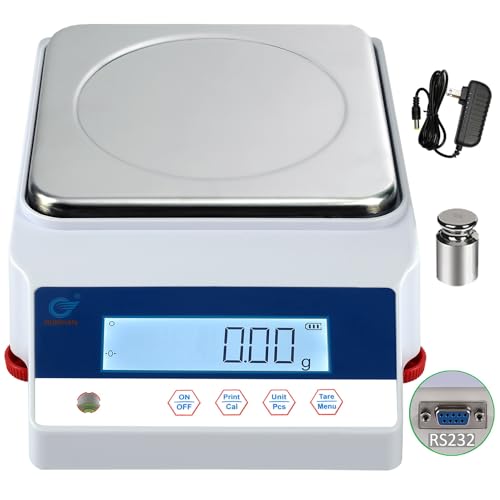
Lab Scale Digital Analytical Balance 0.01g/10mg 170mm Pan RUISHAN
RUISHAN
Premium
Lab scale 5000g/0.01g high precision digital scale
WELLiSH
Mid-Range
Bonvoisin Lab Scale 5000g/0.01g High Precision Balance
Bonvoisin
Mid-Range
Bonvoisin Lab Analytical Balance 500g x 0.001g
Bonvoisin
Premium
Lab Analytical Balance 500g x 0.001g Digital Scale
Toemics
Mid-RangeRoundups
- Best Lab Analytical Balances Under $50 (2026)
- Best Lab Analytical Balances for Calibration Tasks (2026)
- Best Lab Analytical Balances for Lab Weighing (2026)
- Best Lab Analytical Balances for Precise Lab Weighing (2026)
- Best Lab Analytical Balances for Educational Demonstrations (2026)
- Best Lab Analytical Balances Under $200 (2026)
- Best Lab Analytical Balances Under $100 (2026)
- Best Lab Analytical Balances (2026 Guide)
Frequently Asked Questions
How do I choose the right lab analytical balance for my application?
Select based on required readability (decimal places), capacity (maximum load), repeatability and accuracy specifications, and sample size; consider features like draft shields for small samples, calibration method (internal vs. external), and connectivity (USB/RS232) if data logging is needed
What are common accuracy and readability terms I should understand?
Readability is the smallest displayed increment (e.g., 0.001 g), repeatability is how consistent repeated measurements are, and linearity indicates deviation across the weighing range; check the specifications sheet for these values rather than marketing labels
How much should I expect to spend on a reliable analytical balance?
Prices vary with capacity and precision; basic benchtop analytical balances commonly fall within a modest range for hobby or light-lab use, while higher-precision or higher-capacity models cost more; average product listings in this category are around mid-range prices, with budget options below that
What maintenance and calibration do analytical balances require?
Keep the pan and draft shield clean, level the balance, allow warm-up time after power-on, perform routine internal or external calibration per manufacturer guidance, and protect from drafts, vibration, and temperature fluctuations to maintain accuracy
Which features improve measurement reliability in a lab environment?
A draft shield, vibration isolation, good thermal stability, a built-in or traceable calibration routine, and clear specification of repeatability and linearity improve reliability; environmental controls such as stable temperature and minimal air currents are also important
Do I need professional calibration certification for regulatory use?
For regulated workflows, external calibration and certification traceable to national standards are typically required; for non-regulated or routine checks, internal calibration and regular performance verification may suffice
How do capacity and readability trade off when selecting a balance?
Higher capacity balances usually offer coarser readability, while ultra-fine readability (e.g., 0.0001 g) is typically available only on lower-capacity instruments; choose the smallest readability that meets your measurement range and sample mass