Lab Petri Dishes
Laboratory Petri dishes are sterile culture plates and lids used for microbiology, cell culture, and sample incubation, offered in disposable and reusable formats. This Tools & Industrial category indexes 16 products with an average rating of 4.38 and mid-range pricing (about $33–$190); brands include Vabiooth and BIOLOGIX
Top Products

Sterile 60mm Petri Dishes with Lids, 200-pack (Vabiooth)
Vabiooth
Mid-Range
Sterile Petri Dishes 100 Pack 90mm x 15mm with Lids
Vabiooth
Mid-Range
Huanyu 120mm Glass Petri Dish with Lids, 5pcs
Huanyu
Budget
Kigley 400 Pcs Sterile Plastic Petri Dishes with Lids, 60mm
Kigley
Budget
Kigley 500 Pcs Plastic Petri Dishes with Lids 60mm
Kigley
Mid-Range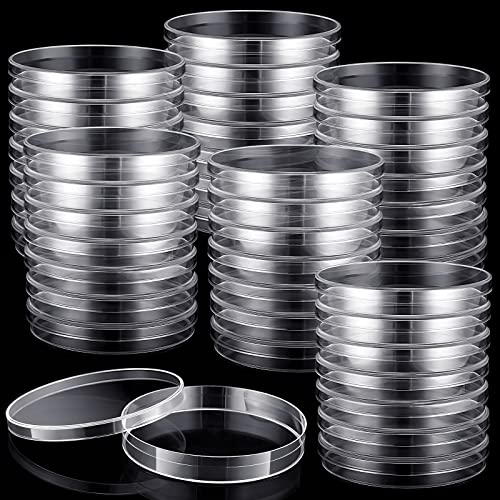
Sterile Petri Dishes with Lids, 200-pack, 90mm
Kingdder
Budget
Celltreat 229697 Petri Dish, Slippable, Sterile, 100 mm x 15 mm (Pack of 500)
Celltreat
Mid-Range![[Autoclavable] 200 Pack Sterile Thick Plastic Petri Dishes with Lid, Vabiooth 60mm Dia x 15mm Deep Clear 3 Vents Petri Dish for Lab Science Experiment, Non-Fragile, Scratch-Resistant](https://m.media-amazon.com/images/I/414VOkv+qHL._SL500_.jpg)
[Autoclavable] 200 Pack Sterile Thick Plastic Petri Dishes with Lid, Vabiooth 60mm Dia x 15mm Deep Clear 3 Vents Petri Dish for Lab Science Experiment, Non-Fragile, Scratch-Resistant
Vabiooth
Mid-Range
Petri Dishes 500-pack Sterile 90mm x 15mm with Lids
Vabiooth
Premium
Petri Dishes with Loosely Fitted Lids, 100-pack, sterile plastic culture dishes
BIOLOGIX
Budget
Celltreat 229695 Petri Dish, Sterile, 100 mm x 15 mm
Celltreat
Mid-Range
Petri Dishes with Lids, 90mm, 500-pack by BIOLOGIX
BIOLOGIX
Mid-Range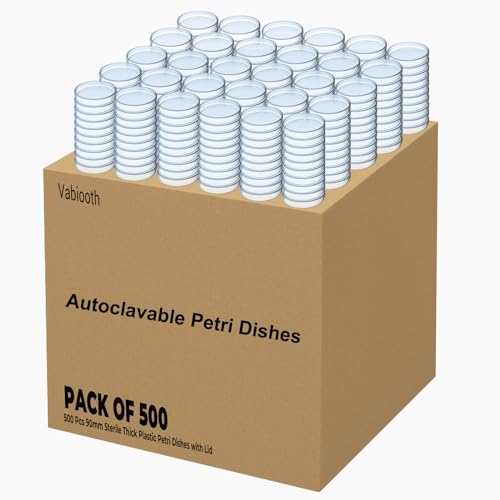
Autoclavable 90mm Petri Dishes with Lid, 500-pack, Vabiooth
Vabiooth
Premium
Petri Dishes with Lids, 500-ct, thick polystyrene culture dishes
BIOLOGIX
Premium![[Autoclavable] 1000 Pack Sterile Thick Plastic Petri Dishes with Lid, 60mm Dia x 15mm Deep](https://m.media-amazon.com/images/I/41LnV3E5eUL._SL500_.jpg)
[Autoclavable] 1000 Pack Sterile Thick Plastic Petri Dishes with Lid, 60mm Dia x 15mm Deep
Vabiooth
Premium
Science Plastic Petri Dishes with Lids, 200 Pack, 150mm Dia x 15mm
BIOLOGIX
PremiumRoundups
- Best Lab Petri Dishes for Lab Demonstrations (2026)
- Best Lab Petri Dishes for Microbiology Experiments (2026)
- Best Lab Petri Dishes for Science Fair Projects (2026)
- Best Lab Petri Dishes Under $200 (2026)
- Best Lab Petri Dishes Under $100 (2026)
- Best Lab Petri Dishes Under $50 (2026)
- Best Lab Petri Dishes (2026 Guide)
Frequently Asked Questions
What types of Petri dishes are available and how do I choose the right one?
Petri dishes come in disposable polystyrene, reusable glass, and tissue-culture-treated plastic; choose based on application: disposable plastics for routine plating, glass for autoclaving and reuse, and treated dishes for cell culture that require improved cell attachment
What size and capacity should I pick for common lab uses?
Standard sizes are 35 mm, 60 mm, and 90–100 mm diameter; use 35 mm for small or individual assays, 60 mm for moderate culture work, and 90–100 mm for larger colonies or replicate plating where more surface area is needed
What should I look for regarding material and chemical compatibility?
Polystyrene is common but incompatible with many organic solvents; borosilicate glass tolerates heat and most chemicals; check manufacturer specifications for solvent resistance and suitability for your reagents and incubation conditions
How do I store and handle Petri dishes to avoid contamination and warping?
Store dishes sealed or in dust-free racks at room temperature away from direct sunlight; handle with sterile gloves, work in a laminar flow hood for aseptic transfers, and avoid high temperatures that can warp plastic dishes
Are there features that improve workflow, like stackability or vented lids?
Stackable designs save bench space and reduce exposure; vented or gridded lids can improve gas exchange for aerobic cultures or aid colony counting, so select features that match your incubation and handling procedures
What price range should I expect for Petri dishes and how does cost relate to quality?
Individual dishes and small sterile packs are available at low unit cost, while treated or autoclavable glass options are more expensive upfront; in many labs, disposable sterile plastics are economical for routine work, with average product prices in the mid-range reflecting treatment and material differences