Lab Sample Vials
Lab Sample Vials in Tools & Industrial are small glass or plastic containers for storing, transporting, and processing biological or chemical samples, offered in screw-cap, cryogenic, and amber variants. The category averages a 4.62 rating across 13 products with price tiers from about $34 to $106 and includes brands like creahub
Top Products

ESHATO 100-Pack 20ml Glass Sample Vials with Black Caps
ESHATO
Budget
20ml borosilicate glass vials with screw caps, pack of 100
XHPHAPACK
Budget
10ml glass vials with flip-off caps and stoppers (200 ct)
GuoGuan-US
Mid-Range
200 x 10ml amber glass vials with caps and stoppers
creahub
Mid-Range
20ml Clear Glass Vials with Caps and Stoppers, 100 Pack
Chudeng
Budget
Reconstitution 30ml 5 Pack Glass Vials
Besgiful
Mid-Range
20ml glass vials with caps & stoppers, 100-pack
FOUR E'S SCIENTIFIC
Budget
100-pack 20ml glass vials with caps and stoppers
creahub
Mid-Range
Dual Action Vial Decapper for 11 mm and 20 mm Crimped Vials
PakCan
Budget
Glass vials set with caps, stoppers & funnels (20 ml, 200 pieces)
Ziliny
Mid-Range
ALWSCI 0.54 oz Glass Vials with Caps, 100-pack
ALLLABWARE
Mid-Range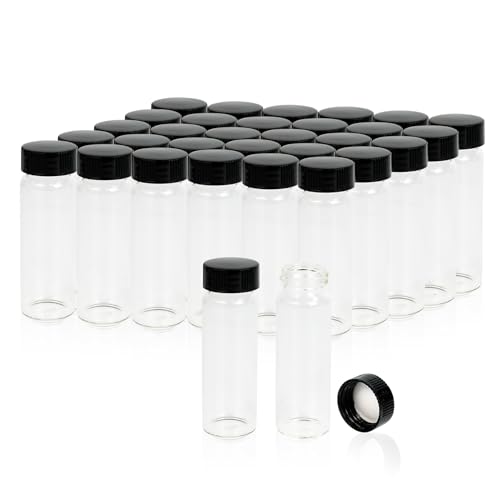
ALWSCI 1 oz Glass Vials with Black Caps, Pack of 100
ALLLABWARE
Mid-Range
SurgiMac Vial Spike Clave – Needleless Vial Adapter for Glass Vials
SurgiMac
Mid-RangeRoundups
- Best Lab Sample Vials for Sample Storage (2026)
- Best Lab Sample Vials for Lab Analyses (2026)
- Best Lab Sample Vials for Long-Term Sample Storage (2026)
- Best Lab Sample Vials for Lab Sample Storage (2026)
- Best Lab Sample Vials Under $200 (2026)
- Best Lab Sample Vials Under $100 (2026)
- Best Lab Sample Vials Under $50 (2026)
- Best Lab Sample Vials (2026 Guide)
Frequently Asked Questions
How do I choose the right vial material for my samples?
Choose based on chemical compatibility and sample type: glass (borosilicate) is best for organic solvents and long-term storage, while polypropylene or HDPE plastics resist many aqueous reagents and are more impact-resistant; check compatibility charts for specific solvents and temperatures
What vial sizes and closure types should I consider?
Select size by sample volume and headspace needs—common sizes range from 0.5 mL to 20 mL—and pick closures (screw cap, crimp, snap cap) with appropriate liners or septa for sealing, pressure resistance, and analysis method compatibility
Are there lab vials suitable for cryogenic or high-temperature use?
Yes: borosilicate glass vials and certain high-grade plastics are suitable for elevated temperatures, while specialized cryovials made from specific polypropylene blends and leak-resistant caps are designed for low-temperature storage; confirm rated temperature limits from specifications
How should I clean and store reusable sample vials?
Clean with appropriate solvents and detergents, rinse with deionized water, and dry thoroughly; avoid abrasive brushes on coated glass, and store vials capped in a dust-free environment to prevent contamination and maintain integrity
What quality indicators should I look for when buying vials for analytical work?
Look for consistent dimensions/tolerances, low extractables and leachables, certified cleanliness or pre-rinsed options, compatible septum/lid materials, and any documentation such as material specifications or lot traceability
How do cost and quantity typically trade off when purchasing vials?
Per-unit costs generally decrease with larger pack sizes; expect a range from budget options under $50 for small packs to higher per-unit quality products in larger lab packs, so balance required cleanliness, material, and quantity needs
Can I use plastic vials for GC or LC analysis?
Plastic vials are suitable for some LC applications but are generally not recommended for gas chromatography when volatile organic solvents or high temperatures are involved; glass vials are the standard for GC due to temperature and solvent compatibility