Network & Cable Testers
Network & Cable Testers covers handheld and benchtop tools for diagnosing copper and fiber cabling, tone tracing, certification, and fiber inspection. About 90 products range from budget to professional levels (average price ~(price varies)), with brands like Fluke Networks commonly represented. Average customer rating is 4.43
Top Products

Klein Tools VDV526-100 Network LAN Cable Tester
KLEIN TOOLS
Budget
Klein Tools VDV526-200 Cable Tester, LAN Scout Jr. 2
KLEIN TOOLS
Mid-Range
Pro3000 Tone Generator with ABN Clips and RJ11 Plug
Fluke Networks
Mid-Range
Klein Tools VDV500-820 Wire Tracer Tone Generator and Probe Kit
KLEIN TOOLS
Mid-Range
Fluke Pro3000 Probe
Fluke Networks
Mid-Range
Pro3000 Analog Tone Generator with Clips & RJ11
Fluke Networks
Mid-Range
Fluke Pro3000 Tone Generator and Probe Kit
Fluke Networks
Premium
Klein Tools VDV500-920 Wire Tracer Tone Generator Kit
KLEIN TOOLS
Premium
Detachable Advanced Cable Tester for 10-Way Lines
MFL.
Premium
TESMEN TLP-900AR Network Cable Tester for RJ11/RJ45
TESMEN
Mid-Range
Klein Tools RJ45 Cable Tester Kit with LAN Scout Jr. 2
KLEIN TOOLS
Premium
Klein Tools VDV026-813 RJ45 Ethernet Cable Tester and Crimper Kit
KLEIN TOOLS
Mid-Range
D-Snip Cable Scissors by Fluke Networks
Fluke Networks
Mid-Range
POE Cable Tester for Network Cables and POE Detection
NOYAFA
Budget
Fluke Networks 6-Wire In-Line Modular Adapter with K-Plug
Fluke Networks
Mid-Range
2PCS Visual Fault Locator Kit with 2.5mm universal connector
VFLTOOL
Mid-Range
TEMPO 701K-G Wire Tracer Tone Generator & Probe Kit
TEMPO
Mid-Range
50KM Visual Fault Locator Kit with 2.5mm universal connector
VFLTOOL
Budget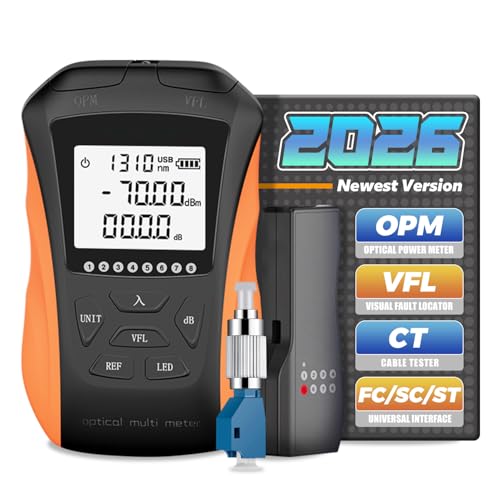
Optical Power Meter with Visual Fault Locator
YGGYM
Budget
NOYAFA NF-8209 Network Cable Tester for CAT5/CAT6
NOYAFA
Mid-Range
2PCS Visual Fault Locator Kit with FC/LC Adapters
VFLTOOL
Budget
Klein Tools VDV500-705 Wire Tracer Tone Generator & Probe Kit
KLEIN TOOLS
Mid-Range
Fluke T6-600 Electrical Tester
Fluke
Premium
Fiber Visual Fault Locator 50KM with FC/LC Adapter Kit
GESD
Mid-RangeRoundups
Frequently Asked Questions
How do I choose the right network and cable tester for my needs?
Pick based on the cable types you work with (Ethernet, coax, fiber), required functions (continuity, wiremap, length, PoE, fiber visual fault locator), and level of reporting/diagnostics; technicians doing installs typically need more advanced features and reporting than basic continuity testers
What price range should I expect for reliable testers in this category?
Entry-level continuity and basic wiremap testers can be found under $100, mid-range multifunction testers commonly fall between $100–$400, and professional analyzers with advanced diagnostics and reporting often cost several hundred dollars or more
Which features are most important for professional network troubleshooting?
Key features include accurate wiremap and continuity, cable length and distance-to-fault measurement (TDR), PoE testing, tone generation for tracing, remote identifiers for multi-drop testing, and optional fiber testing like visual fault locators for fiber links
Can these testers handle both copper and fiber cabling?
Many testers focus on copper Ethernet and coax, while others include fiber-specific functions; if you need both, choose a multifunction tester that explicitly lists support for single-mode/multi-mode fiber testing (visual fault locator, continuity, and power measurement)
How durable and portable are these tools for field use?
Professional-grade testers are typically built for field use with rugged housings, battery operation, and compact designs, but durability varies by model—check IP ratings, shock resistance, and accessory packaging like carrying cases when buying
What maintenance and calibration do network and cable testers require?
Routine maintenance includes keeping connectors clean, replacing batteries as needed, updating firmware when available, and following the manufacturer's recommended calibration interval if the device has precision measurement functions
How do I verify a tester's accuracy and compatibility before relying on it for documentation?
Verify accuracy by testing known good cables and comparing distance/length readings to expected values, ensure compatibility with the cable categories and connector types you use (RJ45, RJ11, BNC, LC/SC), and review whether the tester supports industry standards required for your work