Power Transformers
Power transformers for tools and industrial use, including isolation and step-down units for machinery, test benches, and HVAC controls. Listings span budget to mid-range options (average price ~(price varies)) from brands such as VEVOR and Honeywell, with an average rating of 4.43 across 11 indexed products
Top Products

Honeywell Intrusion 1321-1 Transformer 16.5VAC 25VA
Honeywell
Budget
Robertson VT235 /A V2 25VA Magnetic Step-Down Transformer
Robertson Worldwide
Budget
DROK 48V Buck Converter Power Supply 0-48V 10A Display
DROK
Mid-Range
VEVOR 500VA Auto Variable Voltage Transformer 110V Input
VEVOR
Mid-Range
DROK 24V Buck Converter Power Supply 0-24V 20A
DROK
Mid-Range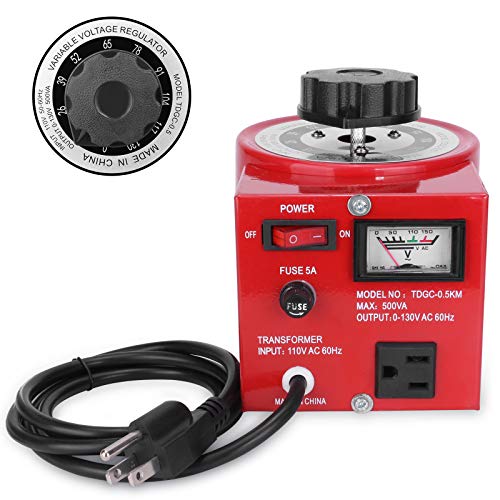
Voltage Transformer 5 Amp Auto AC Regulator Beleeb
Beleeb
Mid-Range
VEVOR 2000VA Auto Variable Voltage Transformer
VEVOR
Mid-Range
2-Pack 40VA Control Transformer, 120/208/240V to 24V, 2ndary Isolation
WUYELIN
Budget
Beleeb 20A Variac Auto Transformer 0-130V, 2000VA
Beleeb
Mid-Range
VEVOR 3000VA Auto Variable Voltage Transformer
VEVOR
Mid-Range
VEVOR 5000VA Auto Transformer 110/220V, 3 US + 3 EU Outlets
VEVOR
PremiumRoundups
Frequently Asked Questions
How do I choose the right power transformer for my tool or equipment?
Match the transformer's primary and secondary voltages to your supply and device requirements, ensure the VA (volt-amp) rating exceeds the device's power draw by 20–30% to prevent overheating, and confirm compatibility with single-phase or three-phase systems as required
What differences should I consider between autotransformers and isolation transformers?
Autotransformers provide voltage adjustment with a shared winding and are lighter and more efficient but do not provide galvanic isolation; isolation transformers have separate windings to isolate loads for safety and noise reduction but are larger and typically more expensive
What safety certifications and features should I look for?
Look for recognized safety certifications (such as UL, CE, or equivalent regional marks), thermal overload protection or fusing, proper grounding terminals, and enclosure ratings (IP or NEMA) appropriate for the installation environment
How do I determine the correct transformer VA or kVA rating?
Calculate the device's worst-case power draw in watts, divide by the supply voltage to get amps, then multiply amps by voltage to get VA; select a transformer with a VA rating at least 20–30% higher than that calculated value to allow headroom for startup currents and continuous loading
What maintenance and installation best practices should I follow?
Install transformers in a well-ventilated, dry location with adequate clearance, tighten all electrical connections per torque specs, keep vents and cooling paths free of dust, perform periodic insulation and grounding checks, and replace units showing overheating or unusual noise
Are there common compatibility issues with modern electronic devices?
Yes — many electronic devices are sensitive to frequency, inrush current, and waveform distortion; ensure the transformer maintains acceptable voltage regulation, handles inrush currents, and, if powering sensitive electronics, consider adding surge suppression or using an isolation transformer to reduce noise
What is a typical price range and how should budget influence my choice?
Power transformer prices vary by capacity and type, commonly ranging from under $50 for small autotransformers to several hundred dollars for larger or isolated units; prioritize correct VA rating, safety certifications, and required features over lowest cost to ensure reliability and safety